DMG Mori ULTRASONIC 50
This model was not found in DMG Mori's current lineup when we checked on 2026-10-02 (lineup page). It may be a superseded or older model; the specifications below are as we last recorded them.
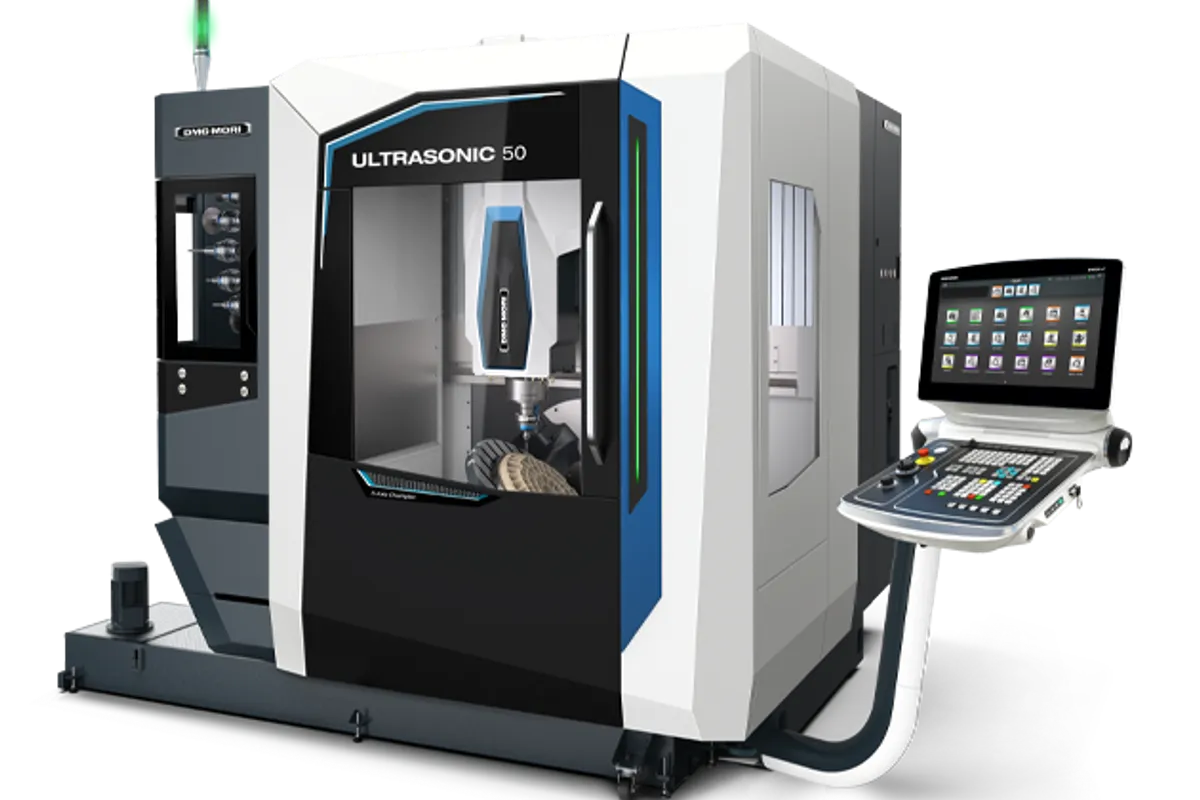
Image: us.dmgmori.com, DMG Mori
Key Specifications
X Travel
Y Travel
Z Travel
Max Spindle
Tool Capacity
Spindle Power
How much does the DMG Mori ULTRASONIC 50 cost?
Estimated price range
Our best estimate for a 5-axis machining center in this class — not a quote from DMG Mori. Configuration moves it a long way.
Overview
The DMG MORI ULTRASONIC 50 is a 5-axis machining center with ultrasonic assistance, listed with 650 mm (25.6 in) of X travel, 520 mm (20.5 in) of Y and 475 mm (18.7 in) of Z. It is not in DMG MORI's current lineup and may be an older model, so the figures here are the listed ones and should be confirmed on the machine being offered.
The listed ultrasonic principle is a longitudinal vibration superimposed on tool rotation, with a process force reduction of approximately 50%. The workpiece envelope is 630 mm (24.8 in) in diameter and 500 mm (19.7 in) in height, on a table rated for 300 kg (661 lb). The B-axis swivels from -35 to +110 degrees, 145 degrees in total.
Two spindle levels are listed. The standard spindle runs to 15,000 RPM with 21 kW (28 hp) and 111 Nm (82 ft-lb). The high-power option is listed at 46 kW (62 hp) and 200 Nm (148 ft-lb), and a top speed of 20,000 RPM is listed as optional. The table does not say whether the optional speed and the high-power rating belong to the same spindle, so read the spindle plate of the actual machine instead of assuming both.
Tool capacity is 30 tools as standard, with 60 or 120 tools optional. The control is listed as SIEMENS with ULTRASONIC technology cycles. Among the current machines, the ULTRASONIC 60 precision is close in size, with 600 mm (23.6 in) of X and Y travel and 510 mm (20.1 in) of Z.
Full Specifications
| Parameter | Value |
|---|---|
| X-Axis Travel | 650 mm (25.6 in) |
| Y-Axis Travel | 520 mm (20.5 in) |
| Z-Axis Travel | 475 mm (18.7 in) |
| B Axis Swivel | -35 to +110 degrees (145 total) |
| Max Spindle Speed | 15,000 RPM standard (20,000 RPM optional) |
| Spindle Motor Power | 21 kW / 28 hp standard (46 kW / 62 hp high-power option) |
| Spindle Torque | 111 Nm / 82 ft-lb standard (200 Nm / 148 ft-lb high-power) |
| Max Workpiece Diameter | 630 mm (24.8 in) |
| Max Workpiece Height | 500 mm (19.7 in) |
| Max Table Load | 300 kg (661 lb) |
| Tool Capacity | 30 tools standard (60 or 120 optional) |
| Ultrasonic Technology | Longitudinal vibration superimposed on tool rotation |
| Process Force Reduction | Approximately 50% |
| CNC Control | SIEMENS with ULTRASONIC technology cycles |
Specifications compiled from manufacturer literature and industry references. Not independently verified against a published spec sheet — confirm with the manufacturer or an authorised dealer before making a purchasing decision.
Strengths & Limitations
Strengths
- Listed process force reduction of approximately 50% from longitudinal vibration superimposed on tool rotation
- B-axis swivel of -35 to +110 degrees, 145 degrees in total
- High-power spindle option listed at 46 kW (62 hp) and 200 Nm (148 ft-lb)
- Workpieces up to 630 mm (24.8 in) in diameter and 500 mm (19.7 in) high
- Tool capacity of 30 tools as standard, with 60 or 120 tools optional
Limitations
- Not in DMG MORI's current lineup, so every listed figure needs checking on the individual machine
- The standard spindle is listed at 111 Nm (82 ft-lb); the 200 Nm (148 ft-lb) rating is the high-power option
- Table load is listed at 300 kg (661 lb), which limits dense parts of full diameter
- The standard magazine holds 30 tools; the larger magazines were options and may not be fitted
Best For
Frequently Asked Questions
01
No. It is not in the current lineup and may be an older model. Anyone evaluating one is looking at an existing machine, so the listed figures, including the 15,000 RPM standard spindle and the 300 kg (661 lb) table load, should be verified against that machine's documentation.
02
The standard spindle is listed at 15,000 RPM, 21 kW (28 hp) and 111 Nm (82 ft-lb). A high-power option is listed at 46 kW (62 hp) and 200 Nm (148 ft-lb), and 20,000 RPM is listed as an optional top speed. Which spindle a particular machine carries has to be read from the machine itself.
03
The listed limits are 630 mm (24.8 in) in diameter and 500 mm (19.7 in) in height, with a maximum table load of 300 kg (661 lb). Travels are 650 mm (25.6 in) in X, 520 mm (20.5 in) in Y and 475 mm (18.7 in) in Z, and the B-axis swivels from -35 to +110 degrees.
04
30 tools as standard, with 60 or 120 tools listed as optional. On a machine that already exists the magazine size is fixed, so count the pockets on the machine instead of relying on the option list.
05
The listed principle is a longitudinal vibration superimposed on tool rotation, and the listed process force reduction is approximately 50%. The control is given as SIEMENS with ULTRASONIC technology cycles. Lower force is what allows grinding-type tools to work with less risk of chipping the part.
Videos

DMG MORI

DMG MORI
More from DMG Mori
Other 5-Axis Machining Centers
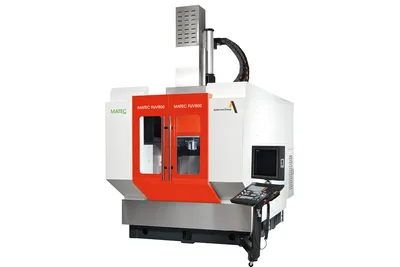
Matec FUV800
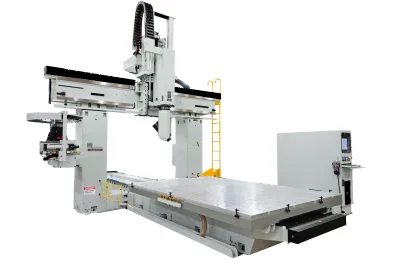
Anderson MAXXIS Series
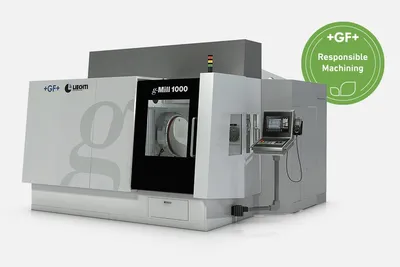
GF Machining Liechti g-Mill 1150
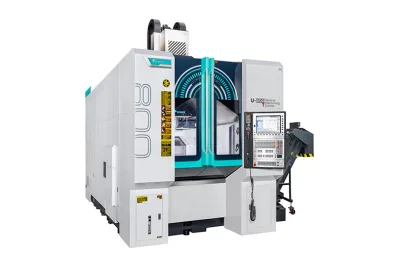
Feeler U-800(T)
Starrag Heckert T55