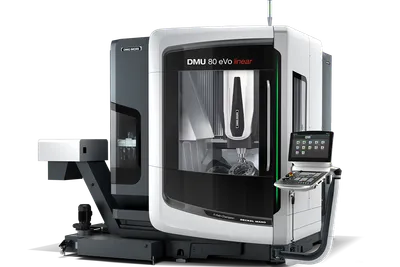
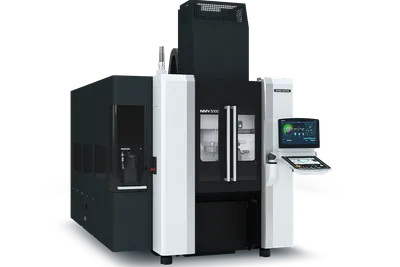
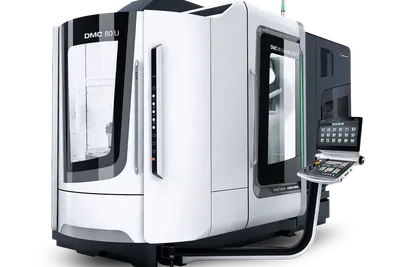
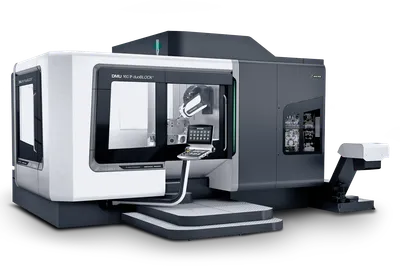
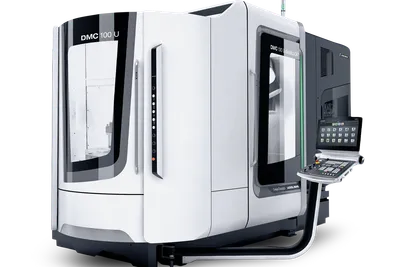
DMG Mori DMC 75 monoBLOCK 2nd Generation
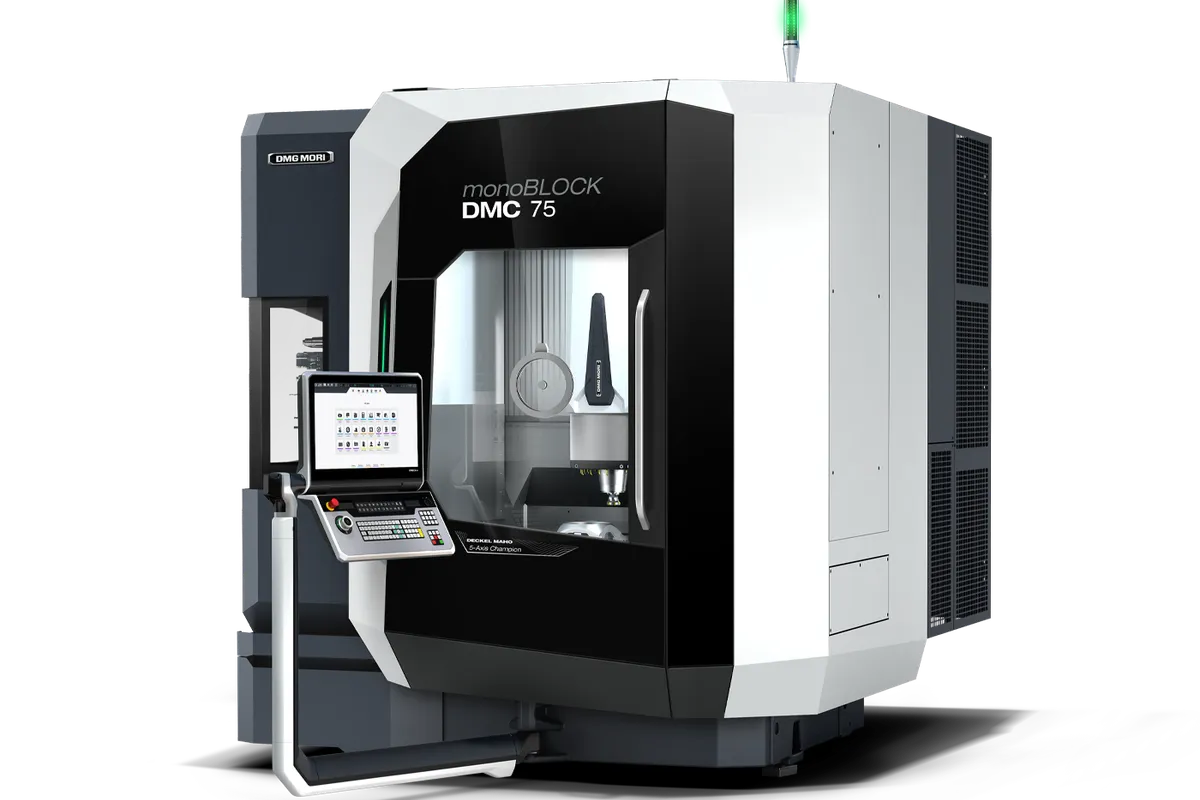
Image: dmgmori.com, DMG Mori
Key Specifications
X Travel
Y Travel
Z Travel
Max Spindle
Tool Capacity
Spindle Power
How much does the DMG Mori DMC 75 monoBLOCK 2nd Generation cost?
Estimated price range
Our best estimate for a 5-axis machining center in this class — not a quote from DMG Mori. Configuration moves it a long way.
Overview
The DMG MORI DMC 75 monoBLOCK 2nd Generation is a 5-axis machining center with 750 × 650 × 560 mm (29.5 × 25.6 × 22 in) of travel, and DMG MORI names its equipment outright: a speedMASTER spindle with 20,000 rpm, 35 kW and 130 Nm (40% dc), 60 magazine positions and MPC (Machine Protection Control).
Those spindle numbers describe a general-purpose spindle weighted toward speed. 20,000 rpm serves small cutters and finishing passes, while 130 Nm is enough for moderate roughing with mid-size tools. The rating carries the note 40% dc, meaning it applies to an intermittent duty cycle. Ask for the continuous figures if the work is long, heavy roughing.
Sixty positions is the starting point for tooling. The machine-integrated magazines go up to 240 pockets, four times that number, which matters once automation feeds different jobs through the machine and sister tools are needed. Access stays at the front for the work area, the magazine and the setup station, and the door opens to the left so pallet handling, workpiece handling or a robot can be connected, at purchase or as a retrofit.
Workpiece limits are 840 mm (33.1 in) in diameter, 500 mm (19.7 in) in height and 600 kg (1,322.8 lb). The DMC 65 monoBLOCK 2nd Generation has the same limits and the same Y and Z, with 735 mm (28.9 in) of X against 750 mm (29.5 in) here, so the choice between the two rests on equipment more than on envelope. Stated positioning accuracy is 4 µm, on a one-piece stand with 45 mm roller guides in all axes.
Full Specifications
| Parameter | Value |
|---|---|
| Max Workpiece Diameter | 840 mm (33.1 in) |
| Max Workpiece Height | 500 mm (19.7 in) |
| Max Workpiece Weight | 600 kg (1,322.8 lb) |
| X-Axis Travel | 750 mm (29.5 in) |
| Y-Axis Travel | 650 mm (25.6 in) |
| Z-Axis Travel | 560 mm (22 in) |
| Spindle Torque | 130 Nm (speedMASTER, 40% dc) |
| Positioning Accuracy | 4 µm |
| Spindle Motor Power | 35 kW (speedMASTER, 40% dc) |
| Tool Capacity | 60 magazine positions; up to 240 pockets |
| Max Spindle Speed | 20,000 rpm (speedMASTER) |
| Linear Guides | 45 mm roller guides in all axes |
| Ball Screw Diameter | ø40 / 50 / 40 mm |
Specifications sourced from dmgmori.com — verified 2026-10-02
Strengths & Limitations
Strengths
- speedMASTER spindle with 20,000 rpm, 35 kW and 130 Nm (40% dc)
- 60 magazine positions, with machine-integrated magazines up to 240 pockets
- MPC (Machine Protection Control) is part of the named equipment
- 4 µm positioning accuracy and up to 30% higher volumetric accuracy with VCS Complete
- Left-opening door keeps the front clear when pallet handling or a robot is connected
Limitations
- 130 Nm at 40% dc limits heavy roughing with large cutters, and no higher-torque spindle is named in the Highlights
- Workpiece weight stops at 600 kg (1,322.8 lb) and height at 500 mm (19.7 in)
- X travel of 750 mm (29.5 in) is shorter than the 840 mm (33.1 in) maximum workpiece diameter, so full-size parts must be rotated to reach their edges
- Spindle power and torque are quoted only at 40% dc; continuous ratings are not published in the Highlights
Best For
Frequently Asked Questions
01
DMG MORI names a speedMASTER spindle with 20,000 rpm, 35 kW and 130 Nm, rated at 40% dc. That is a duty-cycle rating, so the power and torque available in continuous cutting should be requested separately. No alternative spindle is listed in the Highlights for this model.
02
The named equipment includes 60 magazine positions. DMG MORI also states machine-integrated tool magazines with up to 240 pockets, so larger magazines exist for the machine. The magazine is accessible from the front, alongside the work area and the setup station.
03
MPC stands for Machine Protection Control and is listed as part of the machine's equipment together with the speedMASTER spindle and the 60 magazine positions. The Highlights give the name only and do not describe how it works or what it monitors, so ask DMG MORI for the function description.
04
Up to 840 mm (33.1 in) in diameter, 500 mm (19.7 in) in height and 600 kg (1,322.8 lb). Travels are 750 mm (29.5 in) in X, 650 mm (25.6 in) in Y and 560 mm (22 in) in Z. A part at the full diameter is wider than the X travel and is machined by rotating it past the spindle.
05
The DMC 80 U duoBLOCK is a much larger machine, with 800 × 1,050 × 850 mm (31.5 × 41.3 × 33.5 in) of travel and room for workpieces up to 1,450 mm (57.1 in) tall and 1,400 kg (3,086.5 lb). The DMC 75 monoBLOCK 2nd Generation stops at 500 mm (19.7 in) and 600 kg (1,322.8 lb).
Videos

Astranis Manufacturing