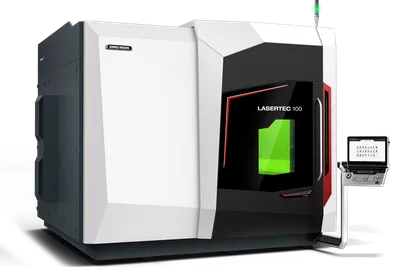
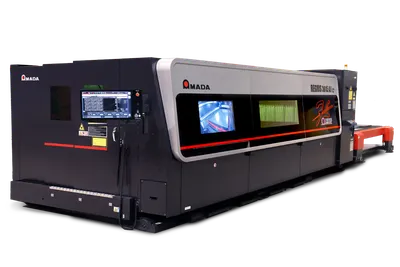
Amada REGIUS 3015 Fiber Laser
This model was not found in Amada's current lineup when we checked on 2026-10-03 . It may be a superseded or older model; the specifications below are as we last recorded them.
Key Specifications
Accuracy
working area x y
laser type
laser power options
maximum sheet thickness mild steel 9 kw
maximum sheet thickness stainless steel 9 kw
How much does the Amada REGIUS 3015 Fiber Laser cost?
Estimated price range
Our best estimate for a cnc laser cutting machine in this class — not a quote from Amada. Configuration moves it a long way.
Overview
The Amada REGIUS 3015 Fiber Laser is listed as a fiber laser cutting machine with a 3,000 × 1,500 mm working area, a linear drive and Locus Beam Control (LBC), in 3 kW / 6 kW / 9 kW versions. A machine under this exact name is not in Amada's current lineup. The REGIUS 3015 AJe is listed with 6000 W / 9000 W / 12000 W / 15000 W / 26000 W oscillators and a 920 kg table load, so check which of the two specifications a quotation or a second-hand advert actually refers to.
For the 9 kW version the listed maximum sheet thickness is 22 mm in mild steel, 25 mm in stainless steel and 20 mm in aluminum. No thickness is given for the 3 kW or 6 kW versions, which leaves the two smaller oscillators unsized. Maximum sheet weight is 900 kg.
Speed is the other half of the listed figures. Traverse is given as up to 150 m/min and cutting speed as up to 40 m/min, on a drive system described as an AF linear drive. Positioning accuracy is ±0.05 mm. The LBC beam oscillation is listed as exclusive to Amada, and the control is the Amada AMNC 3i. Match the nameplate power of any machine sold under this name to these rows, since only the 9 kW thickness limits are stated.
Full Specifications
| Parameter | Value |
|---|---|
| Working Area X Y | 3,000 × 1,500 mm |
| Laser Type | High-brightness fiber laser with Locus Beam Control (LBC) |
| Laser Power Options | 3 kW / 6 kW / 9 kW |
| Maximum Sheet Thickness Mild Steel 9 Kw | 22 mm |
| Maximum Sheet Thickness Stainless Steel 9 Kw | 25 mm |
| Maximum Sheet Thickness Aluminum 9 Kw | 20 mm |
| Maximum Traverse Speed | 150 m/min |
| Maximum Cutting Speed | 40 m/min |
| Positioning Accuracy | ±0.05 mm |
| Maximum Sheet Weight | 900 kg |
| CNC Control | Amada AMNC 3i |
| Beam Oscillation | Locus Beam Control (LBC) — Amada exclusive |
| Drive System | AF (Amada Fiber) linear drive |
Specifications compiled from manufacturer literature and industry references. Not independently verified against a published spec sheet — confirm with the manufacturer or an authorised dealer before making a purchasing decision.
Strengths & Limitations
Strengths
- Locus Beam Control (LBC) beam oscillation is listed with a high-brightness fiber laser
- Listed maximum traverse speed of 150 m/min on a linear drive
- At 9 kW, stainless steel is listed to 25 mm and aluminum to 20 mm
- Maximum cutting speed is listed at 40 m/min
Limitations
- Thickness limits are stated for the 9 kW version only, with nothing for 3 kW or 6 kW
- Mild steel at 9 kW is listed at 22 mm, below the 25 mm given for stainless steel
- Positioning accuracy is listed at ±0.05 mm
- Maximum sheet weight is 900 kg, under the 920 kg table load of the REGIUS 3015 AJe
Best For
Frequently Asked Questions
01
The listed figures differ. This page lists 3 kW / 6 kW / 9 kW versions and a 900 kg maximum sheet weight. The REGIUS 3015 AJe is listed with 6000 W / 9000 W / 12000 W / 15000 W / 26000 W oscillators and a 920 kg table load. If you are being quoted a REGIUS, check which specification applies.
02
The listed maximums are for the 9 kW version: 22 mm in mild steel, 25 mm in stainless steel and 20 mm in aluminum. No thickness is listed for the 3 kW or 6 kW versions, so those need to be confirmed for the machine in question.
03
Maximum traverse speed is listed at 150 m/min and maximum cutting speed at 40 m/min. The drive system is described as an AF linear drive. Positioning accuracy is listed at ±0.05 mm.
04
The control is the Amada AMNC 3i. The laser is described as a high-brightness fiber laser with Locus Beam Control (LBC), and the beam oscillation row lists LBC as exclusive to Amada. The listed power options are 3 kW / 6 kW / 9 kW.
More from Amada
Other CNC Laser Cutting Machines
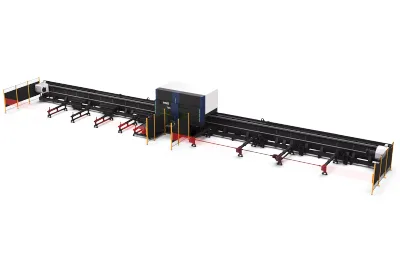
HSG TX5R
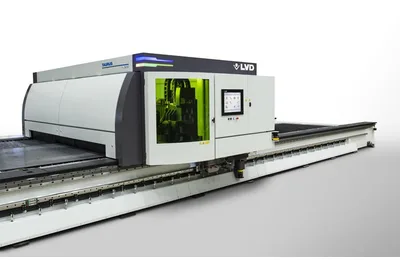
LVD Taurus
Bystronic ByStar Fiber 3015
BLM Group LT5.10