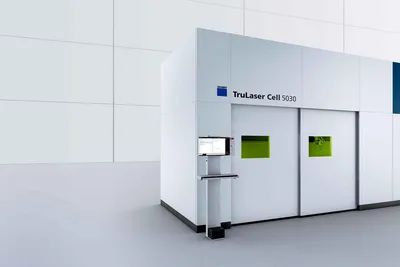
Amada FBLC-3015 AJ
Key Specifications
Accuracy
work area
laser type
laser power
max cutting thickness mild steel
max cutting thickness stainless
Overview
The Amada FBLC-3015 AJ is Amada's automation-forward fiber laser cutting center, engineered specifically for fabricators who need unattended, lights-out sheet metal processing. While the FBLC shares its fiber laser cutting technology with other Amada platforms, its defining characteristic is the deep integration with Amada's MARS (Multi-Tasking Automation with Robotic Systems) and ASFIS (Amada Sheet Feeder Integrated System) automation towers, enabling continuous processing of sheet metal blanks without operator intervention through multiple shifts.
The FBLC-3015 AJ uses a high-brightness fiber laser source delivering consistent beam quality across its full power range. The 3015 work envelope handles 3,048 x 1,524 mm standard sheets. Cutting performance on thin sheet (1-3 mm mild steel and stainless) is where fiber laser technology excels, and the FBLC delivers the rapid acceleration and deceleration needed to maximize average cutting speeds across dense nested programs. The machine's motion system is built for consistent throughput rather than peak speed, prioritizing uptime reliability over headline specification numbers.
The AJ (Automatic Job Change) system is central to the FBLC-3015's value proposition. Automatic nozzle exchange, lens focus adjustment, assist gas switching (nitrogen vs. oxygen), and process parameter updates all occur without operator intervention as the machine transitions between different materials and thicknesses within a nested program. Combined with the AMNC 3i control's automated nesting and scheduling capabilities, the FBLC-3015 AJ can execute an entire day's cutting schedule with morning setup and evening unload — or run completely unattended when paired with an automation tower.
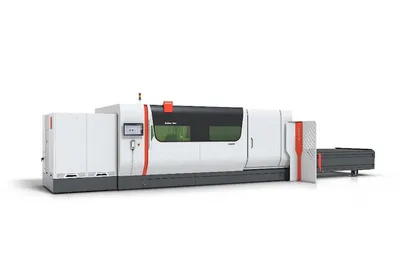
The FBLC-3015 AJ targets high-volume fabricators and contract manufacturers who have moved beyond simple laser cutting into automated fabrication cells. Its competition includes the Trumpf TruLaser 3030 fiber with automation options and Bystronic's automated ByStar Fiber configurations. Amada's advantage is the depth of native automation integration — the FBLC was designed from the ground up as an automation platform, not retrofitted. Pricing ranges from $600,000 to $900,000 depending on laser power and automation tower configuration.
Full Specifications
| Parameter | Value |
|---|---|
| Work Area | 3,048 x 1,524 mm (120 x 60 in) |
| Laser Type | High-brightness fiber laser |
| Laser Power | 4,000 W / 6,000 W (configuration dependent) |
| Max Cutting Thickness Mild Steel | 22 mm (0.87 in) |
| Max Cutting Thickness Stainless | 15 mm (0.59 in) |
| Max Cutting Thickness Aluminum | 10 mm (0.39 in) |
| Positioning Accuracy | ±0.03 mm (±0.0012 in) |
| Max Axis Speed | 150 m/min |
| Acceleration | 1.2 G |
| Automatic Job Change | Yes (AJ — nozzle, focus, gas, parameter auto-change) |
| Automation Compatibility | Amada MARS tower, ASFIS sheet feeder integration |
| CNC Control | Amada AMNC 3i |
| Machine Weight | 13,500 kg (29,762 lb) |
Specifications compiled from manufacturer literature and industry references. Not independently verified against a published spec sheet — confirm with the manufacturer or an authorised dealer before making a purchasing decision.
Strengths & Limitations
Strengths
- Native automation integration with Amada MARS towers and ASFIS sheet feeders — designed from the ground up as an automation platform, not retrofit
- AJ automatic job change eliminates operator touchpoints between material changes, enabling complex high-mix programs to run unattended
- High-brightness fiber laser delivers consistent beam quality across the full power range, maintaining cut quality during extended production runs
- AMNC 3i control with automated scheduling and nesting enables complete day-shift program execution with minimal morning setup time
Limitations
- Full automation tower integration adds significant capital cost on top of the base machine — total cell investment can exceed $1.5M
- Fiber laser technology is less effective than CO2 on non-metallic materials (acrylic, plastics, wood) that some fabrication shops also process
- High-volume automation focus means the machine is over-specified and over-priced for lower-volume shops that don't need lights-out capability
Best For
Frequently Asked Questions
01
MARS (Multi-Tasking Automation with Robotic Systems) is Amada's modular automation tower system for laser cutting cells. The MARS tower stores multiple pallets of raw sheet, automatically loads sheets into the laser cutting machine, retrieves cut parts and skeletons, and sorts finished parts to output stations. Combined with the FBLC-3015 AJ's automatic job change capability, a MARS-equipped cell can run unattended through an entire production shift, processing multiple different jobs without operator intervention.
02
The AMNC 3i control's automated process management handles material transitions within a nested program. When the cutting path moves from one material zone to another (e.g., 3mm mild steel to 6mm stainless on the same sheet), the AJ system automatically switches nozzle diameter, adjusts focus position, changes assist gas (oxygen to nitrogen), and updates cutting parameters without stopping. This enables truly mixed-material sheets that would require extensive operator intervention on conventional laser machines.
03
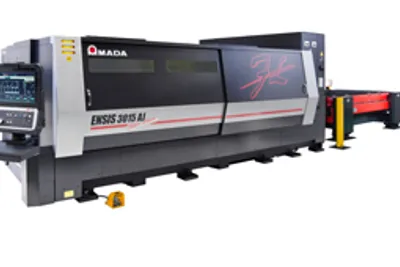
The FBLC-3015 AJ is available in 4 kW and 6 kW fiber laser configurations. The 4 kW version is well-suited for fabricators whose primary work is thin to medium sheet (up to 12 mm mild steel) with good economics. The 6 kW version extends thick-plate capability and increases cutting speed on medium thicknesses. Higher power (9 kW+) configurations are available through Amada's ENSIS technology on the ENSIS 3015 AJ model.
04
Both machines use fiber laser technology and share the AJ automation package, but they differ in beam architecture. The ENSIS uses Amada's proprietary resonator-free Variable Beam Control technology that morphs the beam for optimal performance across all thicknesses — particularly thick plate. The FBLC uses a conventional high-brightness fiber laser source and is optimized for thin-to-medium sheet at high throughput. The ENSIS commands a 20-30% price premium. For shops whose primary work is thin sheet with high automation requirements, the FBLC offers better value.
05
A laser cutting machine running 16+ unattended hours (overnight plus weekends) can effectively triple or quadruple its productive output versus a single-shift manually-tended operation using the same machine. For a $600K-$900K FBLC-3015 AJ investment, the incremental revenue from unattended production typically generates payback periods of 3-5 years. The key enabling factor is the AJ system's ability to process multi-job schedules without operator touchpoints — manual machines cannot achieve this regardless of automation tower investment.
Community Discussions
Troubleshooting and problem-solving — Need Help! Z-axis Sensor problem - AMADA FO 3015 - CNCzone
Troubleshooting and problem-solving — Problem amada 3015 z axis - CNCzone
Troubleshooting and problem-solving — Byprint 3015 table problems - CNCzone
Community discussion — AMADA 3015 - CNCzone
Links to community discussions. Summaries are editorial — visit the original thread for full context.
Related Machines
Amada ENSIS-3015AJ
Amada LCG-3015AJ
Bystronic ByStar Fiber 3015
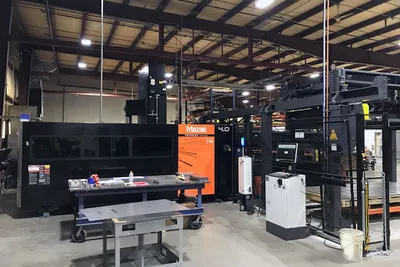
Mazak OPTIPLEX 3015 DDL
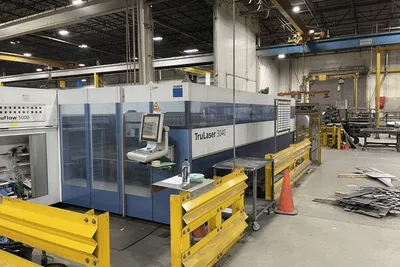
Trumpf TruLaser 3040