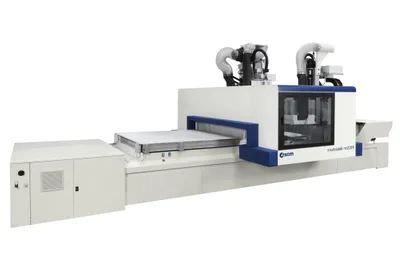
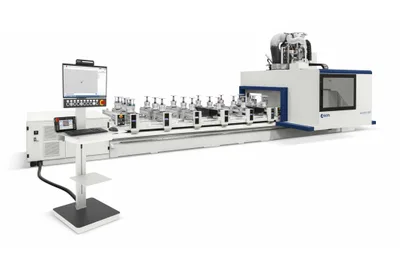
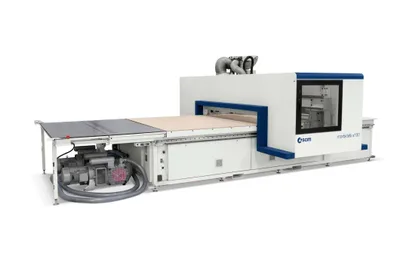
SCM Record 160
This model was not found in SCM's current lineup when we checked on 2026-10-03 . It may be a superseded or older model; the specifications below are as we last recorded them.
Key Specifications
Table Size
Spindle Power
x axis travel
y axis travel
z axis stroke
spindle speed
How much does the SCM Record 160 cost?
Estimated price range
Our best estimate for a cnc router in this class — not a quote from SCM. Configuration moves it a long way.
Overview
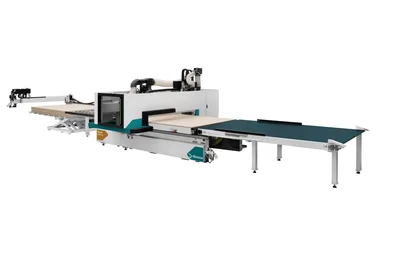
The SCM Record 160 is listed as a long-bed CNC router with a 5,600 x 1,600 mm (220 x 63 in) table, 5,700 mm (224 in) of X travel, 1,700 mm (66.9 in) of Y and a 200 mm (7.9 in) Z stroke. SCM's current lineup does not include it, so the page describes an older model from the listed figures.
Table length is the defining figure. At 5,600 mm (220 in) it is more than three times its own 1,600 mm (63 in) depth, which suits long, narrow parts or two shorter setups placed end to end. Travel exceeds the table by a small margin in both X and Y. The 200 mm (7.9 in) Z stroke keeps the machine to panels and low sections.
The spindle is 9.5 kW (12.7 HP) as standard, with 13 kW listed as an option, and runs up to 24,000 RPM. The tool changer follows the same pattern: 12 tools standard, up to 24 optional. On a second-hand machine both need checking, since the option figures describe what could be ordered and not what was. A multi-drill unit with vertical and horizontal spindles is listed for hole patterns, and work is held on zone-selectable vacuum pods.
Control is SCM Maestro, described as Windows-based and proprietary, with Maestro active nesting software listed as included. The machine weighs approximately 6,500 kg (14,330 lb). The electrical row gives 400 VAC three-phase at 50 Hz, so a site on a different voltage or frequency has to plan for that.
Full Specifications
| Parameter | Value |
|---|---|
| Table Size | 5,600 x 1,600 mm (220 x 63 in) |
| X Axis Travel | 5,700 mm (224 in) |
| Y Axis Travel | 1,700 mm (66.9 in) |
| Z Axis Stroke | 200 mm (7.9 in) |
| Spindle Motor Power | 9.5 kW (12.7 HP) standard; 13 kW optional |
| Spindle Speed | Up to 24,000 RPM |
| ATC Capacity | 12 tools standard; up to 24 optional |
| Drill Bank | SCM multi-drill unit (vertical and horizontal) |
| Vacuum Clamping | Yes (zone-selectable vacuum pods for NBP) |
| X Axis Drive | Linear motor (SCM Accord series feature) |
| CNC Control | SCM Maestro (Windows-based, proprietary CNC) |
| Software | Maestro active nesting (included) |
| Machine Weight | 6,500 kg (14,330 lb) approximate |
| Electrical | 400 VAC 3-phase 50 Hz |
Specifications compiled from manufacturer literature and industry references. Not independently verified against a published spec sheet — confirm with the manufacturer or an authorised dealer before making a purchasing decision.
Strengths & Limitations
Strengths
- 5,600 x 1,600 mm (220 x 63 in) table with 5,700 mm (224 in) of X travel
- Multi-drill unit with vertical and horizontal spindles
- 12-tool automatic changer as standard, with up to 24 listed as an option
- Zone-selectable vacuum pods for work holding
- Maestro active nesting software listed as included
Limitations
- Standard spindle is 9.5 kW (12.7 HP); 13 kW is an option, and the Record 270 CNC is listed at 18 kW
- Z stroke of 200 mm (7.9 in) restricts part height
- Electrical supply is listed as 400 VAC three-phase 50 Hz only
- Weighs approximately 6,500 kg (14,330 lb), which matters for rigging and floor loading
Best For
Frequently Asked Questions
01
The table is listed as 5,600 x 1,600 mm (220 x 63 in). X travel is 5,700 mm (224 in) and Y travel 1,700 mm (66.9 in), so the spindle reaches slightly beyond the table edge in both directions. Z stroke is 200 mm (7.9 in).
02
The listed figures give a 9.5 kW (12.7 HP) spindle and a 12-tool changer as standard. A 13 kW spindle and a changer of up to 24 tools are listed as options. Spindle speed is up to 24,000 RPM.
03
The electrical row lists 400 VAC three-phase at 50 Hz. No current or installed power figure is given, so the connected load has to be taken from the machine's rating plate before the supply is planned.
04
The software row lists Maestro active nesting as included, and the control is SCM Maestro, described as Windows-based and proprietary. On a machine that has changed hands, confirm that the software and its licence are still installed.