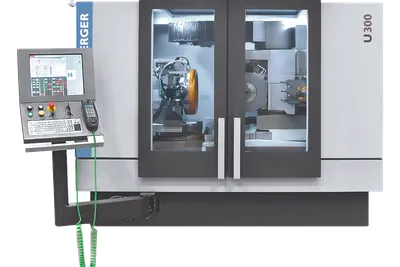
Schneeberger NORMA
This model was not found in Schneeberger's current lineup when we checked on 2026-10-03 . It may be a superseded or older model; the specifications below are as we last recorded them.
Key Specifications
Spindle Power
Accuracy
grinding axes
max insert size
grinding wheel diameter
grinding spindle speed
How much does the Schneeberger NORMA cost?
Estimated price range
Our best estimate for a cnc grinding machine in this class — not a quote from Schneeberger. Configuration moves it a long way.
Overview
The Schneeberger NORMA is presented in the listed figures as an insert grinding machine with 5-axis simultaneous motion: X, Y and Z linear axes plus A and C rotary axes. The insert size is given as IC 50 mm (2.0 in) typical, and configuration-dependent. Schneeberger's current lineup does not carry a model called simply NORMA, which is worth knowing before comparing a machine offered under the name with these figures.
The wheel is large against the part: the listed grinding wheel diameter is up to 250 mm (9.8 in), five times the typical insert size. The grinding spindle runs up to 10,000 RPM with power up to 15 kW (20 HP). Both figures are upper limits, so the rating of a specific machine may be lower. Workholding is listed as precision collets, hydraulic mandrels and custom fixtures. For inserts that last item carries most of the weight: each insert shape needs its own clamping, and the fixtures that come with a machine decide what it can grind on the first day.
Resolution is 0.1 µm on the linear axes and 0.001° on the rotary axes, with positioning accuracy of ±2 µm on the linear axes. No accuracy is listed for the rotary axes. The control is a Schneeberger CNC with dedicated insert grinding software; the software row names insert geometry libraries, 5-axis toolpath generation and simulation. The base is cast iron or polymer composite depending on configuration, and coolant is high-pressure flood with fine filtration.
Full Specifications
| Parameter | Value |
|---|---|
| Grinding Axes | 5-axis simultaneous (X, Y, Z linear + A, C rotary) |
| Max Insert Size | IC 50 mm (2.0 in) typical; configuration-dependent |
| Grinding Wheel Diameter | Up to 250 mm (9.8 in) |
| Grinding Spindle Speed | Up to 10,000 RPM |
| Spindle Motor Power | Up to 15 kW (20 HP) |
| Linear Axis Resolution | 0.1 µm |
| Rotary Axis Resolution | 0.001° |
| Positioning Accuracy | ±2 µm linear axes |
| Machine Base | Cast iron / polymer composite (configuration-dependent) |
| CNC Control | Schneeberger CNC with dedicated insert grinding software |
| Workholding | Precision collets, hydraulic mandrels, custom fixtures |
| Coolant | High-pressure flood coolant with fine filtration |
| Software | Insert geometry libraries, 5-axis toolpath generation, simulation |
Specifications compiled from manufacturer literature and industry references. Not independently verified against a published spec sheet — confirm with the manufacturer or an authorised dealer before making a purchasing decision.
Strengths & Limitations
Strengths
- 5-axis simultaneous grinding with X, Y, Z linear and A, C rotary axes
- Linear axis resolution of 0.1 µm and listed positioning accuracy of ±2 µm on the linear axes
- Grinding spindle power up to 15 kW (20 HP), with speeds up to 10,000 RPM
- Dedicated insert grinding software with insert geometry libraries, 5-axis toolpath generation and simulation
Limitations
- Insert size is given as IC 50 mm (2.0 in) typical and depends on configuration
- Rotary axis resolution is 0.001°, and the listed figures give no positioning accuracy for the rotary axes
- Base material, cast iron or polymer composite, depends on configuration
- Each insert shape needs suitable collets, mandrels or custom fixtures, which the listed figures do not itemise
Best For
Frequently Asked Questions
01
The listed figures give a maximum insert size of IC 50 mm (2.0 in) as typical, and note that it depends on configuration. The fixture supplied with a particular machine therefore sets the real limit, so ask which insert shapes and sizes it was tooled for.
02
Grinding spindle speed is listed at up to 10,000 RPM and spindle power at up to 15 kW (20 HP). The grinding wheel diameter is up to 250 mm (9.8 in). All three are stated as maximums, not as the rating of every machine.
03
Linear axis resolution is 0.1 µm and positioning accuracy is ±2 µm on the linear axes. Rotary axis resolution is 0.001°. No positioning accuracy is listed for the A and C axes and no repeatability figure is given.
04
A Schneeberger CNC with dedicated insert grinding software. The software is listed with insert geometry libraries, 5-axis toolpath generation and simulation. On an existing machine, check which library content and software version are installed.
Videos

KRAFFTER Machine Tools
Automatics & Machinery

Concentric Saw & Tool

MARCELSMASCHINEN
More from Schneeberger
Other CNC Grinding Machines
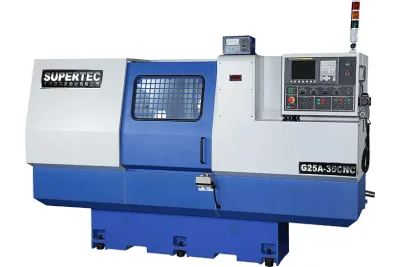
Supertec G25A-35CNC
Walter Helitronic Micro
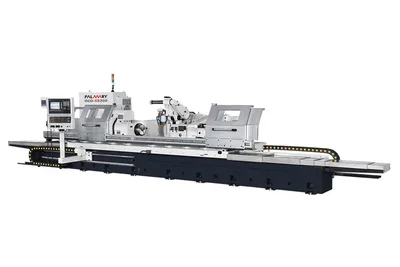
Palmary OCD-45220