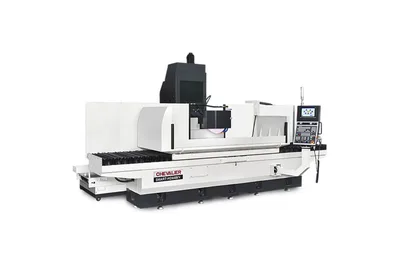
Rollomatic NaNO 6X
Key Specifications
Accuracy
number of cnc axes
maximum tool diameter
linear scale resolution
vision system
minimum tool diameter
How much does the Rollomatic NaNO 6X cost?
Estimated price range
Our best estimate for a cnc grinding machine in this class — not a quote from Rollomatic. Configuration moves it a long way.
Overview
The Rollomatic NaNO 6X is a 6-axis CNC grinder for micro tools, listed for tool diameters from 0.03 mm to 12 mm and a maximum grinding length of 80 mm. Everything else on its table follows from the small end of that range.
A 0.03 mm tool cannot be ground with ordinary surface speeds or ordinary stiffness, and the listed figures answer both. The grinding spindle is an air bearing unit of up to 60,000 RPM, so a small wheel still reaches a useful cutting speed, and its 2.2 kW rating reflects how little material such tools give up. The axes carry linear scales with 0.1 µm resolution and a listed positioning accuracy of ±0.0005 mm.
Stability is handled in three listed ways: a Granitan base with active vibration isolation, real-time thermal compensation on all axes, and an integrated CCD vision system with up to 200x magnification for checking the tool in the machine. The control is a Fanuc 31i-B5.
Compared with the NaNO6, which is listed with a 1.5 kW spindle at 2000 -12000 rpm, the NaNO 6X figures describe a far faster spindle with more power. The listed figures give no axis travels or machine weight for this model.
Full Specifications
| Parameter | Value |
|---|---|
| Number of CNC Axes | 6 |
| Maximum Tool Diameter | 12 mm |
| Linear Scale Resolution | 0.1 µm |
| Vision System | Integrated CCD, up to 200x magnification |
| Minimum Tool Diameter | 0.03 mm |
| Maximum Grinding Length | 80 mm |
| Grinding Spindle Speed | Up to 60,000 RPM (air bearing) |
| Grinding Spindle Power | 2.2 kW |
| Positioning Accuracy | ±0.0005 mm |
| Thermal Compensation | Real-time, all axes |
| Control System | Fanuc 31i-B5 |
| Machine Base | Granitan with active vibration isolation |
Specifications compiled from manufacturer literature and industry references. Not independently verified against a published spec sheet — confirm with the manufacturer or an authorised dealer before making a purchasing decision.
Strengths & Limitations
Strengths
- Grinds tool diameters from 0.03 mm to 12 mm
- Air bearing grinding spindle of up to 60,000 RPM
- Linear scale resolution of 0.1 µm and positioning accuracy of ±0.0005 mm
- Integrated CCD vision system with up to 200x magnification
- Real-time thermal compensation on all axes
- Granitan base with active vibration isolation
Limitations
- Maximum tool diameter is 12 mm, so larger tools need a different machine
- Maximum grinding length is 80 mm
- Spindle power is 2.2 kW, sized for micro tools and not for heavy stock removal
- No wheel changer, loader, travels or weight appear in the listed figures; confirm them before planning production
Best For
Frequently Asked Questions
01
The listed range is 0.03 mm minimum to 12 mm maximum, with a maximum grinding length of 80 mm. That places it at the micro-tool end of tool grinding; anything above 12 mm is outside its range.
02
An air bearing grinding spindle listed at up to 60,000 RPM and 2.2 kW. For comparison, the NaNO6 is listed with a 1.5 kW spindle at 2000 -12000 rpm.
03
The listed positioning accuracy is ±0.0005 mm, measured against linear scales with 0.1 µm resolution. Thermal compensation is listed as real-time on all axes, and the Granitan base has active vibration isolation. No tool runout or profile tolerance is listed.
04
It is listed with an integrated CCD vision system of up to 200x magnification. The listed figures do not say whether measurements feed back into the grinding program automatically, so ask how the vision system is used in the cycle.
More from Rollomatic
Rollomatic NaNO6
Rollomatic GrindSmart 628XW
Rollomatic LaserSmart 510
Rollomatic GrindSmart 629XW
Rollomatic ShapeSmart NP5
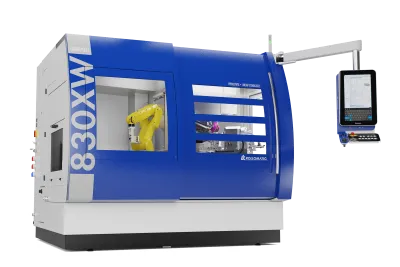
Rollomatic GrindSmart 830XW
Other CNC Grinding Machines
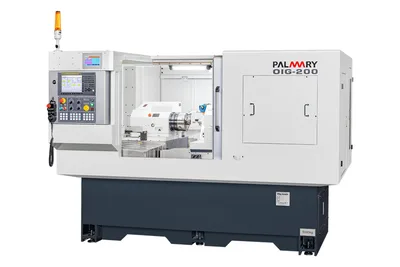
Palmary OIG-200L50
United Grinding Blohm Profimat MT
ANCA RX7
Drake GS:TE400-750
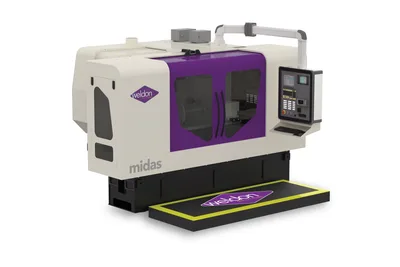
Weldon Midas