Nagel Z 20
Key Specifications
bore diameter range
max bore length
max workpiece weight
honing spindle speed
stroking speed
stroke length
Overview
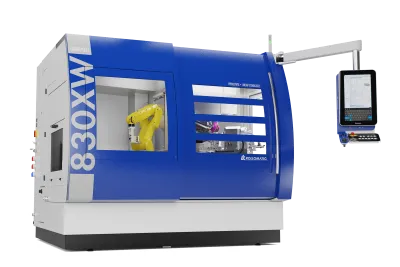
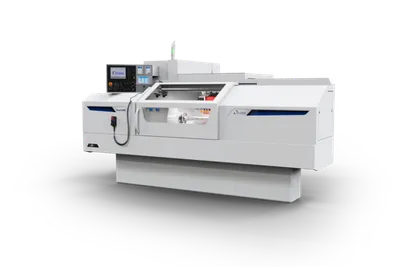
The Nagel Z 20 is a CNC honing machine from Nagel Maschinen- und Werkzeugfabrik GmbH (Nürtingen, Germany), one of Germany's leading honing machine manufacturers with over 80 years of experience in bore finishing technology. The Z 20 is a vertical single-spindle honing machine designed for precision bore finishing of medium-size workpieces — engine cylinder bores, hydraulic cylinders, gearbox bores, and precision housings — requiring the superior bore geometry (roundness, cylindricity) and crosshatch surface texture that honing produces and grinding cannot replicate. The Z 20 accommodates bore diameters from 20 mm to 200 mm, covering the critical bore sizes found in passenger car and commercial vehicle engine blocks.
Honing is fundamentally different from grinding: rather than a high-speed rotating abrasive wheel removing material, honing uses abrasive sticks (stones) held in a multi-stone honing tool (mandrel) that expands radially against the bore wall while the tool simultaneously rotates and strokes axially. This combined rotation and stroke motion produces the characteristic crosshatch surface pattern that retains oil for lubrication — essential in engine cylinders. Nagel's Z 20 uses servo-controlled honing tool expansion (controlled expansion) and CNC-managed stroke and rotation parameters to achieve bore tolerances of roundness < 0.003 mm and cylindricity < 0.005 mm across the bore length, well beyond what cylindrical grinding achieves in bores.
The Nagel Z 20's CNC control (Siemens 840D sl or Nagel proprietary NCU) manages the full honing cycle: rough honing (stock removal), intermediate plateau honing, and finish honing (plateau surface generation). In-process bore measurement using an air gauging or contact gauging system integrated into the honing head automatically controls the expansion of the honing stones to stop when the target bore diameter is reached — this closed-loop gauging is the standard approach for automotive engine bore honing where bore diameter tolerance is ±0.003 mm or tighter. The Z 20 also supports structured honing (creating specific crosshatch patterns for piston ring seating) and plateau honing strategies for different tribological requirements.
At $250,000–$500,000, the Nagel Z 20 competes with Gehring (Langenhagen, Germany), Sunnen (St. Louis, USA), and Kadia (Nürtingen, Germany) in the vertical single-spindle honing machine market. Nagel's long history of engine bore honing for Mercedes-Benz, BMW, and other German OEMs gives the Z 20 genuine application credibility in high-precision engine bore finishing for automotive and commercial vehicle powertrain manufacturing.
Full Specifications
| Parameter | Value |
|---|---|
| Bore Diameter Range | 20 - 200 mm (0.79 - 7.87 in) |
| Max Bore Length | 400 mm (15.7 in) |
| Max Workpiece Weight | 200 kg (441 lb) |
| Honing Spindle Speed | 10 - 400 RPM (stepless) |
| Stroking Speed | 2 - 25 m/min |
| Stroke Length | Up to 400 mm (programmable) |
| Controlled Expansion | Servo-controlled (CNC), 0.001 mm resolution |
| In Process Gauging | Air gauge or contact gauge (standard) |
| Bore Roundness | < 0.003 mm |
| Bore Cylindricity | < 0.005 mm over bore length |
| Surface Finish Achievable | Ra 0.1 - 0.8 µm (Rz 0.5 - 3 µm plateau honing) |
| Crosshatch Angle | 30° - 60° (programmable) |
| CNC Control | Siemens 840D sl or Nagel NCU |
| Machine Weight | ~4,500 kg (9,921 lb) |
| Amperage | 75 A |
Specifications sourced from machinio.com — verified 2026-03-28
Strengths & Limitations
Strengths
- Honing achieves bore roundness < 0.003 mm and cylindricity < 0.005 mm — superior to what internal grinding produces for engine cylinder and hydraulic bore applications
- CNC servo-controlled honing stone expansion with in-process air gauging enables automatic bore diameter control without operator measurement stops between cycles
- Programmable crosshatch angle (30°–60°) and plateau honing strategies allow the Z 20 to produce the specific bore surface texture specified by engine OEMs for piston ring break-in and oil retention
- Nagel's 80+ year automotive honing application heritage means the Z 20's design reflects real-world engine bore requirements from German OEM production lines
- Single-spindle vertical configuration provides easy access to workpiece and honing tool for setup, tool change, and inspection compared to horizontal multi-spindle honing machines
Limitations
- Single-spindle configuration limits production throughput — high-volume engine block honing production typically requires multi-spindle horizontal honing machines or transfer line integration
- Honing tooling (stones, mandrels, adapters) is application-specific and requires selection and testing for each bore size, material, and tolerance requirement
- Honing machine acquisition cost ($250,000–$500,000) and application expertise requirement makes the Z 20 a significant investment appropriate for dedicated bore finishing shops or OEM production lines
Best For
Frequently Asked Questions
01
Both honing and internal grinding improve bore diameter and finish, but by different mechanisms and to different quality levels. Internal grinding uses a high-speed rotating abrasive wheel to remove stock from the bore — it achieves good diameter accuracy and surface finish (Ra 0.1–0.4 µm) but is limited in bore roundness improvement because the wheel only contacts the bore at one point at a time. Honing uses multiple abrasive stones in simultaneous radial contact around the bore circumference — this multi-contact geometry averages out high spots and low spots, correcting roundness and cylindricity errors in the bore that grinding cannot correct. Honing also produces the crosshatch surface texture (from the combined rotation + stroke motion) that is essential for engine cylinder oil retention. For engine bores and hydraulic cylinders, honing is the standard finishing process; grinding is used for production stock removal before honing.
02
Plateau honing is a two-stage honing strategy that first hones the bore with a coarser abrasive to create the crosshatch pattern, then uses a fine abrasive (plateau stone) to remove the peaks of the crosshatch profile while leaving the valleys intact. This produces a 'plateau' surface — flat peaks for piston ring seating contact, with valleys for oil retention. The Rpk (reduced peak height), Rk (core roughness), and Rvk (reduced valley depth) parameters of the Abbott-Firestone curve describe the plateau surface mathematically. Engine OEMs specify plateau honing parameters to optimize piston ring break-in time and reduce oil consumption. The Nagel Z 20 programs plateau honing as a multi-stage automatic cycle: rough hone → intermediate → plateau finish, with in-process gauging maintaining bore diameter control throughout.
03
Air gauging (pneumatic gauging) is the standard bore measurement method in production honing. Compressed air is delivered through small orifices in the honing head that face the bore wall — as the honing head approaches target diameter and the clearance between the orifice and bore wall narrows, back pressure in the air circuit increases. This back pressure is calibrated to bore diameter, enabling real-time diameter measurement during the honing cycle without contact sensors touching the bore. The Z 20's CNC receives the air gauge signal and uses it to control honing stone expansion — when the target diameter back-pressure is reached, the CNC stops stone expansion and executes the programmed number of finish strokes, then retracts. Air gauging accuracy in production honing is typically ±0.002 mm or better.
04
Honing stones for the Z 20 are selected based on bore material, stock removal requirement, and target surface finish. For cast iron engine bores (cylinder blocks), silicon carbide (SiC) abrasive stones are standard for roughing, with aluminum oxide or CBN for finishing. For hardened steel bores (hydraulic cylinders, precision housings), CBN honing stones provide long life and consistent stock removal. For aluminum bores (modern engine blocks), silicon carbide with specific bond formulations suited to non-ferrous cutting are used. Nagel supplies tooling through its tooling division — mandrels, stones, and adapters are bore-size-specific and must be specified for each application. Stone grit progression (rough to finish) is part of the application engineering — Nagel applications engineers recommend the stone progression for each new bore honing application.
05
The crosshatch angle — the angle of the abrasive scratch lines relative to the bore axis — is determined by the ratio of stroking speed to rotational speed during honing. A 45° crosshatch (typical for gasoline engine passenger car cylinders) balances oil film retention and ring-to-bore seal. Diesel engines and heavy-duty applications often use shallower crosshatch angles (30°) to retain more oil for higher combustion pressures. High-performance and motorsport applications sometimes use steeper crosshatch (60°) to minimize friction. The Nagel Z 20 programs crosshatch angle by adjusting the stroke-to-rotation speed ratio in the CNC parameters — achieving a target crosshatch angle is part of the production process setup validated by measuring the actual crosshatch angle on a finished bore using a profilometer.
Videos

20 Nails

20 Nails

Philosophy Overdose

20 Nails

Match Point Faith
Community Discussions
Community discussion — Fadal FIXTURE SETTING CYCLE Confusion With Z Offset
Community discussion — Does anyone have a list of system variables ...
Community discussion — Initial-z mazatrol - Practical Machinist
Community discussion — EIA programming examples - Practical Machinist
Troubleshooting and problem-solving — Need Help! Strange Rigid tapping Problem . Please help - CNCzone
Community discussion — Setting Z offsets on Delta 20 - CNCzone
Community discussion — How to manually set work offset for Z - CNCzone
Options and configuration advice — How do you zero "Z" axis height? - cnczone.com
Links to community discussions. Summaries are editorial — visit the original thread for full context.