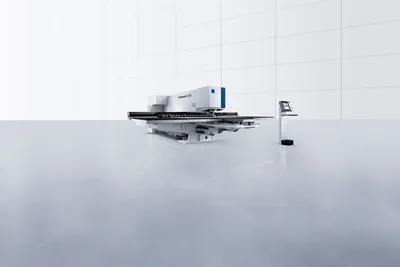
Murata Wiedemann Motorum 2564
Key Specifications
punching force
punch drive
turret stations
max tool diameter
sheet capacity
sheet thickness mild steel
Overview
The Murata Wiedemann Motorum 2564 is a CNC servo-electric turret punch press from Murata Machinery Ltd. (Muratec), headquartered in Kyoto, Japan. Murata Wiedemann is Muratec's North American CNC punch press brand — a heritage name from the Wiedemann machine tool brand that Muratec absorbed, representing decades of American sheet metal fabrication manufacturing expertise now combined with Japanese servo-electric technology.
The Motorum 2564 provides a 25-ton (222 kN) punching force with a servo-electric drive — no flywheel, no clutch, no hydraulics. The servo-electric design enables programmable punch velocity and force, allowing gentle approach speeds for sensitive coated materials and maximum speed for production punching. The 64-station turret includes auto-index (AI) stations for rotation of slotting and special-shape tools to any angle.
The machine's 5 x 10 ft (1,524 x 3,048 mm) sheet capacity handles full commercial sheet sizes. Murata Wiedemann's no-mark repositioning system holds the sheet without grip marks during large-sheet repositioning — critical for pre-painted and powder-coated materials. The Motorum series uses Fanuc 31i-series CNC for familiar programming in shops already running Fanuc-controlled machines.
The Motorum 2564 competes with the Amada EM 2510NT, the Trumpf TruPunch 3000, and the Prima Power Punch Genius in the 25-ton servo-electric punch press class. Murata Wiedemann's differentiators are Fanuc CNC familiarity, the 5 x 10 ft large sheet capacity, and competitive pricing that positions Muratec as a value alternative to Amada and TRUMPF without sacrificing servo-electric technology. Pricing typically runs $180,000–$350,000.
Full Specifications
| Parameter | Value |
|---|---|
| Punching Force | 25 tons (222 kN) |
| Punch Drive | Servo-electric (no flywheel, no clutch) |
| Turret Stations | 64 stations with auto-index |
| Max Tool Diameter | 4.5 in (114 mm) in large station |
| Sheet Capacity | 1,524 x 3,048 mm (60 x 120 in / 5 x 10 ft) |
| Sheet Thickness Mild Steel | 0.5–6.35 mm (0.02–0.25 in) |
| Sheet Thickness Stainless | 0.5–4.75 mm (0.02–0.187 in) |
| Sheet Thickness Aluminum | 0.5–6.35 mm (0.02–0.25 in) |
| Positioning Speed X | 102 m/min (4,000 ipm) |
| Max Punch Rate | 700 hits/min (short step) |
| Repositioning | No-mark repositioning standard |
| Tapping | Yes (up to M10 synchronized tapping) |
| CNC Control | Fanuc 31i-series CNC |
| Machine Weight | 15,000 kg (33,069 lb) |
| Electrical | 460 VAC 3-phase 60 Hz |
Specifications compiled from manufacturer literature and industry references. Not independently verified against a published spec sheet — confirm with the manufacturer or an authorised dealer before making a purchasing decision.
Strengths & Limitations
Strengths
- Fanuc 31i CNC provides familiar programming interface for shops already operating Fanuc-controlled machining centers, lathes, and other punch presses
- 5 x 10 ft (1,524 x 3,048 mm) sheet capacity handles full commercial sheet sizes without re-fixturing — larger than many competitors' standard 50 x 100 in capacity
- 64-station turret provides the largest tooling capacity in its class — fewer setup tool changeovers on complex parts requiring many punch shapes
- Servo-electric drive provides programmable punch velocity and force — gentle approach for coated materials, maximum speed for production punching
- Competitive pricing vs Amada and TRUMPF for comparable servo-electric punch specification — meaningful cost advantage for price-sensitive shops
Limitations
- Murata Wiedemann's brand recognition is lower than Amada or TRUMPF in North America — shops prefer familiar brands for easier operator hiring and training
- Murata Wiedemann's tooling ecosystem is smaller than Amada's — fewer specialized punch shapes available as standard catalog items
- 700 hits/min maximum punch rate is lower than some competitors' 1,400–1,800 hits/min specifications — throughput disadvantage on high-volume identical-hole production
Best For
Frequently Asked Questions
01
A mechanical flywheel punch stores energy in a rotating flywheel and releases it through a clutch-and-brake system to drive the punch ram. Once engaged, the flywheel delivers a fixed force profile — punch velocity and force cannot be adjusted per stroke. A servo-electric drive uses a servo motor to drive the ram directly (through a ball screw or belt), with fully programmable velocity profile per stroke. Advantages of servo-electric: programmable punch velocity enables gentle approach for coated/sensitive materials; no clutch wear or adjustment; energy recovery braking; quieter operation; and precise control of ram position for forming operations. Disadvantages: maximum punch force is limited by servo motor torque vs the flywheel's stored energy reserve.
02
Auto-index (AI) stations are turret positions equipped with a servo-driven rotation mechanism that rotates the tool holder to any angle under CNC control. Standard turret stations hold tools at a fixed angle set at load time. AI stations allow punching slots, oblong holes, rectangles, and special shapes at any orientation without a separate tool for each angle. On a 64-station turret with 16 AI stations, complex parts with angled slots in multiple directions use one tool set loaded in AI stations rather than multiple fixed-angle tools consuming multiple stations.
03
Yes, with proper setup. The no-mark repositioning system holds the sheet using clamps with non-marking surface contacts — the sheet can be repositioned across the full 5 x 10 ft work area without the standard workholders marking the finished surface. For punching operations on coated surfaces, the servo-electric drive's programmable punch velocity enables slow approach speed, reducing the shock force at contact that can crack or chip coatings at the punch entry point. Additional measures: polished punch and die surfaces reduce galling; clearance adjustments for coating thickness; and anti-mark tables protect the sheet underside. Complete surface protection on heavily coated materials requires consultation with Murata Wiedemann applications engineering.
04
The large-station turret position accepts punches up to 4.5 in (114 mm) diameter. This accommodates large round knockouts, large square cutouts, and special-shape punches up to this diameter. For features larger than 114 mm, nibbling (multiple overlapping punch strokes) can produce any profile size in any shape — nibbling is slower but eliminates the need for special large punches. The machine can also be programmed to punch a pilot hole and then laser-cut (if a combination machine) or transfer to a laser for large profile features exceeding the turret's punch capacity.
05
Both are 25-ton servo-electric turret punch presses. Key differences: Amada EM 2510NT uses Amada's proprietary AMNC controller; Motorum 2564 uses Fanuc 31i — Fanuc is preferred in Fanuc-standard shops. Amada offers 48 stations vs Muratec's 64 stations — more tooling capacity on the Motorum. Amada's maximum sheet capacity is 50 x 100 in (1,270 x 2,540 mm); Motorum 2564 handles 60 x 120 in (1,524 x 3,048 mm) — a meaningful advantage for shops processing full commercial sheets. Amada's tooling ecosystem and application support are larger and more established. Motorum 2564 is typically priced 10–15% lower. For Fanuc-standard shops processing large sheets, the Motorum is the stronger choice; for tooling variety and application support, Amada has the broader ecosystem.
Community Discussions
Community discussion — Murata Motorum-2034 Fanuc 16-B -NEED HELP - Practical Machinist
Pricing and buying discussion — Wiedemann manual turret punch - Practical Machinist
Community discussion — OT:Looking for Wiedemann turret press owners-need info
Pricing and buying discussion — Sheetmetal/Metalfab equipment advice ...
Troubleshooting and problem-solving — Problem I dont know to connect Murata Wiedemann with computer ...
Troubleshooting and problem-solving — Wiedemann CNC Punch Error - cnczone.com
Troubleshooting and problem-solving — WIEDEMANN - CNCzone
Community discussion — Fanuc - Page 90 - cnczone.com
Links to community discussions. Summaries are editorial — visit the original thread for full context.
Related Machines
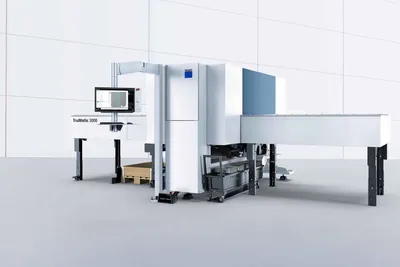
Trumpf TruMatic 3000
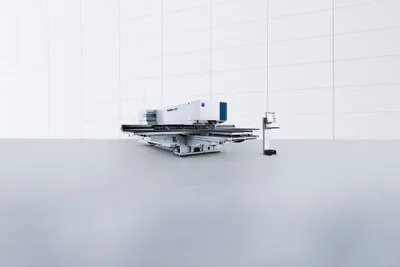
Trumpf TruMatic 7000
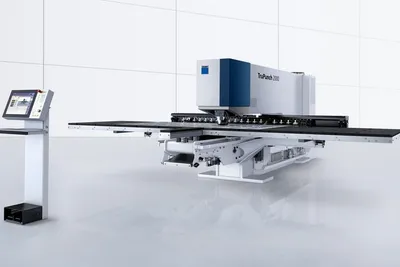
Trumpf TruPunch 2000
Trumpf TruPunch 3000