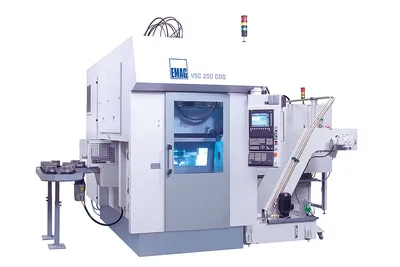
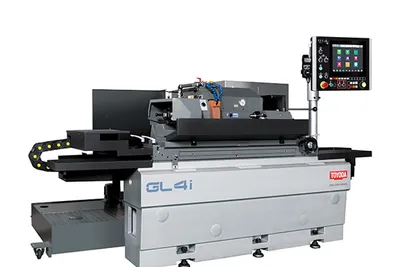
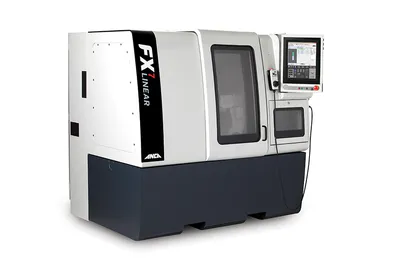
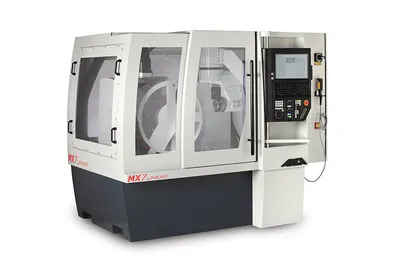
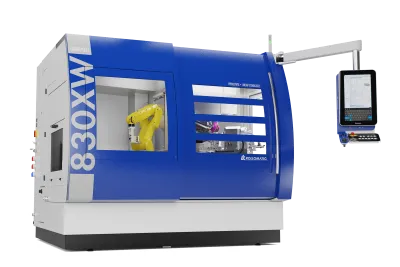
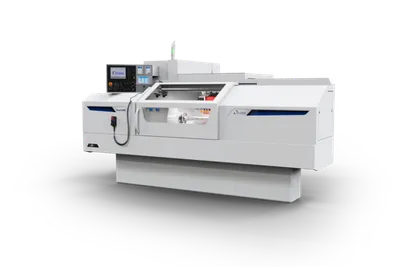
Loeser SZ 600
Key Specifications
max workpiece length
journal diameter range
oscillation amplitude
oscillation frequency
workpiece rotation speed
stone pressure
Overview
The Loeser SZ 600 is a CNC superfinishing machine from Germany's Loeser GmbH, based in Remscheid in the Bergisches Land region — a traditional German tool and machine manufacturing area. Loeser specializes in superfinishing (short-stroke honing) machines for precision shaft journals, bearing surfaces, camshafts, crankshafts, and precision cylindrical surfaces requiring Ra < 0.05 µm surface finish and improved bearing surface geometry.
Superfinishing (also called microfinishing or short-stroke honing) differs from cylindrical grinding in that it removes only a very small amount of material (typically 1–10 µm) from an already-ground surface using a short-stroke oscillating abrasive stone or film. The short oscillating stroke combined with workpiece rotation produces a cross-hatch surface texture that improves oil film retention in bearing applications, reduces friction, and extends component life. The process corrects residual grinding chatter marks, waviness, and micro-geometry errors left after cylindrical grinding.
The SZ 600 handles workpieces up to 600 mm (23.6 in) in length with journal diameters from 5 mm to 200 mm, and accommodates automotive camshafts, crankshafts, roller shaft journals, and bearing inner races as typical workpieces. The machine uses CNC-controlled oscillation amplitude, frequency, and pressure for consistent results across production runs.
The Loeser SZ 600 competes with the Thielenhaus Microstar and the Supfina GT-3 in the superfinishing machine market. Loeser's position is specialized German superfinishing engineering for automotive powertrain component producers. Pricing typically runs $150,000–$350,000 depending on configuration.
Full Specifications
| Parameter | Value |
|---|---|
| Max Workpiece Length | 600 mm (23.6 in) |
| Journal Diameter Range | 5 - 200 mm (0.2 - 7.87 in) |
| Oscillation Amplitude | 0.5 - 10 mm (CNC adjustable) |
| Oscillation Frequency | 0 - 30 Hz (CNC adjustable) |
| Workpiece Rotation Speed | 0 - 300 RPM |
| Stone Pressure | CNC-controlled (programmable per journal) |
| Surface Finish Achievable | Ra < 0.05 µm (50 nm) |
| Roundness Improvement | Corrects up to 2 µm of grinding roundness error |
| Material Removal | 1 - 10 µm per pass (typical) |
| Abrasive Type | Aluminum oxide or CBN superfinishing stones; film alternatives |
| Machine Weight | 4,500 kg (9,921 lb) |
| CNC Control | Siemens 828D with Loeser superfinishing software |
| Coolant | Superfinishing oil (honing oil flush) |
| Electrical | 400 VAC 3-phase 50 Hz, 32 A |
Specifications compiled from manufacturer literature and industry references. Not independently verified against a published spec sheet — confirm with the manufacturer or an authorised dealer before making a purchasing decision.
Strengths & Limitations
Strengths
- Ra < 0.05 µm surface finish on journal bearings reduces friction and extends bearing life in automotive powertrains — measurable fuel economy and durability improvement
- CNC-programmable oscillation amplitude, frequency, and stone pressure enables consistent superfinishing results across production runs without operator-to-operator variation
- 600 mm workpiece length covers automotive camshafts and crankshafts for 4-cylinder engines — the core automotive powertrain superfinishing application
- German Loeser engineering provides deep automotive powertrain superfinishing application knowledge, including cam lobe and crankpin superfinishing sequences
- Process corrects residual grinding geometry errors — roundness improvement by up to 2 µm brings out-of-tolerance ground parts back to specification in some cases
Limitations
- Superfinishing is a secondary operation after cylindrical grinding — requires a grinding machine investment before the SZ 600 adds value, meaning total system cost is $600K+ for grind + superfinish
- Loeser has limited North American dealer presence — service response may require scheduling with factory-trained technicians with longer lead times
- Superfinishing stones and films are consumables that add ongoing tooling costs and must be managed for stone wear and stone holder maintenance
Best For
Frequently Asked Questions
01
Superfinishing (microfinishing) is a low-speed, low-pressure abrasive process that removes only 1–10 µm of material from an already-ground surface. Unlike grinding — which uses high speed and deep cuts to remove significant material — superfinishing uses a short-stroke oscillating motion (1–10 mm, 10–30 Hz) combined with low workpiece rotation and very light stone pressure. This produces the characteristic cross-hatch texture (similar to cylinder bore honing but on external diameters) that traps lubricating oil on bearing surfaces. Superfinishing corrects micro-waviness and chatter marks from grinding and dramatically improves the load-bearing ratio of the surface.
02
At Ra < 0.05 µm (50 nm), a bearing surface is smooth enough that an oil film can fully separate the bearing and journal under hydrodynamic conditions — both surfaces ride on oil rather than contacting each other. Above Ra 0.10–0.20 µm, surface asperities break through the oil film under load, causing metal-to-metal contact, friction, heat, and wear. For automotive crankshaft and camshaft bearings operating at thousands of RPM under high combustion loads, the difference between Ra 0.20 µm (ground) and Ra 0.05 µm (superfinished) can be 5–10% friction reduction and significantly longer bearing life — measurable in fuel economy and engine durability testing.
03
Superfinishing stones are molded abrasive blocks in aluminum oxide (for steel), silicon carbide (for cast iron and aluminum), or CBN (for hardened steel, 58+ HRC). Stone grit ranges from 400 grit (coarser, faster stock removal) to 1200+ grit (fine, Ra < 0.05 µm finish). An alternative to stones is superfinishing film — an abrasive-coated polyester film that wraps around the workpiece and indexes to present fresh abrasive continuously. Film provides consistent results and eliminates stone wear variation. The Loeser SZ 600 supports both stone and film superfinishing depending on configuration.
04
Yes. Cam lobe superfinishing requires the workpiece rotation to be synchronized with the superfinishing stone position so the stone follows the cam lobe profile (which is not round) while maintaining constant stone pressure against the lobe flank. The Loeser SZ 600's CNC can execute cam-following cycles where the stone pressure and position are controlled relative to the cam lobe angle — producing consistent superfinishing across the full lobe profile including the ramp, nose, and base circle. This is a specialized automotive camshaft application that requires configuration-specific setup.
05
Superfinishing uses a low-viscosity petroleum-based honing oil (similar to EDM dielectric or honing fluid) applied as a thin flood to the stone-workpiece interface. The fluid lubricates the stone to prevent glazing, flushes abrasive swarf from the work zone, and removes heat. Common superfinishing oils include Houghton, Quaker Chemical, and Blaser Swisslube superfinishing-specific products. Concentration and filtration are managed by the machine's integrated fluid system. Do not use water-based coolant in superfinishing — it causes stone bond breakdown and inconsistent results.