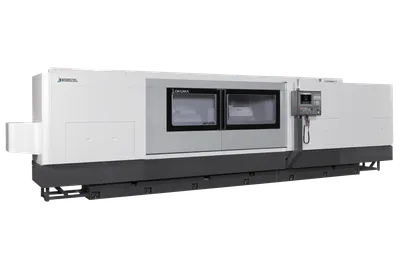
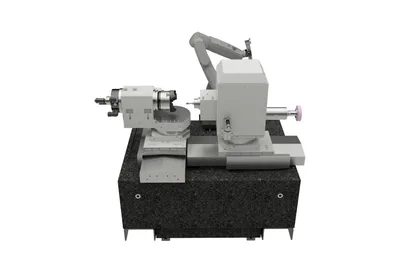
Hardinge Kellenberger VM1000
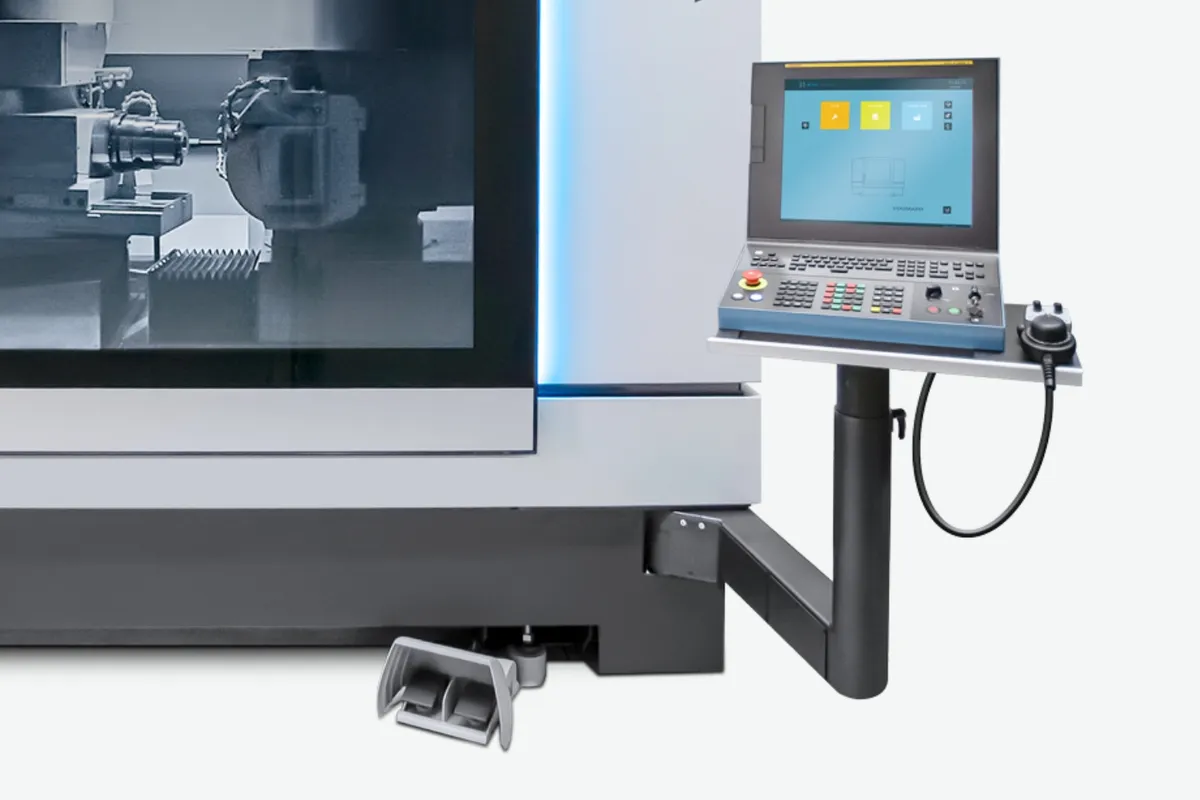
Image: kellenberger.com, Hardinge
Key Specifications
X Travel
Z Travel
Max Workpiece ⌀
center height
max workpiece weight
axis resolution
How much does the Hardinge Kellenberger VM1000 cost?
Estimated price range
Our best estimate for a cnc grinding machine in this class — not a quote from Hardinge. Configuration moves it a long way.
Overview
The Kellenberger VM1000 is a grinder weighted toward internal work: its internal spindle is listed at 15 kW, almost twice the 8 kW of the external grinding spindle, and it takes bores up to 150 mm. Workpieces can be under 150 mm or under 300 mm in diameter depending on version, on a 150 mm (5.9 in) centre height with 600 mm (23.6 in) between centres.
Two swivel axes define how the machine is used. The B axis turns through 330°, the kind of range a wheelhead needs when more than one spindle is mounted around it. A second axis, B2, swivels 225 degrees at 30 RPM. B-axis resolution is 0.0001 degrees, so cone angles and tapered seats are programmed, not set against a sine bar. Together they suit parts that combine a bore, a taper and a face, such as spindle noses, tool holders and bearing housings.
X and Z both travel 450 mm (17.7 in). Equal travel on both axes fits a machine that moves the wheel across a chucked part as much as along it, and it leaves room for long internal quills. Axis resolution is listed as 0.0025 µm (2.5 nm) and roundness as 0.4 / 0.2 μm. For external work the wheel is Ø 300 x 40 mm at a peripheral speed of 50 m/s, a small wheel that matches the 8 kW drive and is sized for shoulders and short diameters, not for long traverse grinding.
Workpiece weight is listed as 50 / 100 / 200 kg (110 / 220 / 441 lb), so the workhead version matters when the part is heavy. The control is FANUC 31i-B with the BLUE Solution interface, the supply is 400 V / 460 V and the footprint is 2.5 m × 2.1 m.
Full Specifications
| Parameter | Value |
|---|---|
| Center Height | 150 mm (5.9 in) |
| Max Workpiece Diameter | < 150 mm / < 300 mm |
| Max Workpiece Weight | 50 / 100 / 200 kg (110 / 220 / 441 lb) |
| Z-Axis Travel | 450 mm (17.7 in) |
| X-Axis Travel | 450 mm (17.7 in) |
| Axis Resolution | 0.0025 um (2.5 nm) |
| B2 Axis Swivel | 225 degrees at 30 RPM |
| B Axis Resolution | 0.0001 degrees |
| Roundness Accuracy | 0.4 / 0.2 μm |
| Internal Spindle Power | 15 kW |
| Internal Bore Capacity | 150 mm |
| CNC Control | FANUC 31i-B |
| Floor Space Required | 2.5 m × 2.1 m |
| Center Distance | 600 mm (23.6 in) |
| Power Supply | 400 V / 460 V |
| B Axis Swivel | 330° |
| Peripheral Speed | 50 m/s |
| Grinding Spindle Power | 8 kW |
| Grinding Wheel Size | Ø 300 x 40 mm |
| Hmi | BLUE Solution |
Specifications sourced from kellenberger.com — verified 2026-10-03
Strengths & Limitations
Strengths
- Internal grinding spindle listed at 15 kW, with an internal bore capacity of 150 mm
- B axis swivels 330° with 0.0001 degrees resolution; B2 swivels 225 degrees at 30 RPM
- Axis resolution of 0.0025 µm (2.5 nm)
- X and Z travel of 450 mm (17.7 in) each
- Workpiece weight options of 50 / 100 / 200 kg (110 / 220 / 441 lb)
Limitations
- External grinding spindle is 8 kW with a Ø 300 x 40 mm wheel, limiting wide plunge or long traverse OD work
- No internal spindle speed is listed, so the smallest practical bore depends on the spindle quoted
- Maximum workpiece diameter is under 150 mm or under 300 mm depending on version, and the table does not say which weight rating goes with which
- Centre distance is 600 mm (23.6 in), and no tailstock figures are listed
Best For
Frequently Asked Questions
01
The figures point to internal and combined internal and external grinding of chucked parts. The internal spindle is listed at 15 kW with a bore capacity of 150 mm, the external spindle at 8 kW with a Ø 300 x 40 mm wheel. Maximum workpiece diameter is under 150 mm or under 300 mm, with 600 mm (23.6 in) between centres.
02
A B axis with 330° of swivel and a B2 axis listed at 225 degrees at 30 RPM. B-axis resolution is 0.0001 degrees. The swivel range lets the control set taper angles directly and bring different wheels to the part without re-clamping.
03
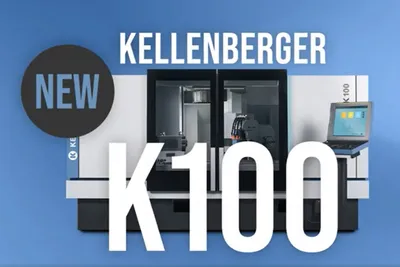
Both use the FANUC 31i-B control. The Kellenberger K100 is a between-centres machine offered at 600 / 1,000 / 1,700 mm with an 11.5 kW grinding spindle and 370 mm (14.6 in) of X travel. The VM1000 has a single 600 mm (23.6 in) centre distance, an 8 kW external spindle and 450 mm (17.7 in) of travel on both X and Z, which favours chucked parts and internal work.
04
Axis resolution is 0.0025 µm (2.5 nm) and B-axis resolution is 0.0001 degrees. Roundness is listed as 0.4 / 0.2 μm, with no condition given for either value. Positioning accuracy and repeatability are not in the table.
05
The table lists 50 / 100 / 200 kg (110 / 220 / 441 lb), which indicates different workhead versions. It does not say which goes with the under 150 mm and under 300 mm diameter limits, so confirm the rating for the configuration on the quotation. Centre height is 150 mm (5.9 in).
Videos

Kellenberger