Industrial CNC Machine Directory

EMAG EMAG HG 208 DW

$500,000 - $800,000 Updated 2026-03-19
EMAG EMAG HG 208 DW CNC Grinding Machines
01

Key Specifications

Max Workpiece ⌀

200 mm (7.9 in)

max workpiece length

600 mm (23.6 in)

x axis travel

mmin

z axis travel

mmin

simultaneous axes

4-axis simultaneous grinding

grinding spindles

2 external grinding spindles (independent)

02

Overview

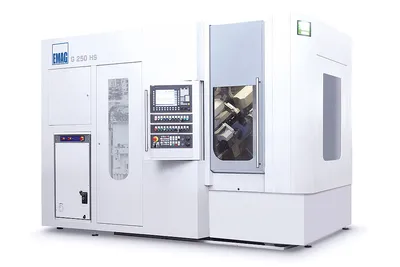
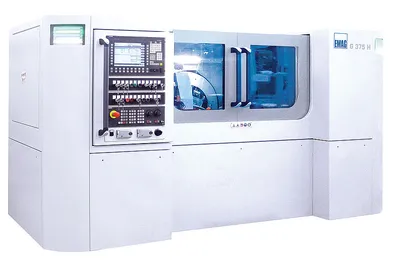
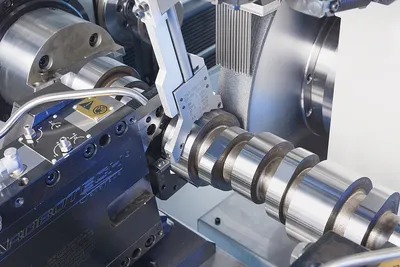
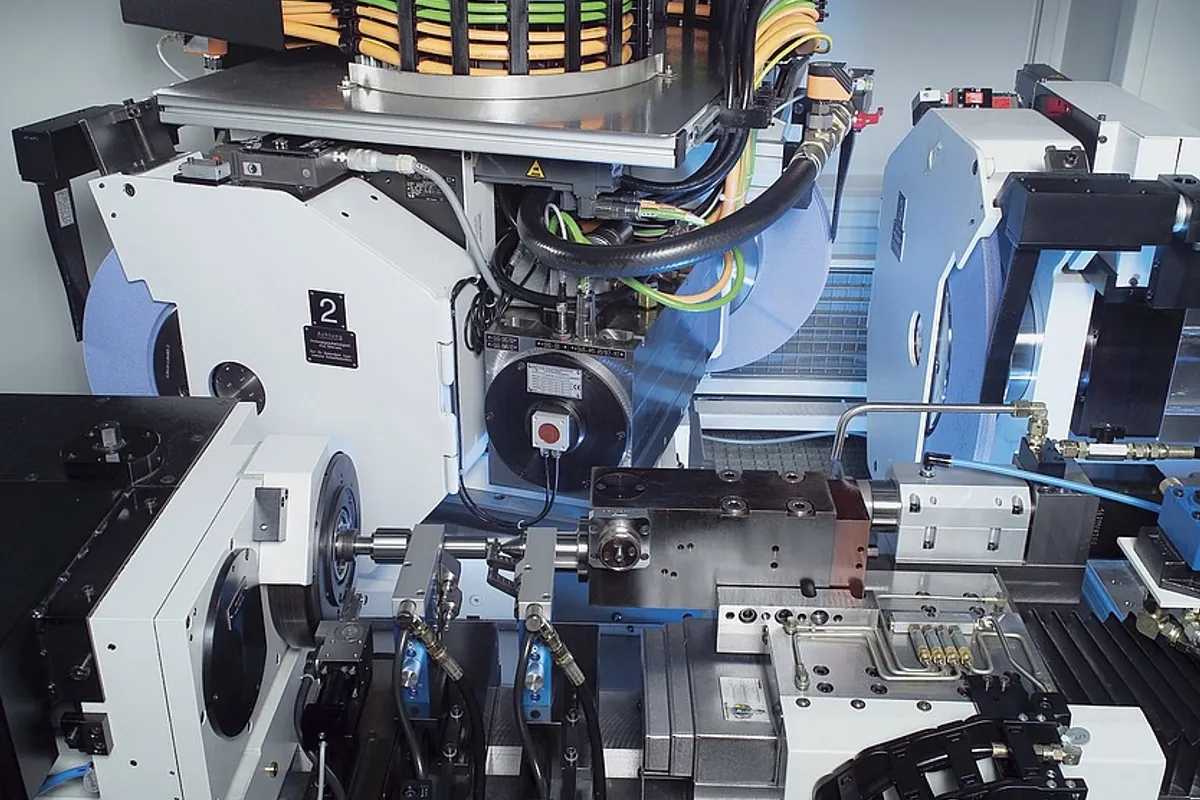
The EMAG HG 208 DW is a four-axis simultaneous CNC cylindrical grinder specifically designed for production grinding of shaft-type components requiring two external cylindrical grinding operations performed simultaneously at different positions along the workpiece. The DW designation indicates the dual-wheel configuration that enables parallel external grinding at two locations on the shaft, cutting cycle times dramatically on components with multiple critical diameters.

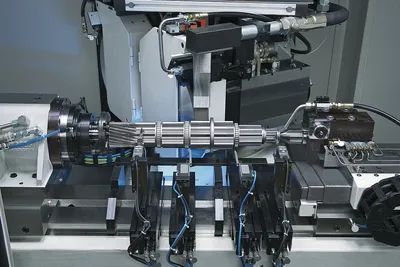
The machine handles workpieces up to 200 mm in diameter and 600 mm in length, with 380 mm of X-axis travel and 800 mm of Z-axis travel. The four-axis simultaneous capability means two grinding spindles can independently approach and grind different portions of the shaft at the same time — for example, grinding two bearing journals simultaneously, or grinding a seal surface while plunge-grinding a gear seat on the same shaft.

This dual-wheel simultaneous architecture is particularly valuable for workpiece families like steering pinions, gear shafts, motor shafts, and compressor shafts where the same grinding operations are performed at varying distances along the shaft. The independent axis control on each grinding station allows the machine to adapt to different workpiece geometries within a family without mechanical changeover, reducing setup time when transitioning between related part numbers.

The HG 208 DW includes EMAG’s standard production grinding features: absolute measuring systems with linear glass scales in all axes, in-process gauging control for OD and shoulder verification, contact and crash recognition, and an NC tailstock with extended stroke. Linear roller guideways provide precision retention throughout the machine’s service life.

New EMAG HG 208 DW machines typically price between $500,000 and $800,000 depending on configuration and automation options.

03

Full Specifications

Parameter Value
Max Workpiece Diameter 200 mm (7.9 in)
Max Workpiece Length 600 mm (23.6 in)
X Axis Travel mmin
Z Axis Travel mmin
Simultaneous Axes 4-axis simultaneous grinding
Grinding Spindles 2 external grinding spindles (independent)
Guideways Linear roller guideways
Measuring System Absolute glass scales in all axes
In Process Gauging OD and shoulder position control
Crash Recognition Contact and crash detection system
Tailstock NC-controlled with extended stroke
Grinding Media Corundum or CBN
CNC Control CNC (FANUC or Siemens)
Workpiece Dia Max mmin
Workpiece Length Max mmin

Specifications sourced from emag.com — verified 2026-03-28

04

Strengths & Limitations

Strengths

  • Four-axis simultaneous grinding with two independent external spindles cuts cycle times by up to 50% on multi-diameter shaft components
  • Independent axis control on each grinding station enables adaptation to varying workpiece geometries within a part family without mechanical changeover
  • Linear roller guideways maintain precision retention throughout the machine service life critical for production environments running multiple shifts
  • Ideal for shaft families where the same operations occur at varying positions such as steering pinions, gear shafts, motor shafts, and compressor shafts
  • In-process gauging on both grinding stations ensures dimensional accuracy is maintained during simultaneous grinding operations
  • 600 mm workpiece length capacity covers the majority of automotive and industrial shaft grinding applications

Limitations

  • Premium pricing of $500K-$800K requires high-volume shaft production to justify over sequential single-wheel grinding solutions
  • Dual-wheel process development and cycle optimization are significantly more complex than single-wheel grinding requiring experienced application engineers
  • External grinding only as components requiring bore grinding need a separate machine or the HG 208 CD variant
  • 200 mm maximum diameter limits the machine to standard shaft components as large-diameter heavy shafts require different platforms
05

Best For

Automotive drivetrain manufacturers grinding steering pinions, transmission input/output shafts, and balance shafts requiring two simultaneous OD operations Motor and compressor manufacturers grinding rotor shafts and compressor shafts with multiple bearing journals that can be ground simultaneously Production facilities grinding high volumes of gear shafts where two-location simultaneous grinding maximizes throughput per machine Shops grinding families of similar shaft components where independent axis control enables rapid changeover between part numbers within the family Electric vehicle motor manufacturers grinding e-motor shafts with multiple precision journal surfaces requiring simultaneous finishing
06

Frequently Asked Questions

01 What does DW mean in the HG 208 DW designation?

DW indicates the dual-wheel configuration with two independent external grinding spindles that can perform simultaneous grinding operations at different locations along the workpiece. This four-axis capability enables parallel processing for significantly reduced cycle times.

02 What is the difference between the HG 208 DW and HG 208 CD?

The HG 208 DW performs simultaneous external grinding at two positions along shaft-type components (200 mm max dia, 600 mm length). The HG 208 CD performs simultaneous OD and bore grinding on chucked parts (100 mm max dia, 400 mm length). The DW is for shafts; the CD is for rings and bushings.

03 What types of shafts benefit most from the HG 208 DW?

Shafts with two or more critical grinding diameters spaced along their length benefit most: steering pinions, transmission shafts with two bearing journals, motor shafts with multiple seal surfaces, and compressor shafts with symmetric journal layouts.

04 Can the two grinding wheels use different wheel specifications?

Yes. Each grinding spindle is independently configured, so different wheel diameters, widths, and abrasive types (corundum vs. CBN) can be used on each station. This flexibility allows optimization of each grinding operation independently.

07

Related Machines