EMAG HG 2
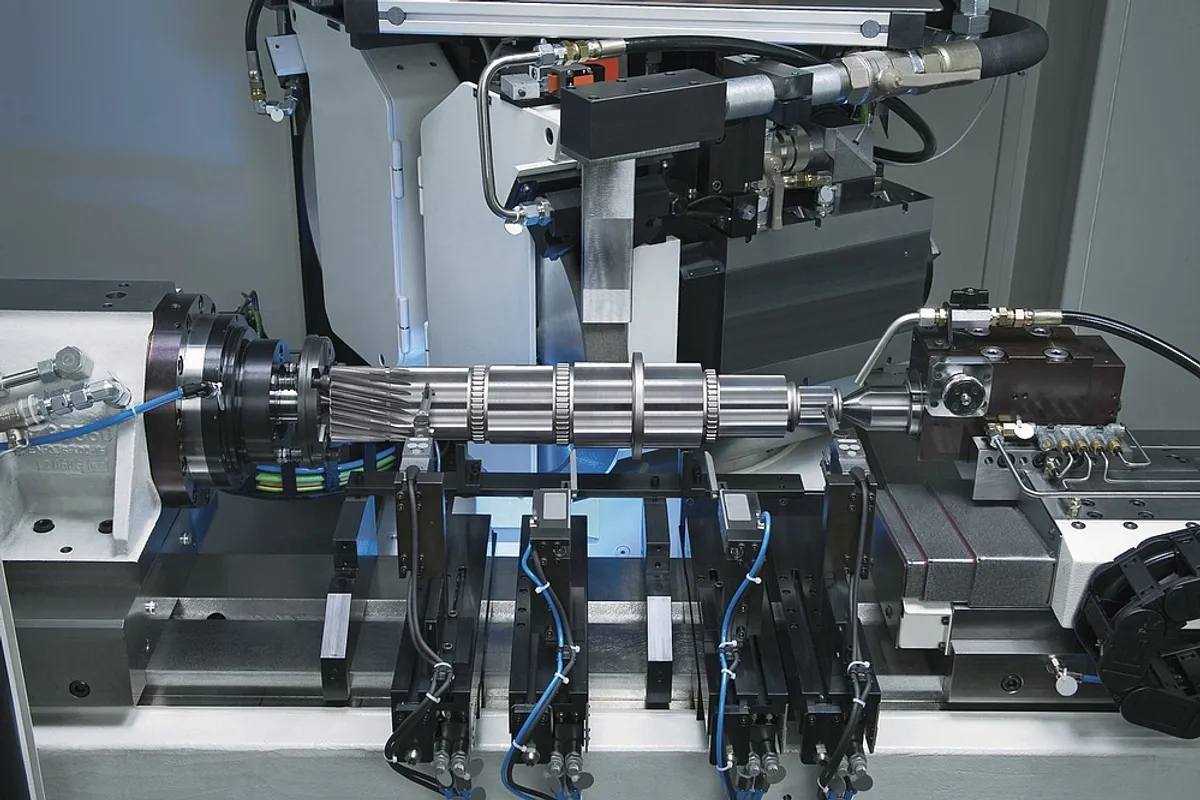
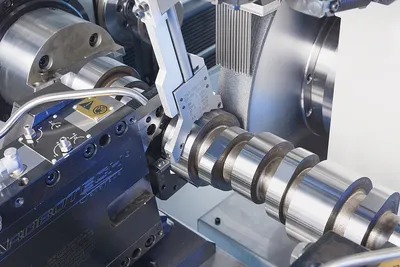
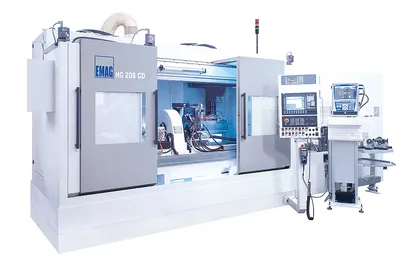
Image: emag.com, EMAG
Key Specifications
X Travel
Z Travel
Max Workpiece ⌀
max workpiece length
machine base
feed drives
How much does the EMAG HG 2 cost?
Estimated price range
Our best estimate for a cnc grinding machine in this class — not a quote from EMAG. Configuration moves it a long way.
Overview
The EMAG HG 2 is a machine from EMAG's HG range for workpieces up to 200 mm (8 in) in diameter and 400 mm (15.5 in) long. It travels 360 mm (14 in) on X and 1,000 mm (39.5 in) on Z, on a machine base of thermostable cast iron with precision ball screws driving the feed axes.
The Z travel is long for the part size. With 1,000 mm (39.5 in) of Z against a 400 mm (15.5 in) workpiece, the axis has room to move a unit well clear of the part, which is the kind of reserve a machine needs when it carries more than one tool or spindle along the bed. The table does not list the spindles or wheels themselves, so ask EMAG what the HG 2 is configured with; its sibling HG 204 is specified with B-axis spindle packages and an automatic balancing unit.
Against the HG 208, which shares the 360 mm (14 in) X travel but has 1,600 mm (63 in) of Z, the HG 2 is the shorter frame. The thermostable cast iron base is the row that speaks to holding size over a shift, since a base that resists temperature change keeps the axes where they were set as the shop warms up.
Full Specifications
| Parameter | Value |
|---|---|
| Max Workpiece Diameter | 200 mm (8 in) |
| Max Workpiece Length | 400 mm (15.5 in) |
| Machine Base | Thermostable cast iron |
| Feed Drives | Precision ball screws |
| X-Axis Travel | 360 mm (14 in) |
| Z-Axis Travel | 1,000 mm (39.5 in) |
Specifications sourced from emag.com — verified 2026-10-03
Strengths & Limitations
Strengths
- Thermostable cast iron machine base
- Precision ball screws on the feed drives
- 1,000 mm (39.5 in) of Z travel and 360 mm (14 in) of X travel
- Workpieces up to 200 mm (8 in) in diameter
Limitations
- Workpiece length is limited to 400 mm (15.5 in)
- The table lists no spindle, wheel, power or control data for this model
- Z travel is 1,000 mm (39.5 in), against 1,600 mm (63 in) on the HG 208
Best For
Frequently Asked Questions
01
Up to 200 mm (8 in) in diameter and 400 mm (15.5 in) in length. The axes travel 360 mm (14 in) on X and 1,000 mm (39.5 in) on Z.
02
The listed envelope is the same: 200 mm (8 in) diameter, 400 mm (15.5 in) length, 360 mm (14 in) of X and 1,000 mm (39.5 in) of Z. The HG 204 table goes on to describe B-axis spindle configurations, an automatic balancing unit and corundum or CBN wheels; the HG 2 table describes the cast iron base and ball screw drives instead.
03
A machine base of thermostable cast iron, with precision ball screws as the feed drives. The table gives no machine weight or footprint, so ask EMAG for installation data.
Videos

EMAG

EMAGLLC

EMAGLLC
More from EMAG
Other CNC Grinding Machines
Supertec G32A / G38A / G45A CNC
Walter Helitronic Raptor
Palmary OCD-45400
Blohm Orbit 46