EMAG G 400
Key Specifications
Max Workpiece ⌀
max workpiece length
max toothed length
generating grinding module
profile grinding module
grinding wheel diameter
Overview
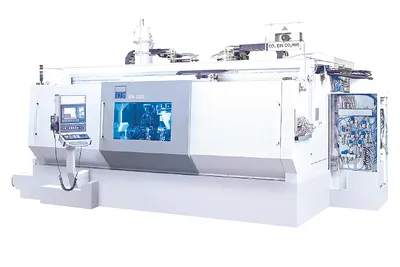
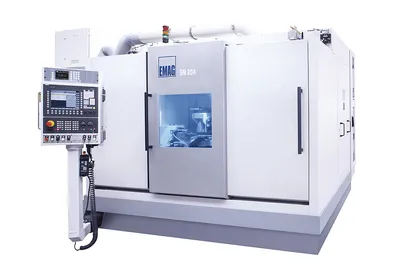
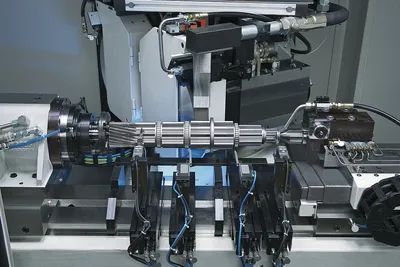
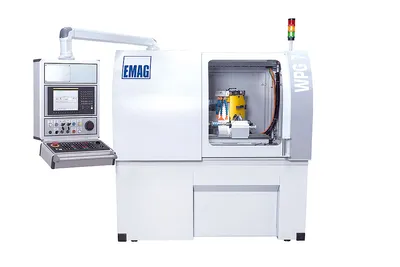
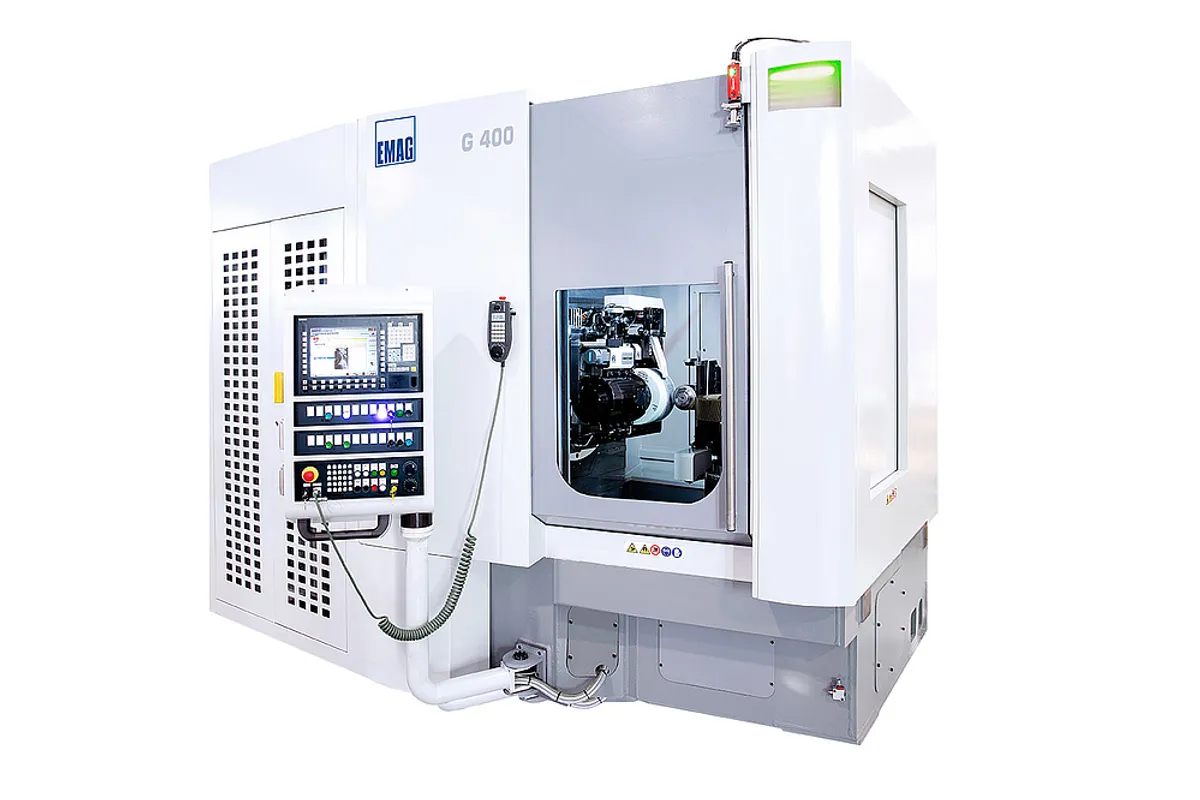
The EMAG G 400 is a CNC gear generating and profile grinding machine designed for finish grinding of spur and helical gears with workpiece diameters up to 400 mm (15.5 in). The G 400 bridges the gap between EMAG's high-volume automotive G 250 and the large-capacity G 500 H profile grinder, targeting medium to large gears used in commercial vehicle transmissions, industrial gearboxes, wind energy, and aerospace applications where both generating and profile grinding capability on a single platform provides critical process flexibility.
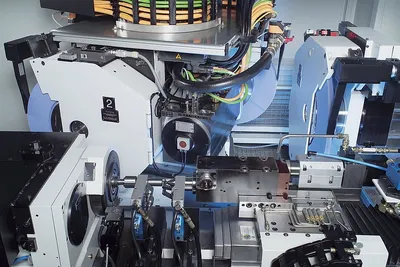
The machine accommodates both generating grinding (module 0.5-8.0) and profile grinding (module 0.7-12.0) modes, enabling shops to select the optimal process for each application. Generating grinding with threaded wheels provides fast cycle times for standard involute gears, while profile grinding with single-rib wheels handles non-standard forms, topography modifications, and individual tooth corrections. Grinding wheels from 220 mm to 300 mm (8.5 to 12 in) diameter with maximum width of 160 mm (6.5 in) operate at peripheral speeds up to 80 m/s.
The G 400 grinds workpiece lengths up to 750 mm (29.5 in) with toothed lengths up to 380 mm (15 in), covering the full range of medium-sized gear shaft and wheel applications. The swivel angle range of +/-45 degrees handles standard helical gear geometries. The dressing tool diameter of 123 mm (5 in) enables precision wheel profiling for both generating and profile modes.
The Siemens SINUMERIK ONE control — EMAG's latest control platform for the G-series — features HMI dialog programming and Twist-Control software with visualization for optimizing gear flank topography. The machine supports fine grinding and polishing operations and includes an L-shaped machine door design for automatic robot loading. For manufacturers requiring both generating and profile grinding in a single machine at diameters exceeding 250 mm, the G 400 provides the dual-mode capability and capacity needed for versatile gear production.
Full Specifications
| Parameter | Value |
|---|---|
| Max Workpiece Diameter | 400 mm (15.5 in) |
| Max Workpiece Length | 750 mm (29.5 in) |
| Max Toothed Length | mmin |
| Generating Grinding Module | 0.5 - 8.0 |
| Profile Grinding Module | 0.7 - 12.0 |
| Grinding Wheel Diameter | 300 / 220 mm (12 / 8.5 in) |
| Max Grinding Wheel Width | 160 mm (6.5 in) |
| Grinding Spindle Speed | 80 m/s peripheral |
| Swivel Angle | mmin |
| Dressing Tool Diameter | 123 mm (5 in) |
| CNC Control | Siemens SINUMERIK ONE |
| Automation | L-shaped door for robot loading |
| Workpiece Dia Max | mmin |
| Workpiece Length Max | mmin |
| Grinding Wheel Dia | mmin |
| Grinding Wheel Width Max | mmin |
| Grinding Spindle Speed Max | m/s |
| Dressing Tool Dia | mmin |
Specifications sourced from emag.com — verified 2026-03-28
Strengths & Limitations
Strengths
- Dual generating and profile grinding capability on a single machine provides maximum process flexibility for diverse gear geometries
- 400 mm diameter capacity covers commercial vehicle, industrial, and aerospace gears that exceed the G 250's 250 mm limit
- Siemens SINUMERIK ONE with Twist-Control visualization represents the latest control technology for optimized gear flank topography
- Profile grinding module range up to 12.0 handles medium-module industrial gears beyond the capability of generating-only machines
- 80 m/s grinding wheel speed with fine grinding and polishing capability delivers premium surface quality for noise-critical applications
- L-shaped machine door design enables straightforward robot loading integration for automated production cells
Limitations
- 400 mm diameter limit still excludes large industrial and wind energy gears — the G 500 H is needed for workpieces above 400 mm
- Dual generating/profile grinding capability adds cost and complexity compared to dedicated single-mode machines
- Profile grinding mode is significantly slower than generating grinding, and switching between modes requires wheel changes
- 80 m/s peripheral speed without the 20,000 RPM option means the G 400 lacks the small-wheel access capability of the G 250 HS
Best For
Frequently Asked Questions
01
Use generating grinding for standard involute spur and helical gears in production quantities — it is significantly faster because the threaded wheel forms all teeth simultaneously. Use profile grinding when the gear form is non-standard, when individual tooth corrections are needed, when the gear has interfering contours, or when production volumes are low enough that the slower profile grinding cycle time is acceptable.
02
SINUMERIK ONE is Siemens' latest CNC platform, succeeding the 840D sl used on other G-series machines. It provides faster processing, digital twin capability for virtual commissioning, and an enhanced HMI interface. On the G 400, the SINUMERIK ONE's computational power enables real-time Twist-Control visualization and more sophisticated gear flank optimization than previous control generations.
03
The G 250 is a generating grinder for gears up to 250 mm diameter. The G 375 H is a profile grinder for gears up to 375 mm with internal grinding capability. The G 400 combines both generating and profile grinding in one machine for gears up to 400 mm, but without internal grinding capability. Choose the G 400 when you need both grinding modes for external gears in the 250-400 mm range.
04
Yes, the G 400 features an L-shaped machine door specifically designed for robot loading integration. The door geometry provides clear access for a robot arm to load and unload workpieces without interference from machine structures. EMAG provides standard robot interface specifications for integration with common industrial robot brands.
Videos
Cottrill & Co
EMAGLLC
EMAGLLC
Mark Comeaux
EMAG