Industrial CNC Machine Directory

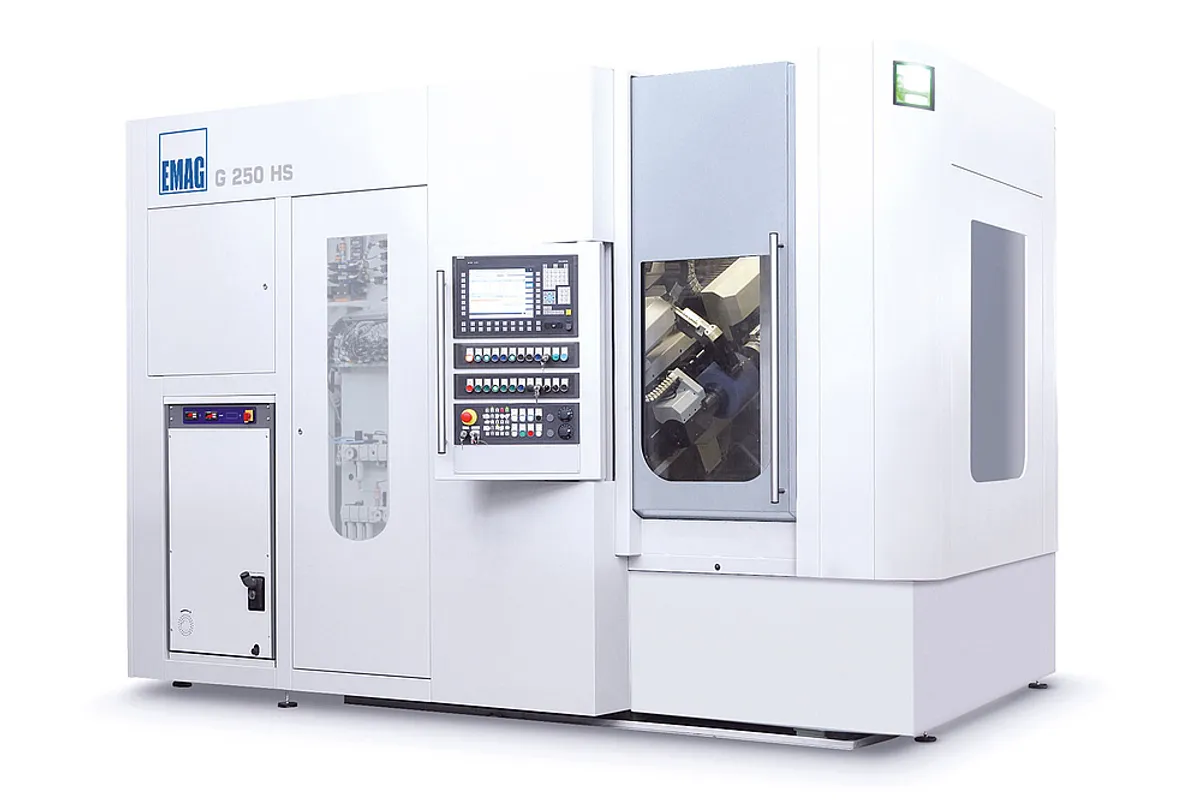
EMAG G 250 HS

$650,000 - $900,000 Updated 2026-03-19
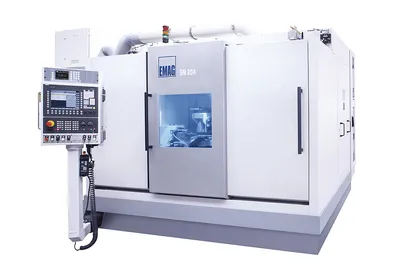
EMAG G 250 HS CNC Grinding Machines
01

Key Specifications

Max Workpiece ⌀

250 mm (10 in)

max workpiece length

550 mm (21.5 in)

max face width

380 mm (15 in)

generating grinding module

0.5 - 5.0 mm

profile grinding module

0.5 - 7.0 mm

generating grinding wheel diameter

160 / 68 mm (6.5 / 2.5 in)

02

Overview

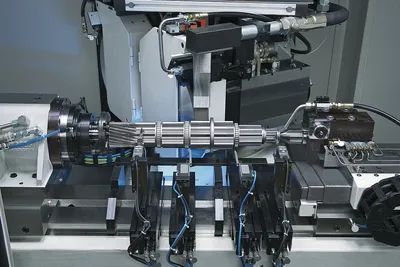
The EMAG G 250 HS is a high-speed variant of the G 250 gear generating grinding machine, featuring a compact grinding head designed specifically for machining workpieces with interfering contours. The "HS" designation stands for High-Speed, reflecting the 20,000 RPM grinding spindle that enables use of small-diameter grinding wheels for accessing tight spaces around gear teeth that standard-sized wheels cannot reach. This makes the G 250 HS the machine of choice for shoulder gears, cluster gears, and gears adjacent to bearing seats or other features that interfere with conventional grinding wheel access.

The G 250 HS handles workpieces up to 250 mm (10 in) diameter with face widths up to 380 mm (15 in), matching the standard G 250's workpiece capacity. However, the grinding wheel configuration differs significantly: generating grinding uses wheels from 68 mm to 160 mm (2.5 to 6.5 in) diameter, while profile grinding uses wheels from 30 mm to 160 mm (1 to 6.5 in) diameter. These smaller wheel diameters, driven at 20,000 RPM, maintain the peripheral speeds needed for effective grinding while fitting into workpiece geometries that exclude larger wheels.

The machine supports both generating and profile grinding with quick conversion between the two modes. Generating grinding with module range 0.5-5.0 covers most small-module gear applications, while profile grinding extends the module range to 7.0 for individual tooth finishing. The dual work spindles carry over from the standard G 250, maintaining the near-zero non-productive time that defines the G-series platform.

The Siemens SINUMERIK 840D sl control manages both grinding modes, automatic dressing, and the high-speed spindle dynamics. For gear manufacturers producing gears with interfering contours, the G 250 HS eliminates the need to compromise on gear quality due to grinding access limitations — delivering full generating and profile grinding capability in spaces where conventional machines cannot operate.

03

Full Specifications

Parameter Value
Max Workpiece Diameter 250 mm (10 in)
Max Workpiece Length 550 mm (21.5 in)
Max Face Width 380 mm (15 in)
Generating Grinding Module 0.5 - 5.0 mm
Profile Grinding Module 0.5 - 7.0 mm
Generating Grinding Wheel Diameter 160 / 68 mm (6.5 / 2.5 in)
Profile Grinding Wheel Diameter 160 / 30 mm (6.5 / 1 in)
Max Grinding Wheel Width 180 mm (7 in)
Grinding Spindle Speed 20,000 RPM
Helix Angle +45° / -45°
Dressing Tool Diameter 123 mm (5 in)
Workpiece Spindles Dual (simultaneous load/grind)
CNC Control Siemens SINUMERIK 840D sl
Workpiece Dia Max mm
Workpiece Length Max mmin
Grinding Wheel Width Max mmin
Grinding Spindle Speed Max rpm
Dressing Tool Dia mmin
Tooth Width Max mmin
Grinding Wheel Gear Generating Grinding mmin
Grinding Wheel Profile Grinding mmin

Specifications sourced from emag.com — verified 2026-03-28

04

Strengths & Limitations

Strengths

  • High-speed 20,000 RPM spindle with small-diameter wheels accesses interfering contours that standard gear grinders cannot reach
  • Supports both generating and profile grinding with quick conversion, providing maximum process flexibility on a single machine
  • Grinding wheels as small as 30 mm diameter enable finish grinding of gears immediately adjacent to shoulders, bearing seats, and other obstructions
  • Dual work spindles maintain near-zero non-productive time despite the specialized high-speed grinding head configuration
  • Profile grinding mode extends module range to 7.0 for individual tooth finishing on larger-module gears with access restrictions
  • Same 250 mm workpiece diameter capacity as the standard G 250 — no sacrifice in workpiece size for the high-speed capability

Limitations

  • Smaller grinding wheels remove material slower than the standard G 250's larger wheels — cycle times are longer for gears without interfering contours
  • 20,000 RPM high-speed spindle requires more frequent bearing maintenance and higher-grade balancing than standard-speed spindles
  • Higher acquisition cost than the standard G 250 due to the high-speed spindle and dual grinding mode capability
  • Module 5.0 limit in generating grinding mode is lower than the standard G 250's module 7.0, restricting some applications to profile grinding mode
05

Best For

Automotive transmission manufacturers producing shoulder gears and cluster gears where grinding wheel access is restricted by adjacent features Electric vehicle drive manufacturers grinding compact gear assemblies where close-coupled gear stages create interference for conventional wheels Gear manufacturers producing gears adjacent to bearing seats, snap ring grooves, or other geometric features that prevent standard wheel access Shops requiring both generating and profile grinding capability on a single machine for maximum scheduling flexibility Production of stepped gear shafts where multiple gear sets at different diameters create mutual interference for grinding operations
06

Frequently Asked Questions

01 When should I choose the G 250 HS over the standard G 250?

Choose the G 250 HS when your gears have interfering contours — shoulders, bearing seats, adjacent gear stages, or other features that prevent a standard-size grinding wheel from accessing the gear teeth. If your gears have clear wheel access, the standard G 250 with its larger wheels will grind faster at lower cost. The G 250 HS is purpose-built for the access-restricted applications where standard machines cannot grind to full quality.

02 How does the G 250 HS maintain grinding speed with smaller wheels?

The 20,000 RPM spindle speed compensates for the smaller wheel diameter to maintain the peripheral grinding speed needed for effective material removal. A 68 mm wheel at 20,000 RPM achieves similar peripheral speed to a 250 mm wheel at approximately 5,500 RPM. The high spindle speed ensures that grinding performance is not sacrificed despite the smaller wheel diameter required for access.

03 Can the G 250 HS switch between generating and profile grinding?

Yes, the G 250 HS supports quick conversion between generating grinding (using threaded wheels) and profile grinding (using single-rib wheels). This dual capability is particularly valuable for gears with interfering contours, where profile grinding may be needed for specific teeth or flanks that the generating process cannot access efficiently. The conversion is managed through the Siemens control without mechanical changes.

04 What is the smallest grinding wheel the G 250 HS can use?

In profile grinding mode, the G 250 HS accommodates wheels as small as 30 mm (approximately 1.2 inches) diameter. This extremely small wheel size enables grinding of gear teeth in extremely tight spaces, such as gears positioned between bearing shoulders or within cluster gear assemblies where only millimeters of clearance exist between the gear face and the adjacent obstruction.

07

Videos

Induction Hardening on the MIND-M 250 from EMAG eldec

Induction Hardening on the MIND-M 250 from EMAG eldec

EMAGLLC

EMAG VSC 250 vertical lathe

EMAG VSC 250 vertical lathe

Surplex

W 11 CNC Cylindrical Grinding Machine from EMAG Weiss

W 11 CNC Cylindrical Grinding Machine from EMAG Weiss

EMAGLLC

VL 6 – Vertical Lathe Turning Machine for Heavy Workpieces –  EMAG

VL 6 – Vertical Lathe Turning Machine for Heavy Workpieces – EMAG

EMAGLLC

VLC 200 GT Turning Grinding Center - EMAG

VLC 200 GT Turning Grinding Center - EMAG

EMAGLLC

08

Related Machines