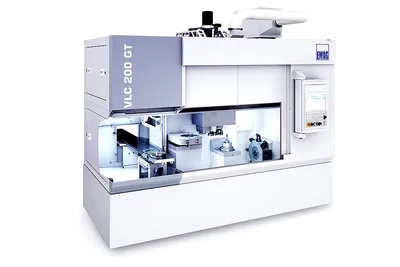
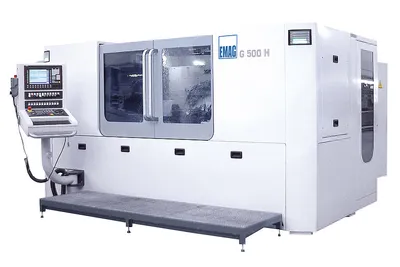
EMAG G 160
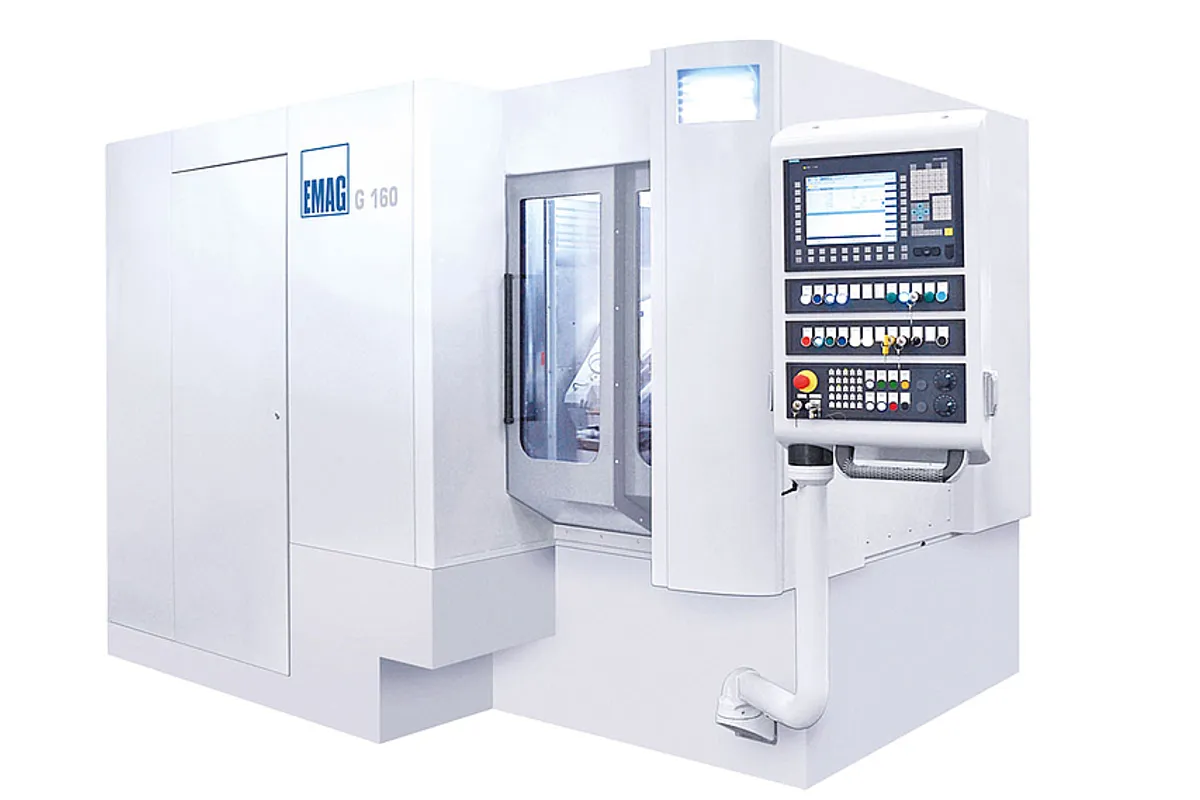
Image: cdn.emag.com, EMAG
Key Specifications
Max Workpiece ⌀
max workpiece length
max face width
helix angle
grinding wheel diameter
grinding spindle speed
How much does the EMAG G 160 cost?
Estimated price range
Our best estimate for a cnc grinding machine in this class — not a quote from EMAG. Configuration moves it a long way.
Overview
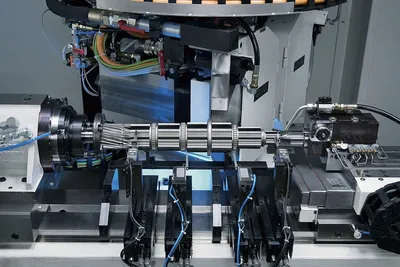
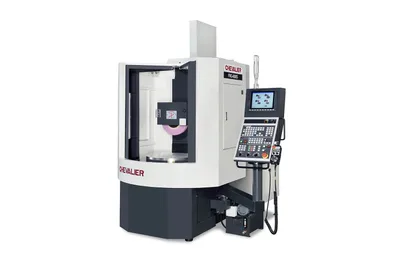
The EMAG G 160 is a gear grinding machine for gears up to 160 mm (6.5 in) in diameter and 300 mm (12 in) long, with a maximum face width of 180 mm (7 in) and a module range of 0.5 - 4.0 mm. It sits below the G 250 in size, and its envelope suits small gears and pinions.
The row that speaks most directly to output is the workpiece spindle changeover, listed at under 2 seconds. On small gears with short grinding cycles, the time spent swapping one part for the next is a large share of the total, so a fast changeover can be worth as much as a faster grind.
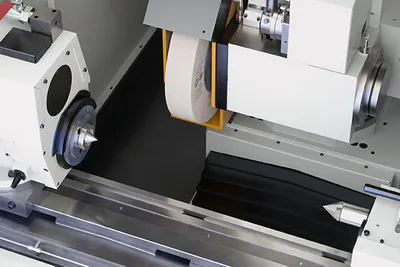
The grinding wheel runs at 80 m/s and is listed at 275 mm maximum and 210 mm minimum diameter, with a width of 160 mm (6.5 in). The gap between those two diameters is the dressing allowance a wheel gives before it is replaced, and the dressing tool itself is 123 mm (5 in) in diameter. The control is a Siemens 840 D sl.
The next size up shows where the G 160 stops: the G 250 takes 250 mm (10 in) workpieces up to 550 mm (21.5 in) long, a face width of 380 mm (15 in) and modules of 0.5 - 7.0 mm. If a family of parts includes anything above module 4.0 mm or wider than 180 mm (7 in) across the face, the G 160 is the wrong size. Floor space is listed as a footprint of 3,275 / 2,200 / 2,285 mm (129 / 86.5 / 90 in).
Full Specifications
| Parameter | Value |
|---|---|
| Max Workpiece Diameter | 160 mm (6.5 in) |
| Max Workpiece Length | 300 mm (12 in) |
| Max Face Width | 180 mm (7 in) |
| Helix Angle | +95° / -45° |
| Grinding Wheel Diameter | mm 275 max / 210 min |
| Grinding Spindle Speed | 80 m/s |
| Workpiece Spindle Changeover | Under 2 seconds |
| Linear Motor Speed | 30 m/s |
| Dressing Tool Diameter | 123 mm (5 in) |
| CNC Control | Siemens Simnumerik 840 D sl |
| Floor Space Required | 3,275 / 2,200 / 2,285 mm (129 / 86.5 / 90 in) |
| Module Range | 0.5 - 4.0 mm |
| Grinding Wheel Width | 160 mm (6.5 in) |
Specifications sourced from emag.com — verified 2026-10-03
Strengths & Limitations
Strengths
- Workpiece spindle changeover in under 2 seconds
- Grinding wheel speed of 80 m/s with a 160 mm (6.5 in) wide wheel
- Wheel diameters from 275 mm down to 210 mm, a usable dressing allowance
- Module range of 0.5 - 4.0 mm with face widths up to 180 mm (7 in)
- Footprint of 3,275 / 2,200 / 2,285 mm (129 / 86.5 / 90 in)
Limitations
- Workpieces are limited to 160 mm (6.5 in) in diameter and 300 mm (12 in) in length
- Module stops at 4.0 mm; the G 250 goes to 7.0 mm
- Face width is limited to 180 mm (7 in), against 380 mm (15 in) on the G 250
- The table gives no power or accuracy figure for the grinding spindle
Best For
Frequently Asked Questions
01
Up to 160 mm (6.5 in) in diameter and 300 mm (12 in) in length, with a face width of up to 180 mm (7 in). The module range is 0.5 - 4.0 mm.
02
The workpiece spindle changeover is listed at under 2 seconds. On short grinding cycles that changeover is a large share of floor-to-floor time, which is where this figure matters most.
03
A wheel of 275 mm maximum and 210 mm minimum diameter, 160 mm (6.5 in) wide, running at 80 m/s. It is dressed with a dressing tool of 123 mm (5 in) diameter.
04
Choose by the largest part. The G 160 takes 160 mm (6.5 in) diameter, 300 mm (12 in) length, 180 mm (7 in) face width and modules to 4.0 mm. The G 250 takes 250 mm (10 in), 550 mm (21.5 in), 380 mm (15 in) and modules to 7.0 mm.
05
Its footprint is listed as 3,275 / 2,200 / 2,285 mm (129 / 86.5 / 90 in). The table does not label the three dimensions, so check which is the height before planning ceiling and crane clearance.
Videos

EMAGLLC

EMAGLLC