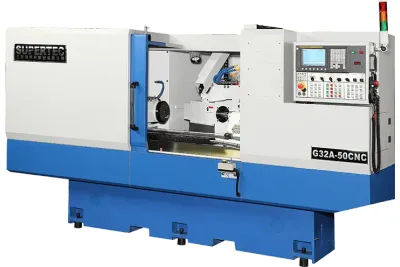
ELB-Schliff SW 6 Series
This model was not found in ELB-Schliff's current lineup when we checked on 2026-10-03 . It may be a superseded or older model; the specifications below are as we last recorded them.
Key Specifications
Table Size
Spindle Power
Accuracy
table traverse x
cross traverse y
vertical travel z
How much does the ELB-Schliff SW 6 Series cost?
Estimated price range
Our best estimate for a cnc grinding machine in this class — not a quote from ELB-Schliff. Configuration moves it a long way.
Overview
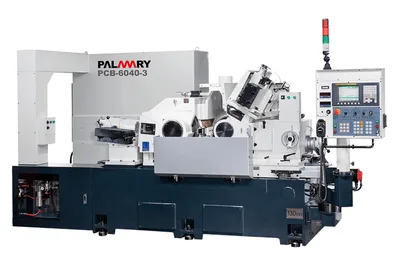
The ELB-Schliff SW 6 Series is a CNC surface grinder built around a 600 x 350 mm (23.6 x 13.8 in) standard table, with 700 mm (27.6 in) of table traverse, 420 mm (16.5 in) of cross traverse and 500 mm (19.7 in) of vertical travel. It is not part of ELB-Schliff's current lineup. The listed figures are most useful for sizing up a machine that is already in a shop.
Capacity is modest and well matched. The chuck is 600 x 350 mm, in electromagnetic or manual versions, and takes up to 200 kg (441 lb). Because the chuck type is a choice, check which one a given machine has. The wheel is up to 400 mm (16 in) in diameter x 50 mm (2 in) wide, driven by a 5.5 kW (7.4 hp) spindle with a variable range of 1,000 - 3,000 RPM.
For finishing work the listed figures give positioning accuracy of ±0.003 mm, flatness of < 0.003 mm over 300 mm and a surface finish of Ra 0.10 µm, the last one qualified as achievable with a fine wheel and spark-out. Dressing is automatic and programmable, using a single-point diamond dresser. No diamond roll or profile dressing unit is named.
The installation data is complete enough to plan from: 400 VAC 3-phase 50 Hz at 32 A, 200 L (53 gal) of coolant and a machine weight of 3,500 kg (7,716 lb). The control is a Siemens 828D CNC.
Full Specifications
| Parameter | Value |
|---|---|
| Table Size | 600 x 350 mm (23.6 x 13.8 in) standard |
| Table Traverse X | 700 mm (27.6 in) |
| Cross Traverse Y | 420 mm (16.5 in) |
| Vertical Travel Z | 500 mm (19.7 in) |
| Grinding Wheel Max | 400 mm (16 in) diameter x 50 mm (2 in) wide |
| Spindle Speed | 1,000 - 3,000 RPM (variable) |
| Spindle Motor Power | 5.5 kW (7.4 hp) |
| Chuck Size | 600 x 350 mm electromagnetic or manual options |
| Max Workpiece Weight | 200 kg (441 lb) on chuck |
| Positioning Accuracy | ±0.003 mm |
| Flatness Achievable | < 0.003 mm over 300 mm |
| Surface Finish | Ra 0.10 µm (achievable with fine wheel and spark-out) |
| Automatic Dressing | Yes (single-point diamond dresser, programmable) |
| CNC Control | Siemens 828D CNC |
| Machine Weight | 3,500 kg (7,716 lb) |
| Coolant Capacity | 200 L (53 gal) |
| Electrical | 400 VAC 3-phase 50 Hz, 32 A |
| Grinding Length | 3,000 mm |
Specifications compiled from manufacturer literature and industry references. Not independently verified against a published spec sheet — confirm with the manufacturer or an authorised dealer before making a purchasing decision.
Strengths & Limitations
Strengths
- Automatic, programmable dressing with a single-point diamond dresser
- Listed flatness of < 0.003 mm over 300 mm and positioning accuracy of ±0.003 mm
- 600 x 350 mm (23.6 x 13.8 in) table with 700 mm (27.6 in) of table traverse and 420 mm (16.5 in) of cross traverse
- Variable spindle speed of 1,000 - 3,000 RPM with a wheel up to 400 mm (16 in) in diameter
- Light installation demands: 32 A at 400 VAC 3-phase and a machine weight of 3,500 kg (7,716 lb)
Limitations
- Workpiece weight on the chuck is limited to 200 kg (441 lb)
- 5.5 kW (7.4 hp) of spindle power and a 50 mm (2 in) wheel width limit stock removal per pass
- Ra 0.10 µm is listed only as achievable with a fine wheel and spark-out, so it should not be expected from a roughing setup
- The electrical row gives only 400 VAC 3-phase 50 Hz, so a site on a different supply needs to confirm compatibility
Best For
Frequently Asked Questions
01
The standard table is 600 x 350 mm (23.6 x 13.8 in). Table traverse in X is 700 mm (27.6 in), cross traverse in Y is 420 mm (16.5 in) and vertical travel in Z is 500 mm (19.7 in). The chuck is the same 600 x 350 mm size and carries up to 200 kg (441 lb).
02
Automatic dressing is listed, with a programmable single-point diamond dresser. The listed figures name no diamond roll, so wheel forms have to be generated by the single-point tool under program control.
03
The listed figures give flatness of < 0.003 mm over 300 mm and a surface finish of Ra 0.10 µm, the finish being achievable with a fine wheel and spark-out. Positioning accuracy is ±0.003 mm. Results on a used machine depend on its condition, so ask for a test grind.
04
The electrical row reads 400 VAC 3-phase 50 Hz, 32 A. Coolant capacity is 200 L (53 gal) and the machine weighs 3,500 kg (7,716 lb). The spindle motor is 5.5 kW (7.4 hp).
Videos

Hesse Maschinen