Chevalier FSG-AD3060
Key Specifications
Table Size
Spindle Power
Accuracy
max workpiece height
longitudinal traverse
cross traverse
Overview
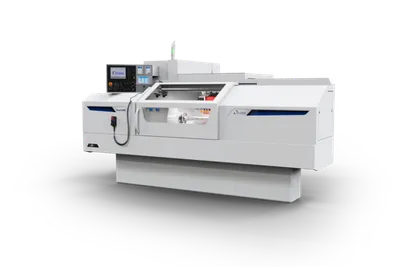
The Chevalier FSG-AD3060 is a CNC automatic surface grinder from Taiwan's Chevalier Machinery, designed for high-precision flat grinding of tool steels, mold components, carbide inserts, and hardened workpieces requiring consistent surface finish and tight flatness tolerances. The AD series designation indicates automatic down-feed with CNC cycle control, distinguishing it from manual surface grinders while remaining more accessible in price than full multi-axis CNC grinders.
The machine accommodates workpieces up to 762 x 305 mm (30 x 12 in) on a magnetic chuck of the same dimensions — the '30x60' in the model name refers to the table size in inches. The grinding spindle runs at 3,450 RPM (60 Hz) with a 5.5 kW (7.5 hp) motor driving a 355 mm (14 in) diameter x 38 mm (1.5 in) wide wheel. The automatic down-feed system precisely controls incremental depth cuts — from 0.001 mm to 0.05 mm per pass — with settable finish and spark-out pass counts.
The FSG-AD3060 uses a full-surface electromagnet chuck for workholding, with magnetic force control adjustable through the control panel. Table traverse speed is steplessly adjustable from 2 to 25 m/min. Wheelhead vertical movement is motorized with digital readout display. The control handles automatic grinding cycles: roughing passes at programmed depth, finish passes at finer increments, and spark-out passes with zero infeed for final surface improvement.
Chevalier's FSG-AD series competes with Okamoto (ACC-1224EX, ACC-1232EX), Kent Industrial surface grinders, and Sharp Industries models in the manual-to-CNC surface grinder market. Chevalier's advantage is a strong North American dealer network and competitive pricing relative to Japanese competitors. Typical pricing runs $25,000–$45,000 depending on magnetic chuck specifications and coolant system options.
Full Specifications
| Parameter | Value |
|---|---|
| Table Size | 762 x 305 mm (30 x 12 in) |
| Max Workpiece Height | 375 mm (14.8 in) under wheel |
| Longitudinal Traverse | 838 mm (33 in) |
| Cross Traverse | 330 mm (13 in) |
| Vertical Travel | 400 mm (15.7 in) |
| Grinding Wheel Diameter | 355 mm (14 in) |
| Grinding Wheel Width | 38 mm (1.5 in) |
| Spindle Speed | 3,450 RPM (60 Hz) |
| Spindle Motor Power | 5.5 kW (7.5 hp) |
| Table Speed | 2 - 25 m/min (6.6 - 82 fpm), stepless |
| Auto Downfeed Increment | 0.001 - 0.05 mm (0.00004 - 0.002 in) |
| Downfeed Resolution | 0.001 mm (0.00004 in) |
| Magnetic Chuck | Electromagnetic, 762 x 305 mm |
| Positioning Accuracy | ±0.003 mm (±0.00012 in) |
| Surface Finish | Ra 0.2 µm (8 µin) achievable |
| Machine Weight | 2,800 kg (6,173 lb) |
| Coolant System | Magnetic separator + paper filter standard |
| Electrical | 230/460 VAC 3-phase 60 Hz |
Specifications compiled from manufacturer literature and industry references. Not independently verified against a published spec sheet — confirm with the manufacturer or an authorised dealer before making a purchasing decision.
Strengths & Limitations
Strengths
- 30 x 12 inch magnetic chuck accommodates large mold plates, die blocks, and fixture elements in a single setup without repositioning
- Automatic down-feed with programmable roughing, finish, and spark-out passes reduces operator attention and improves surface finish consistency
- 0.001 mm down-feed increment resolution enables precision finish grinding to tight flatness and parallelism tolerances on hardened tool steel components
- Stepless table speed control from 2–25 m/min covers both roughing passes on large stock and finish passes on carbide and ceramic workpieces
- Strong Chevalier North American dealer network provides accessible service and parts support relative to European grinder brands at similar pricing
Limitations
- Automatic down-feed with DRO display is not full multi-axis CNC — complex profiling, angular dressing, and fully programmed cycles require upgrading to a higher-end CNC surface grinder
- 5.5 kW (7.5 hp) spindle limits stock removal rate on large workpieces in hard materials; operators must manage down-feed rates carefully to avoid wheel loading
- No on-board wheel dressing unit with automatic dress compensation — wheel dressing is manual, requiring operator skill and affecting unattended cycle capability
Best For
Frequently Asked Questions
01
Automatic down-feed means the wheelhead vertical axis is motorized and CNC-controlled for programmable infeed increments, pass counts, and spark-out cycles. The table traverse (longitudinal) and cross-feed are servo-driven with stepless speed control. However, wheel dressing is performed manually and the machine does not support multi-axis interpolation, complex surface profiling, or fully lights-out unattended operation. Full CNC surface grinders (Okamoto CNC series, Jones & Shipman) offer automatic dress compensation and multi-axis simultaneous control for unattended production.
02
The FSG-AD3060 excels at flat, parallel surfaces on hardened tool steel, carbide, and ceramic workpieces up to 30 x 12 inches. Typical applications include mold plates, die blocks, parallels, spacer plates, gages, and hardened fixture components. Parts with complex contours, angles, or profiles requiring form grinding are better suited to profile grinders or CNC surface grinders with rotary dressing.
03
Yes. Carbide (cemented tungsten carbide) grinding is a common application on Chevalier surface grinders. Diamond grinding wheels are required for carbide — standard aluminum oxide wheels used for steel will not cut carbide effectively. Wheel selection (bond type, grit size, concentration) depends on carbide grade and surface finish requirements. Chevalier dealers can advise on wheel specifications for specific carbide grinding applications.
04
The Okamoto ACC-1232EX covers a similar 12 x 32 inch table size with comparable automatic down-feed capability. Okamoto is generally regarded as having slightly higher precision construction and tighter spindle bearing specifications, commanding a 15–25% price premium over comparable Chevalier models. For shops in North America where either brand's dealer network is accessible, both machines deliver suitable precision for tool and die surface grinding. Chevalier's stronger North American service presence is an advantage in locations without local Okamoto support.
05
The FSG-AD3060 includes a standard coolant system with a magnetic separator to remove ferrous grinding swarf and a paper filter to capture fine particles. This combination is adequate for most surface grinding applications in steel and cast iron. For carbide grinding (where non-ferrous swarf must be managed), supplemental filtration may be required. Through-coolant spindle and nozzle positioning are configurable at installation.
Community Discussions
Electrical and installation requirements — Operations info or manual forChevalierfully...
Pricing and buying discussion — Chevalier Surface Grinder | Practical ...
Maintenance and service — Anyone have an operator's manual for a Chevalier FSG?
Community discussion — Machine Reconditioning, Scraping and Inspection | Chevalier ...
Community discussion — Can’t post a ad? « FAQs
Community discussion — What is the Best Production NC Bandsaw? : r/Machinists - Reddit
Community discussion — Advice on superduplex : r/Machinists - Reddit
Community discussion — Accusize : r/Machinists - Reddit
Community discussion — OTS start up failure : r/Machinists - Reddit
Links to community discussions. Summaries are editorial — visit the original thread for full context.