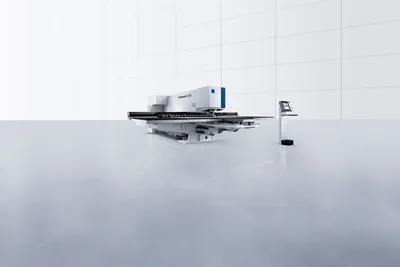
Boschert Combi 500
Key Specifications
Accuracy
Repeatability
max punching force
notching capacity steel
notching max depth
working area
Overview
The Boschert Combi 500 is a CNC combination punch-and-notch machine from Boschert GmbH, representing the manufacturer's approach to combining two common sheet metal operations — punching and corner notching — in a single machine. Unlike a standard CNC punch press, the Combi 500 integrates a hydraulic punch head with a separate hydraulic notching station, allowing the same machine to punch hole patterns and then notch corners for box and pan fabrication without repositioning the sheet to a separate notching machine. This combination is particularly valuable for sheet metal shops producing enclosures, brackets, frames, and structural components where corner notching is a frequent operation alongside punching.
The punching section of the Combi 500 delivers 500 kN (56-ton) force — a significant step above the EKO 200 and Compact — handling material up to 8 mm mild steel and 6 mm stainless steel for blanking and forming operations. The notching section uses a dedicated hydraulic notching die with a fixed 90-degree notch angle and variable depth up to approximately 150 mm from the sheet edge. Maximum notching capacity in mild steel is typically 5-6 mm thickness, covering the range where manual corner notchers become impractical and CNC routing is too slow for production quantities. The working area is 2,500 x 1,250 mm (98 x 49 in), accommodating standard sheet sizes through both the punching and notching stations.
Boschert's Combi series reflects a design philosophy focused on practical shop utility over headline performance metrics. The 500 kN punching force handles the heavy forming operations — large-diameter embosses, heavy-gauge louvers, deep draws — that justify the Combi 500's heavier-duty punch head compared to the EKO 200. The integrated notching station eliminates the purchase, maintenance, and floor space of a separate corner notcher. For small-to-medium fabrication shops producing enclosures, electrical panels, and structural brackets, this workflow simplification can be as valuable as raw throughput improvements. The hydraulic drive on both stations is straightforward to maintain and is familiar to shops that already work with hydraulic press brakes and ironworkers.
New Combi 500 systems are priced in the $180,000 to $280,000 range, which is higher than a standalone punch of equivalent force but lower than purchasing separate punch and notching machines. The combined machine occupies less floor space than two separate machines and eliminates the material handling between operations. For shops where corner notching represents 20-40% of their sheet metal operations, the Combi 500's workflow integration provides both cost and productivity advantages that a standalone punch press cannot deliver.
Full Specifications
| Parameter | Value |
|---|---|
| Max Punching Force | 500 kN (56 tons) |
| Notching Capacity Steel | Up to 6 mm mild steel (90° corner notch) |
| Notching Max Depth | 150 mm from sheet edge |
| Working Area | 2,500 x 1,250 mm (98 x 49 in) |
| Max Stroke Rate | 250 strokes/min (punching section) |
| Max Sheet Thickness Steel | 8 mm (0.315 in) mild steel (punching) |
| Max Sheet Thickness Stainless | 6 mm (0.236 in) stainless steel (punching) |
| Tool Stations | 20 (linear rail, automatic selection) |
| Drive Type | Hydraulic (both punch and notch stations) |
| Notch Angle | 90° fixed |
| Positioning Accuracy | +/- 0.004 inch |
| Traverse Speed | 60 m/min |
| CNC Control | Siemens or Beckhoff CNC with touchscreen |
| Machine Weight | Approx. 13,000 kg (28,660 lbs) |
| Low Tonnage | 120 spm |
| High Tonnage | 58 spm |
| Max Material Thickness | ¾ inch |
| Max Copper Bar Length Standard Length | 160 inches |
| Min Copper Bar Width | ¾ inch |
| Max Copper Bar Width | 12 inches |
| Tooling System | Thick Turret “D” station tooling in quick change cassette |
| Max Punch Diameter | 3.5 inches or any shape fitting within |
| Repeatability | +/- 0.002 inch |
| X Axis | 230 feet per minute |
| Y Axis | 98 feet per minute |
| Hydraulic Drive | 25 HP |
| Hydraulic System Capacity | 50 gallons |
| Approximate Floor Space | 16’ x 35’ |
| Approximate Height | 6’ |
| Approximate Weight | 29,500 lbs. |
Specifications sourced from boschertusa.com — verified 2026-03-28
Strengths & Limitations
Strengths
- Integrated punch-and-notch in a single machine eliminates the need for a separate corner notcher, saving floor space and capital cost versus two separate machines
- 500 kN (56-ton) punch force handles thick-gauge forming operations — large embosses, heavy louvers, and 8 mm steel blanking — beyond the capacity of 200-300 kN entry-level punches
- 90° corner notching capability produces clean, accurate corners for box and pan fabrication without secondary processing — particularly valuable for enclosure and bracket manufacturers
- 20 tool stations provide more tooling variety than the EKO 200's 12 stations, reducing manual tool change interruptions on complex parts
- Single CNC program can sequence punch operations and notch operations on the same part program, reducing programming effort and setup time
Limitations
- Fixed 90° notch angle limits the notching station to standard right-angle corner cuts — non-standard angles require separate routing or plasma cutting
- Hydraulic drive on both stations means higher power consumption, more maintenance (fluid, filters, seals) and more noise than servo-electric alternatives
- The combination machine concept creates a bottleneck if punching or notching operations dominate — if 90% of work is punching with only 10% notching, the notching integration adds cost without proportional benefit
Best For
Frequently Asked Questions
01
Combining punch and notch operations eliminates sheet repositioning between machines, saving handling time and eliminating the risk of positioning errors when moving sheets between a punch press and a separate corner notcher. For parts requiring both operations, a single Combi 500 program can complete the entire flat blank preparation in one setup. Floor space savings are also significant — the Combi 500 replaces two separate machines occupying separate footprints.
02
The notching station uses a fixed upper and lower die set configured for 90° corner removal. The sheet is positioned at the corner notching station with the sheet corner inserted into the die opening, and the hydraulic notching head descends to shear out the corner. Notch depth is programmed via the CNC — the sheet is fed to the correct position by the CNC axes before the notch cycle fires. Multiple corners are notched in sequence within the same CNC program after the punching operations are complete.
03
Yes. Aluminum up to approximately 8-10 mm can be punched at the Combi 500's 500 kN force, and aluminum up to 8 mm is typically within the notching station's capacity. Aluminum punching requires tooling clearances of approximately 8-12% of material thickness per side (smaller than steel clearances) and sharp tools to avoid burring. The notching section handles aluminum with the same ease as steel given aluminum's lower shear strength.
04
The Combi 500 in its standard configuration is designed for operator-loaded sheet metal processing. Boschert offers sheet feed and support tables as accessories but not the fully integrated tower storage and robotic sheet handling systems offered by Amada, Trumpf, or Murata Wiedemann for production punch presses. For high-volume automated production, the standalone Boschert punch models or a full-featured turret press from a major brand is more appropriate.
05
The typical Combi 500 customer is a small-to-medium fabrication shop (5-30 employees) producing enclosures, brackets, frames, and custom metalwork in runs of 10-500 parts per job. These shops value machine versatility and low capital cost over peak throughput. The Combi 500 serves as their primary flat blank preparation machine, replacing both a punch press and a separate corner notcher while fitting in the floor space of one mid-size machine.
Videos

HedermanEngineering

Boschert USA

Apex Auctions
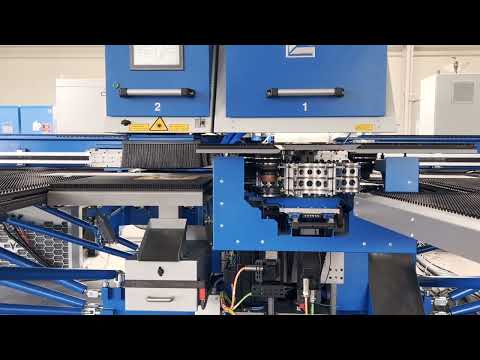
Boschert USA
Community Discussions
Pricing and buying discussion — Newbie Affordable CAM software for hobbyist? - CNCzone
Community discussion — Need Help! Boschert Compact Rotation Programming for Louver ...
Troubleshooting and problem-solving — AlphaCam nesting multiple lists - CNCzone
Community discussion — TRENS SUI 500 COMBI WITH HEIDENHAIN MANUALplusM prameters
Community discussion — Can anyone identify this bench top combo? : r/Machinists - Reddit
Pricing and buying discussion — Cheap Combination Mill/Lathe. Great value entry level setup ...
Pricing and buying discussion — Quiet air compressor recommendations? : r/Machinists - Reddit
Community discussion — Coolant recommendations : r/Machinists - Reddit
Links to community discussions. Summaries are editorial — visit the original thread for full context.
Related Machines
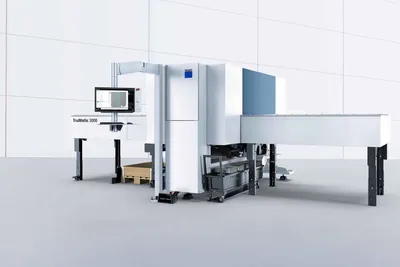
Trumpf TruMatic 3000
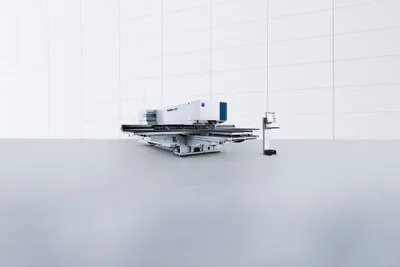
Trumpf TruMatic 7000
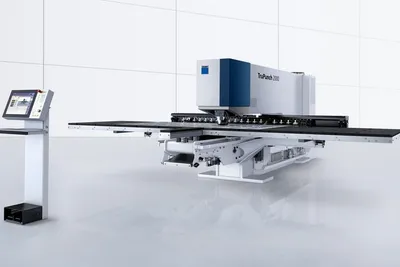
Trumpf TruPunch 2000
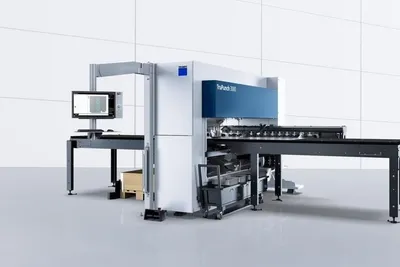
Trumpf TruPunch 3000