Industrial CNC Machine Directory

Blohm Orbit 46

$900,000 - $1,400,000 Updated 2026-03-17
01

Key Specifications

Max Workpiece ⌀

500 mm (19.7 in)

rotary table diameter

800 mm (31.5 in)

max workpiece height

400 mm (15.7 in)

max workpiece weight

300 kg (661 lb)

cnc axes

5-axis simultaneous (X, Y, Z, A, C)

grinding spindle power

45 kW (60.3 HP)

02

Overview

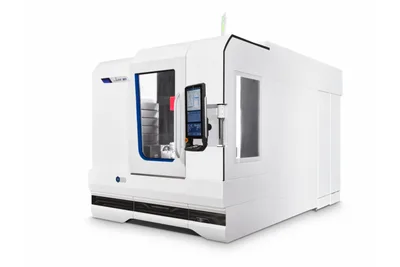
The Blohm Orbit 46 is a large-format 5-axis CNC creep-feed grinding machine purpose-built for the most demanding aerospace and energy turbine component grinding applications — larger blisks, fan blade root forms, low-pressure turbine vane segments, and structural turbine components that exceed the workpiece envelope of the Orbit 36. With a rotary table diameter of 800 mm and maximum workpiece diameter of 500 mm and height of 400 mm, the Orbit 46 is designed for the next tier of turbine components above the Orbit 36: large commercial turbofan fan stages, industrial gas turbine compressor disks, and power generation turbine blade arrays.

Like the Orbit 36, the Orbit 46 uses a 5-axis simultaneous CNC architecture with a precision rotary C-axis table as the central defining feature. The continuous C-axis rotation enables the machine to index between blade positions on a blisk, grind helical features, and maintain consistent grinding wheel-to-workpiece geometry as the part rotates — capabilities that are structurally impossible on a linear-table surface grinder. The X, Y, and Z linear axes plus the C rotary table and A wheelhead swivel axis work in simultaneous interpolation for 3D profile grinding of the complex geometries produced by modern turbine aerodynamic design.

The Orbit 46's grinding spindle delivers 45 kW of power with peripheral wheel speeds up to 80 m/s, providing the cutting power needed for CBN and conventional abrasive creep-feed grinding of Inconel 718, titanium 6Al-4V, titanium aluminide, and René alloys in production quantities. The increased spindle power over the Orbit 36 (30 kW) reflects the larger workpiece cross-sections and higher material removal rates required when grinding the bigger fan and compressor components the Orbit 46 is sized for. High-pressure coolant at up to 150 bar with multiple jet positions maintains thermal control in the grinding contact zone during deep creep-feed cuts.

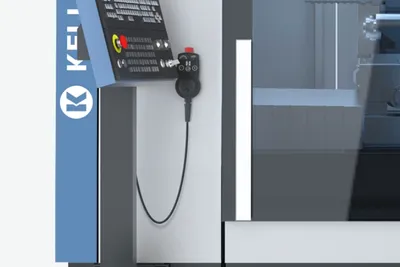
Control is via the Siemens 840D sl platform with Blohm's grinding-optimized interface and dedicated turbine component grinding cycle libraries. The machine supports in-process gauging, automatic CNC form dressing, and PROFINET robot loading interfaces for unattended production cell integration. New Orbit 46 pricing typically falls in the $900,000–$1,400,000 range depending on automation and options — positioned above the Orbit 36 and competing with Mägerle MGC-L and Makino GA5 for the largest aerospace creep-feed grinding applications.

03

Full Specifications

Parameter Value
Rotary Table Diameter 800 mm (31.5 in)
Max Workpiece Diameter 500 mm (19.7 in)
Max Workpiece Height 400 mm (15.7 in)
Max Workpiece Weight 300 kg (661 lb)
Cnc Axes 5-axis simultaneous (X, Y, Z, A, C)
Grinding Spindle Power 45 kW (60.3 HP)
Max Wheel Peripheral Speed 80 m/s
Max Grinding Wheel Diameter 500 mm (19.7 in)
X Travel 800 mm (31.5 in)
Y Travel 500 mm (19.7 in)
Z Travel 500 mm (19.7 in)
A Axis Swivel +/- 120°
C Axis Rotation 360° continuous
Coolant Pressure Up to 150 bar (2,175 psi)
Machine Base Polymer concrete (Granitan-type)
CNC Control Siemens 840D sl with Blohm OP 15 interface
04

Strengths & Limitations

Strengths

  • 800 mm rotary table and 500 mm workpiece diameter handle large fan stage blisks, low-pressure compressor disks, and industrial gas turbine components that exceed the Orbit 36's 350 mm envelope
  • 45 kW spindle at 80 m/s provides the power density for CBN creep-feed grinding of large-cross-section superalloy features without sacrificing material removal rate on thick blade root forms
  • 5-axis simultaneous CNC with C-axis rotary table enables complete blisk and blade array grinding in a single setup, indexing between all blade positions without reclamping
  • Up to 150 bar high-pressure coolant with multiple jets penetrates the grinding wheel-workpiece interface during deep creep-feed cuts, preventing thermal damage to aerospace superalloy surfaces
  • PROFINET automation interfaces and automatic in-cycle CNC form dressing support unattended production cell operation with robot loading for high-volume turbine component production

Limitations

  • At $900,000–$1,400,000, the Orbit 46 is one of the highest-capital grinding investments available — exclusively justified by high-volume production of large aerospace or energy turbine components
  • The 500 mm maximum workpiece diameter and 400 mm height, while substantially larger than the Orbit 36, still excludes very large low-pressure turbine disks and industrial gas turbine components exceeding these dimensions
  • 5-axis simultaneous programming for complex turbine geometries on large components requires experienced CAM programmers and significant process development time for each new part family
05

Best For

Aerospace engine OEMs and Tier 1 suppliers grinding large turbofan fan stage blisks, low-pressure compressor disks, and turbine vane segments where the Orbit 36's 350 mm envelope is insufficient Power generation and industrial gas turbine manufacturers grinding large compressor and turbine blade roots, shroud segments, and disk rim profiles for land-based turbine applications NADCAP-certified aerospace grinding facilities processing large turbine assemblies that require 5-axis simultaneous grinding capability and full process traceability documentation Aerospace MRO overhaul shops performing dimensional restoration of large turbine disk and fan assemblies where rotary-table 5-axis grinding is necessary for the component geometry
06

Frequently Asked Questions

01 How does the Orbit 46 differ from the Orbit 36?

The Orbit 46 has a larger 800 mm rotary table (vs. 600 mm) and 500 mm maximum workpiece diameter (vs. 350 mm), higher workpiece weight capacity at 300 kg (vs. 150 kg), and more powerful 45 kW spindle (vs. 30 kW). Both machines share the same 5-axis simultaneous architecture, Siemens 840D sl control, and creep-feed grinding methodology. The Orbit 46 is specified when the workpiece size — particularly large fan blisks and industrial gas turbine components — exceeds the Orbit 36's envelope.

02 Can the Orbit 46 grind large blisks for commercial turbofan engines?

Yes, the Orbit 46's 800 mm rotary table and 500 mm maximum workpiece diameter are sized to accommodate large commercial turbofan fan-stage blisks and low-pressure compressor blisks. The C-axis continuously indexes between blade positions while X, Y, Z, and A simultaneously position the grinding wheel on each blade profile. The high-pressure coolant system is essential for thermal management during the deep creep-feed passes required on the large cross-sections of fan blade root forms.

03 What certification standards can the Orbit 46 support?

The Orbit 46 supports NADCAP grinding process certification through its comprehensive parameter documentation and process control capabilities on the Siemens 840D sl. All grinding parameters — wheel speed, feed rate, dressing cycles, coolant pressure and flow — are logged and traceable. For AS9100-certified aerospace manufacturing, the machine's process records satisfy the documentation requirements for special process qualification on flight-critical turbine components.

04 What wheel types are used on the Orbit 46 for turbine blade grinding?

Turbine blade root form grinding on the Orbit 46 most commonly uses vitrified CBN wheels for fir-tree and dovetail profiles on nickel superalloys and titanium alloys. Vitrified CBN provides excellent thermal conductivity, long wheel life, and consistent profile holding across large production runs. For profile forms that require frequent dressing to maintain geometry, vitrified conventional abrasive wheels with CNC form roll dressing are also used — particularly on Inconel 718 where CBN thermal load can be marginal.

05 How does the Orbit 46 fit against the Mägerle MGC-L for aerospace grinding?

Both machines target aerospace turbine component creep-feed grinding at the highest performance level, but with different table configurations. The Mägerle MGC-L uses a linear table (up to 1,200 mm × 600 mm) — better for prismatic blade arrays, vane segments, and parts where the linear travel is the dominant dimension. The Orbit 46 uses a rotary table — better for round components like blisks and disks where the C axis is integral to the workpiece geometry. Many aerospace OEMs use both configurations for different component families.

07

Videos

Missing Planet - Falling In

Missing Planet - Falling In

sub bassline

Stabilizer Conversion

Stabilizer Conversion

Stellar PM

Rave Culture Telegram Year Mix 2025

Rave Culture Telegram Year Mix 2025

Serge Podsypannikov

Hazem Beltagui ft. Rebecca Louise Burch - Lost Again (original mix) [FSOE 325]

Hazem Beltagui ft. Rebecca Louise Burch - Lost Again (original mix) [FSOE 325]

Cesone4

Uplink & Jason Gewalt - Euphoria (Free Download)

Uplink & Jason Gewalt - Euphoria (Free Download)

GOOD VIBES MUSIC

08

Community Discussions

09

Related Machines