Industrial CNC Machine Directory

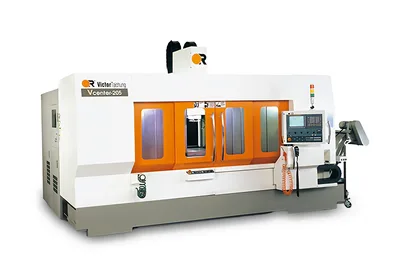
Victor Taichung V-Center 55

$90,000 - $140,000 Updated 2026-03-17
01

Key Specifications

X Travel

1,067 mm (42.0 in)

Y Travel

600 mm (23.6 in)

Z Travel

560 mm (22.0 in)

Max Spindle

6,000 RPM (10,000 / 12,000 RPM optional)

Spindle Taper

BT 40

Table Size

1,400 x 600 mm (55.1 x 23.6 in)

02

Overview

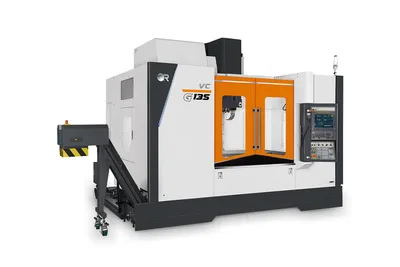
The Victor Taichung V-Center 55 is a mid-size vertical machining center from Victor Taichung Machinery Works, one of Taiwan's most established machine tool manufacturers with over 60 years of production history. The V-Center 55 targets the core production VMC segment — job shops, contract manufacturers, and toolrooms requiring a dependable, accurate, and well-supported machining platform for steel, aluminum, stainless, and cast iron work. The machine's 1,400 x 600 mm table and 1,067mm X-axis travel put it at the larger end of the standard VMC category, making it well-suited for longer parts, multi-fixture setups, and medium-to-large mold work.

Victor Taichung builds the V-Center 55 on a heavily ribbed Meehanite cast iron frame designed and verified through finite element analysis to minimize deflection and thermal growth under production cutting loads. All three axes run on box-way guideways — a design choice that differentiates the V-Center 55 from linear-guide competitors and delivers greater vibration damping and resistance to cutting force deflection, particularly valuable in heavy steel roughing, hard-material work, and interrupted cuts. The tradeoff is lower rapid traverse (20 m/min) compared to linear-guide machines, but for the job shop segment the box-way damping advantage in difficult materials often outweighs traverse speed.

The spindle is a geared dual-range design running to 6,000 RPM, providing high torque across the full speed range for heavy-duty material removal in steel and cast iron. A direct-drive or belt-drive high-speed spindle option extends the speed range to 10,000 or 12,000 RPM for shops also running aluminum or finishing work. The 30-tool arm-type ATC handles most production programs, and a 40-tool option is available for complex multi-operation setups.

Fanuc 0iMF is standard, supported by a full splash enclosure, programmable coolant, and chip conveyor. The V-Center 55 is also available with Mitsubishi and Siemens control options for customers with specific control preferences or automation integration requirements.

The V-Center 55 competes with the YCM NV-1000A, Leadwell V-42iT, and Quaser MV154 in the large-table Taiwanese VMC segment. Victor Taichung's pricing is typically competitive with peers, with street pricing running from $90,000 to $140,000 depending on spindle choice, control, and configuration. For shops that value box-way rigidity and high-torque cutting over maximum traverse speed, the V-Center 55 delivers a compelling, time-tested production VMC.

03

Full Specifications

Parameter Value
X-Axis Travel 1,067 mm (42.0 in)
Y-Axis Travel 600 mm (23.6 in)
Z-Axis Travel 560 mm (22.0 in)
Table Size 1,400 x 600 mm (55.1 x 23.6 in)
Max Table Load 1,500 kg (3,307 lb)
Max Spindle Speed 6,000 RPM (10,000 / 12,000 RPM optional)
Spindle Motor Power 22 / 15 kW (30 / 20 hp)
Spindle Taper BT 40
Feed Rate Max 20,000 mm/min (787 ipm)
Tool Changer Capacity 30 tools (arm-type ATC; 40-tool optional)
CNC Control Fanuc 0iMF (Mitsubishi / Siemens optional)
Machine Weight Approx. 14,000 kg (30,865 lb)
Manufacturer Victor
Model Vcenter-55

Specifications sourced from machinio.com — verified 2026-03-28

04

Strengths & Limitations

Strengths

  • Box-way guideway construction on all axes delivers superior vibration damping and cutting force resistance for heavy steel roughing, interrupted cuts, and hard-material machining
  • 1,400 x 600 mm table with 1,500 kg load rating handles large workpieces, heavy fixtures, and multi-part setups without table loading concerns
  • 22 kW BT50 spindle with high-torque dual-range geared option provides the cutting force needed for aggressive material removal in production steel and cast iron applications
  • Victor Taichung's 60-year manufacturing history and established global dealer network provide strong after-sales support and parts availability
  • BT50 taper offers higher rigidity and tool holding force than BT40 for large-diameter tools and heavy-cut applications

Limitations

  • 20 m/min rapid traverse is significantly lower than linear-guide VMCs (36–48 m/min), which increases non-productive positioning time in high-mix programs with many rapid moves
  • 6,000 RPM standard spindle limits surface speed for aluminum and non-ferrous finishing; the high-speed spindle option is needed for aluminum-focused work
  • BT50 tooling is larger, heavier, and more expensive than BT40, which can be a consideration for shops maintaining smaller tooling budgets
05

Best For

Job shops and production manufacturers regularly performing heavy steel roughing, hard material machining, or interrupted cuts where box-way damping provides a measurable advantage over linear-guide machines Mold and die shops producing large mold bases, cavity blocks, and tooling plates requiring deep pockets and aggressive stock removal in P20, H13, or hardened tool steel Shops machining large weldments, castings, and structural steel components where workpiece weight, irregular surfaces, and interrupted cutting favor a high-mass, high-damping platform Contract manufacturers needing a versatile large-table VMC that can handle the full range of job shop materials from aluminum to hardened steel without spindle changes
06

Frequently Asked Questions

01 Why does the V-Center 55 use box ways instead of linear guides?

Victor Taichung designed the V-Center 55 with box-way guideways to maximize rigidity, vibration damping, and resistance to cutting force deflection. Box ways have a larger contact area with the saddle compared to linear guides, which dissipates cutting vibration more effectively and maintains accuracy under heavy side loads — conditions common in steel roughing, interrupted cuts, and deep-pocket mold work. The trade-off is lower rapid traverse speed (20 m/min vs. 36–48 m/min for linear-guide machines). Shops with heavy material removal requirements will often find box-way machines more productive despite the lower traverse speed.

02 Is the V-Center 55 suitable for mold and die work?

Yes. The V-Center 55's large table, heavy construction, box-way rigidity, and BT50 high-torque spindle make it well-suited for mold and die applications. Shops machining large mold bases, A/B plates, cavity blocks, and die components in P20, H13, S7, or hardened steels will benefit from the machine's damping characteristics. For high-speed aluminum electrode work, the optional high-speed spindle (10,000 or 12,000 RPM) can be specified to cover both rough steel work and electrode finishing in the same machine.

03 What control options are available for the V-Center 55?

The V-Center 55 is available with Fanuc 0iMF (most common, broad CAM post availability), Mitsubishi M80 (preferred by some Asian markets), and Siemens 828D (preferred in European markets and shops with existing Siemens standardization). The Fanuc 0iMF is the recommended choice for shops in North America and most other markets due to the widest post-processor support and most extensive global service network. Siemens is appropriate for shops with existing Siemens training and toolpath expertise.

04 How does the V-Center 55 compare to the Leadwell V-42iT?

Both are large-table Taiwanese VMCs in the 1,000–1,070mm X-travel class, but with different design philosophies. The V-Center 55 uses box-way guideways and a BT50 spindle optimized for heavy-duty cutting with maximum damping. The Leadwell V-42iT uses linear guideways and a BT40 spindle optimized for higher traverse speeds and lighter cuts. Shops performing heavy steel roughing and mold work will generally prefer the V-Center 55's box-way rigidity. Shops running higher-mix, faster-cycle production in aluminum and lighter steels may prefer the V-42iT's traverse speed advantage.

05 What is the maximum workpiece height the V-Center 55 can accommodate?

The V-Center 55 provides 560mm of Z-axis travel with a spindle nose-to-table distance that allows workpieces up to approximately 500–520mm in height (depending on toolholder and tool length). Shops working with tall workpieces, angle plate setups, or rotary table installations should verify the specific spindle nose-to-table and Z-stroke configuration with Victor Taichung's regional distributor to confirm that their tallest fixture and workpiece combinations fit within the available clearance.

07

Videos

Victor Taichung Vcenter 55 with built in robot EWR 03

Victor Taichung Vcenter 55 with built in robot EWR 03

Victor Taichung

Victor Taichung Vcenter H630HS horizontal machining center

Victor Taichung Vcenter H630HS horizontal machining center

Victor Taichung

Victor Taichung Vcenter H630HD horizontal machining center

Victor Taichung Vcenter H630HD horizontal machining center

Victor Taichung

Victor Taichung Vcenter P106 machining center

Victor Taichung Vcenter P106 machining center

Victor Taichung

08

Community Discussions

09

Related Machines