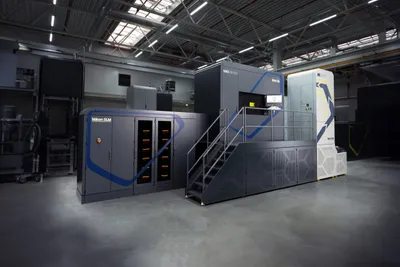
Velo3D Sapphire Pro
Key Specifications
build volume
laser type
laser power
number of lasers
layer thickness
min feature size
Overview
The Velo3D Sapphire Pro is the multi-laser production evolution of the original Sapphire platform, increasing the standard Sapphire's single-laser architecture to two or four 1 kW fiber lasers while retaining the core 315 mm diameter x 400 mm build envelope. The Pro designation signals a focus on production throughput: the additional lasers double or quadruple build rates on standard geometries without changing the build volume or the fundamental SupportFree printing process that differentiates Velo3D's technology from conventional LPBF systems.
At the heart of the Sapphire Pro is Velo3D's Intelligent Fusion process control system, which coordinates all laser zones in real time using thermal feedback from across the build surface. Unlike multi-laser systems that simply divide the build plate into fixed zones, Intelligent Fusion dynamically manages laser assignments and power levels to compensate for thermal gradients and maintain consistent melt pool conditions. This is particularly important when printing near-zero-degree overhangs — the feature that has made Velo3D's platform essential in space propulsion and aerospace — where thermal management directly determines whether the part prints without supports.
The Sapphire Pro supports the same qualified material portfolio as the standard Sapphire: Inconel 718, Inconel 625, Ti-6Al-4V, Hastelloy X, aluminum F357, and stainless steels. Flow software handles build file preparation with Velo3D's orientation-optimized layout tools, and Assure quality management generates the layer-by-layer documentation required for flight hardware qualification. The non-contact recoater design reduces the risk of recoater blade crashes on complex overhanging geometries — a persistent problem with conventional blade recoaters on low-angle surfaces.
The Sapphire Pro is targeted at aerospace manufacturers, space launch companies, and advanced defense contractors who have already validated the Sapphire platform for their applications and need higher throughput without changing part programs, qualification packages, or material specifications. It competes with the EOS M 300-4 and Renishaw RenAM 500Q in the multi-laser production segment, but differentiates on its SupportFree capability which those platforms do not offer. Pricing is typically in the $1,200,000–$1,800,000 range.
Full Specifications
| Parameter | Value |
|---|---|
| Build Volume | 315 mm dia x 400 mm H (12.4 x 15.7 in) |
| Laser Type | Yb-fiber laser |
| Laser Power | 2 x 1 kW or 4 x 1 kW |
| Number Of Lasers | 2 or 4 (configuration dependent) |
| Layer Thickness | 50 – 100 µm (material dependent) |
| Min Feature Size | ~150 µm |
| Min Overhang Angle | Sub-5 degrees (SupportFree technology) |
| Recoater Type | Non-contact recoater |
| Technology | Laser Powder Bed Fusion (LPBF) — SupportFree |
| Materials | Inconel 718, Inconel 625, Ti-6Al-4V, Hastelloy X, Al F357, Stainless Steel |
| Atmosphere | Argon inert gas |
| Process Monitoring | Intelligent Fusion real-time thermal monitoring |
| Software | Flow (print preparation), Assure (quality management) |
| Machine Dimensions | ~2,500 x 1,800 x 2,800 mm |
| Power Requirements | 3-phase, 480V, 60A |
Specifications compiled from manufacturer literature and industry references. Not independently verified against a published spec sheet — confirm with the manufacturer or an authorised dealer before making a purchasing decision.
Strengths & Limitations
Strengths
- Multi-laser (2x or 4x 1 kW) configuration provides 2–4x the throughput of the standard Sapphire on the same 315 mm build envelope with no change to part programs or qualification packages
- SupportFree printing of overhangs below 5 degrees eliminates support structures on combustion chambers, impellers, and complex internal channels that conventional LPBF requires
- Intelligent Fusion dynamically coordinates laser zones using real-time thermal feedback, maintaining melt pool consistency across multi-laser operation
- Non-contact recoater design prevents blade crashes on aggressive overhanging geometries that fail on conventional systems
- Assure quality management generates layer-by-layer documentation suitable for flight hardware and safety-critical part qualification
Limitations
- 315 mm diameter build envelope limits part size — large aerospace structural components exceeding this diameter require the Sapphire XC platform
- Velo3D's Flow and Assure software ecosystem requires dedicated training and is not interchangeable with EOS or SLM parameter sets
- Premium pricing ($1.2M–$1.8M) reflects Velo3D's SupportFree technology differentiation and is higher than conventional LPBF systems of similar build volume
Best For
Frequently Asked Questions
01
The Sapphire Pro adds two or four 1 kW lasers to the standard Sapphire's single-laser design, doubling or quadrupling throughput on the same 315 mm diameter build envelope. The build volume, materials, SupportFree capability, and software are identical. The Pro is specifically intended for customers scaling from prototype qualification to production volume who want higher output without changing their validated process parameters.
02
SupportFree is Velo3D's technology for printing metal overhangs at angles below 5 degrees from horizontal — surfaces that conventional LPBF systems require dense support structures to print. Velo3D achieves this through a combination of non-contact recoating, Intelligent Fusion thermal control, and purpose-engineered exposure strategies. For parts like combustion chambers, rotating impellers, and complex manifolds, SupportFree printing eliminates support removal operations and enables internal features that would trap supports in a conventional system.
03
The Sapphire Pro supports Velo3D's full qualified material portfolio: Inconel 718, Inconel 625, Ti-6Al-4V, Hastelloy X, aluminum F357, and several stainless steels. Velo3D qualifies materials at the system level across the Sapphire platform family, so parameters developed and qualified on the standard Sapphire transfer directly to the Pro configuration.
04
Both are multi-laser production LPBF systems in the $1.2M–$2M range. The EOS M 300-4 has a slightly larger square build envelope (300 x 300 mm vs. 315 mm diameter circular) and the broader EOS material qualification library. The Sapphire Pro's defining advantage is SupportFree printing, which the EOS M 300-4 does not offer. For complex overhanging geometries in aerospace and propulsion, the Sapphire Pro is typically the stronger choice.
05
Yes. Velo3D designed the Sapphire Pro to maintain process equivalency with the standard Sapphire. The Intelligent Fusion system manages multi-laser operation to replicate the melt pool conditions of the single-laser Sapphire. Customers who have qualified parts on the standard Sapphire can typically transition to the Pro with qualification bridging rather than full re-qualification, though the specific requirements depend on the customer's quality system and regulatory environment.
Videos

Velo3D

3Dnatives
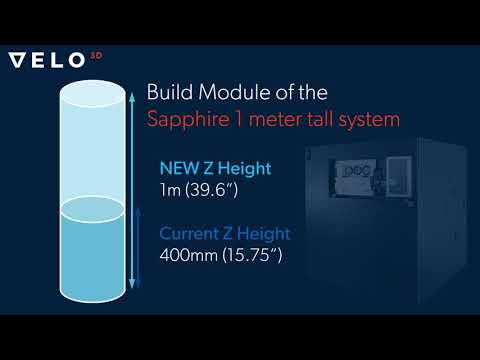
Velo3D
FabMetalMag

My Financial Friend
Community Discussions
Community discussion — 3d probing on machine
Pricing and buying discussion — Purchasing a new CMM and software decisions ...
Pricing and buying discussion — Super Draft CAD/CAM (UK ... - Practical Machinist
Troubleshooting and problem-solving — ESSO Lubricant Equivalents
Troubleshooting and problem-solving — Need Help with Vevor Lathe Decision : r/Machinists - Reddit
Community discussion — Recommendations for CNC VMC : r/Machinists - Reddit
Community discussion — Not your normal lathe : r/Machinists - RedditBelzona or alternatives. : r/Machinists - RedditRecommendations on a good metal lathe? : r/Machinists - RedditTrying to Understand Precision Matthews Benchtop Lathe ...
Community discussion — Belzona or alternatives. : r/Machinists - Reddit
Links to community discussions. Summaries are editorial — visit the original thread for full context.
Related Machines
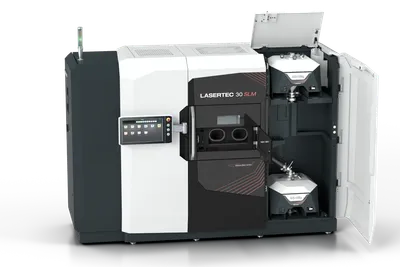
DMG Mori LASERTEC 30 SLM
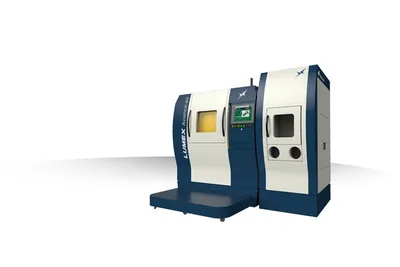
Matsuura LUMEX Avance-60
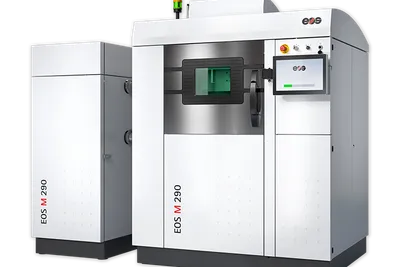
EOS M 290
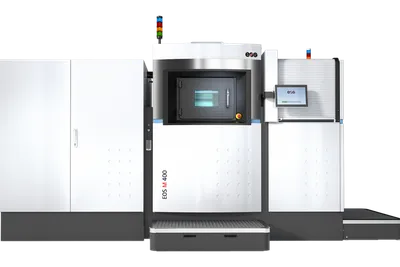
EOS M 400-4
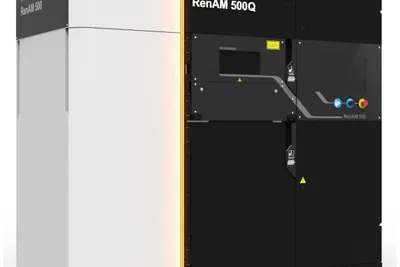
Renishaw RenAM 500Q