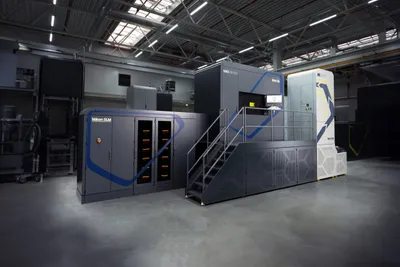
Velo3D Sapphire 64
Key Specifications
build volume
number of lasers
laser power
layer thickness
build rate
minimum overhang angle
Overview
The Velo3D Sapphire 64 is the large-format iteration in Velo3D's Sapphire product line, featuring a 1,000 mm diameter × 600 mm tall cylindrical build volume and 24 fiber lasers at 1 kW each — one of the highest laser count and build volume combinations available in production LPBF. The Sapphire 64's primary target is the serial production of very large aerospace, defense, and industrial components that previously required multiple-piece assemblies or conventional fabrication routes. By printing these parts as a single near-net-shape structure, the Sapphire 64 eliminates joining operations, reduces part count, and enables internal geometry complexity impossible with subtractive or casting methods.
Like all Sapphire platform machines, the Sapphire 64 incorporates Velo3D's non-contact recoater and Intelligent Fusion closed-loop process control. These technologies are even more critical at the Sapphire 64's scale, where maintaining consistent powder bed quality and melt pool conditions across a 1-meter build plate requires precision that traditional contact recoaters cannot reliably deliver. Intelligent Fusion monitors thousands of individual melt pools per second with photodiode and pyrometer arrays, enabling the system to detect and respond to anomalies in real time across all 24 laser zones.
The Sapphire 64 shares the Sapphire platform's support-free printing capability, printing overhangs from 0° and internal channels from 1 mm diameter without support structures. At this scale, that capability is transformative: large rocket engine structures, satellite bus frames, aircraft nacelle components, and offshore energy equipment that would require extensive support scaffolding on conventional LPBF machines can be printed clean on the Sapphire 64, dramatically reducing post-processing labor and the risk of part damage during support removal.
Velo3D offers the Sapphire 64 as a production system to be operated in customer facilities or through Velo3D's network of contract manufacturing partners. Qualified materials include Ti-6Al-4V, Inconel 718, Inconel 625, and Hastelloy X, with the Assure quality system providing the AS9100-compatible layer-by-layer documentation required for aerospace production. The Sapphire 64 represents the current frontier of production-scale LPBF for the most demanding large-part aerospace and space applications.
Full Specifications
| Parameter | Value |
|---|---|
| Build Volume | 1,000 mm diameter × 600 mm tall (39.4 in × 23.6 in) |
| Number Of Lasers | 24 |
| Laser Power | 24 × 1,000 W fiber lasers (24 kW total) |
| Layer Thickness | 30 – 100 µm |
| Build Rate | Up to 200 cm³/hr (material and geometry dependent) |
| Minimum Overhang Angle | 0° (support-free down to horizontal surfaces) |
| Minimum Internal Channel Diameter | 1 mm without supports |
| Accuracy | ±0.1 mm or 0.1% of dimension (whichever is greater) |
| Supported Materials | Ti-6Al-4V, Inconel 718, Inconel 625, Hastelloy X |
| Atmosphere | Argon inert atmosphere, continuous O2 monitoring |
| Process Monitoring | Velo3D Intelligent Fusion — 24-zone photodiode and pyrometer melt pool monitoring |
| Software | Velo3D Flow (build prep), Assure (quality monitoring) |
| Machine Weight | Approx. 10,000 kg (22,046 lb) |
Specifications compiled from manufacturer literature and industry references. Not independently verified against a published spec sheet — confirm with the manufacturer or an authorised dealer before making a purchasing decision.
Strengths & Limitations
Strengths
- 1,000 mm diameter build volume enables single-piece printing of aerospace structures that would otherwise require multi-piece assembly
- 24 × 1 kW lasers provide up to 200 cm³/hr build rate, enabling production-scale throughput for large complex parts
- Support-free printing capability at 1-meter scale eliminates extensive support scaffolding and post-processing labor on large aerospace hardware
- Intelligent Fusion monitors all 24 laser zones simultaneously, providing consistent process control across the full 1-meter build area
Limitations
- Extremely high capital cost in the $3.5M–$6M range limits buyers to the largest aerospace OEMs and well-capitalized contract AM bureaus
- Cylindrical 1-meter build volume requires substantial facility space including floor loading capacity, inert gas supply, and powder handling infrastructure
- Material qualification limited to Velo3D's approved alloy library — novel material development requires Velo3D collaboration
Best For
Frequently Asked Questions
01
The Sapphire 64 is significantly larger than the XC: 1,000 mm diameter vs 600 mm diameter build volume, and 24 lasers vs 8 lasers. The Sapphire 64 is targeted at single-piece printing of very large aerospace structures, while the XC is better suited for high-throughput production of large-but-not-enormous parts like rocket chamber and turbine components. Both share Velo3D's support-free printing and Intelligent Fusion process control.
02
The Sapphire 64 is primarily deployed in space launch, satellite, and defense aerospace. Customers use it to eliminate multi-piece assembly on structures like rocket engine components, satellite bus frames, and aerospace structural brackets. The 1-meter build diameter is particularly relevant for next-generation launch vehicle architectures that prioritize lightweight integrated structures.
03
The Sapphire 64 requires reinforced flooring for approximately 10,000 kg machine weight, high-volume argon inert gas supply, climate-controlled environment, 3-phase power, and substantial space for the printer and associated powder management equipment. Total facility footprint including powder handling is typically 50+ square meters. Velo3D provides detailed facility specifications during the sales process.
Videos

3Dnatives

Vision Miner

Flash by StockSentinel ai

Ascencore

CNBC Television
Community Discussions
Maintenance and service — DLL and firmware version - CNCzone
Maintenance and service — Need Help! Fanuc with MP Scale SV0366 alarm - cnczone.com
Maintenance and service — Need Help! fanuc ps/064 alarm - CNCzone
Maintenance and service — Need Help! Funuc oi-tc Alarm #064 - CNCzone
Troubleshooting and problem-solving — Need Help with Vevor Lathe Decision : r/Machinists - Reddit
Community discussion — CAPTO alternatives? : r/Machinists - Reddit
Community discussion — VTL operable now : r/Machinists - Reddit
Community discussion — Not your normal lathe : r/Machinists - RedditCNC simulator : r/Machinists - RedditRecommendations on a good metal lathe? : r/Machinists - Reddit
Links to community discussions. Summaries are editorial — visit the original thread for full context.
Related Machines
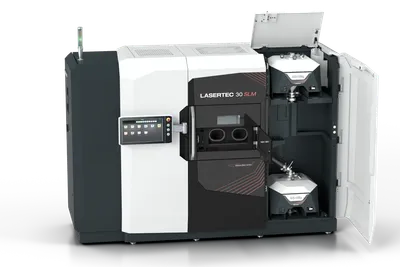
DMG Mori LASERTEC 30 SLM
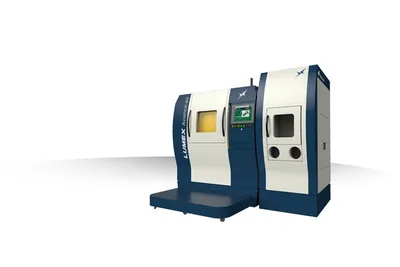
Matsuura LUMEX Avance-60
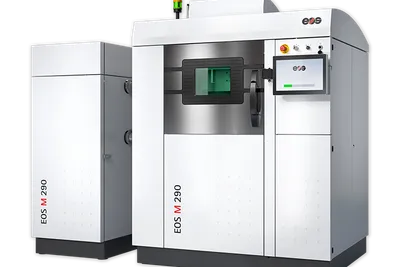
EOS M 290
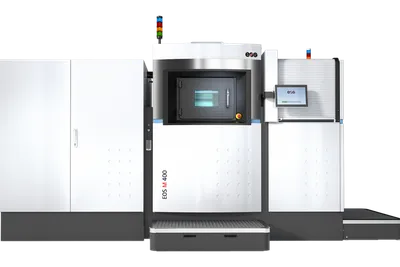
EOS M 400-4
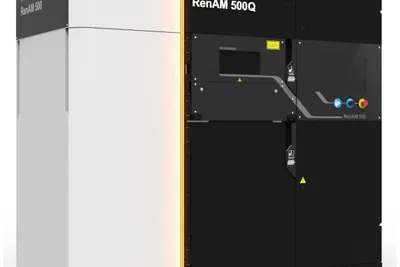
Renishaw RenAM 500Q