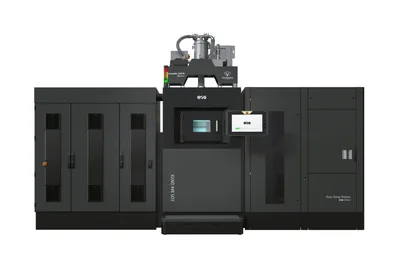
Velo3D Sapphire 1MZ
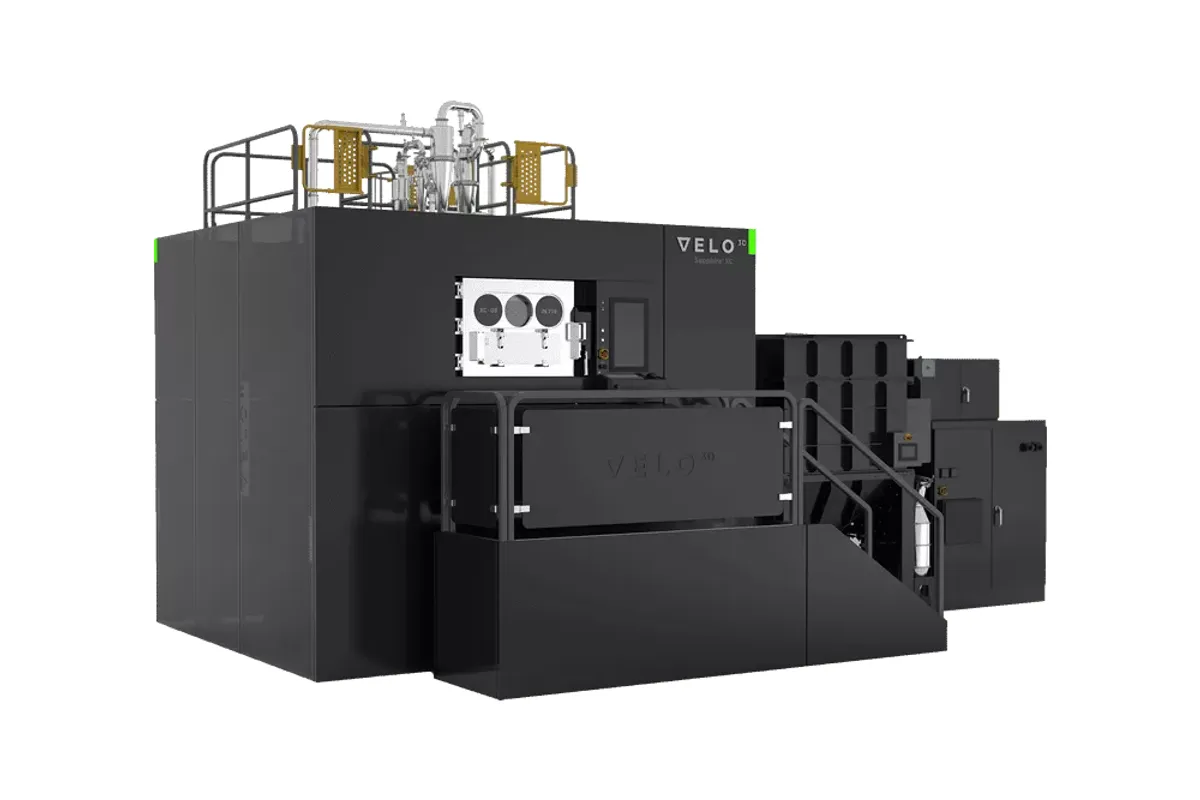
Key Specifications
build volume
machine dimensions
machine weight
lasers
throughput
surface finish
How much does the Velo3D Sapphire 1MZ cost?
Estimated price range
Our best estimate for a metal additive manufacturing in this class — not a quote from Velo3D. Configuration moves it a long way.
Overview
The Velo3D Sapphire 1MZ is the tall-build version of the Sapphire: a metal additive manufacturing system with a Ø315 mm x 1000 mm Z build volume and dual 1 kW lasers. The diameter matches the standard Sapphire, listed at Ø315 mm x 400 mm Z, so what this model adds is height, 2.5 times as much of it.
The extra height comes with a pit. The dimensions row reads 2.1 x 2.1 x 2.5 m + 1.37 m pit: a square of floor a little over two metres on a side, 2.5 m of machine above it and a 1.37 m pit below. That pit is the main site question. It has to be cut and made accessible before the machine arrives, which rules out most upper floors. Weight is 3,150 kg (6,930 lbs), the same figure listed for the Sapphire, so the floor loading does not change with the taller build.
Throughput is up to 100 cc/hr. A column a metre tall can hold a great deal more metal than a short one, and the rate at which the lasers deposit it is unchanged, so a full-height job is a long job and the build schedule should be planned on that basis.
Velo3D qualifies materials for the 1MZ in five families. Nickel: Inconel 718, Inconel 625, Hastelloy C-22, Hastelloy X, forAM Haynes 282 and Haynes 214. Aluminum: F357, Scalmalloy and Aheadd CP1. Titanium: Ti-6Al-4V. Steel: M300 Steel and Stainless 415. Copper: GRCop-42 and C18150. Typical surface finish is 5–15 μm Sa.
Full Specifications
| Parameter | Value |
|---|---|
| Build Volume | Ø315 mm x 1000 mm Z |
| Machine Dimensions | 2.1 x 2.1 x 2.5 m + 1.37 m pit |
| Machine Weight | 3,150 kg (6,930 lbs) |
| Lasers | Dual 1 kW |
| Throughput | Up to 100 cc/hr |
| Surface Finish | 5–15 μm Sa (typical) |
| Qualified Materials Nickel | Inconel® 718, Inconel 625®, Hastelloy® C-22, Hastelloy® X, forAM® Haynes® 282®, Haynes® 214® |
| Qualified Materials Aluminum | F357, Scalmalloy®, Aheadd® CP1 |
| Qualified Materials Titanium | Ti-6Al-4V |
| Qualified Materials Steel | M300 Steel, Stainless 415 |
| Qualified Materials Copper | GRCop-42, C18150 |
Specifications sourced from velo3d.com — verified 2026-10-03
Strengths & Limitations
Strengths
- 1000 mm of Z on a Ø315 mm diameter, 2.5 times the 400 mm Z of the standard Sapphire
- Listed at the same 3,150 kg (6,930 lbs) as the Sapphire, despite the taller build
- Six qualified nickel alloys: Inconel 718, Inconel 625, Hastelloy C-22, Hastelloy X, forAM Haynes 282 and Haynes 214
- Copper alloys GRCop-42 and C18150 are on the qualified list, alongside Ti-6Al-4V and three aluminum alloys
- Typical surface finish of 5–15 μm Sa
Limitations
- Needs a 1.37 m pit beneath a 2.1 x 2.1 x 2.5 m machine, which is construction work before delivery
- Diameter stays at Ø315 mm; wider tall parts need the Sapphire XC 1MZ at Ø600 mm x 1000 mm Z
- Throughput is up to 100 cc/hr from dual 1 kW lasers, so tall builds run long; the Sapphire XC 1MZ is listed with 8 x 1 kW
- The qualified steel list has two entries, M300 Steel and Stainless 415
Best For
Frequently Asked Questions
01
In build height. The Sapphire 1MZ is listed at Ø315 mm x 1000 mm Z and the Sapphire at Ø315 mm x 400 mm Z. Diameter is the same and both carry a listed weight of 3,150 kg (6,930 lbs), so the decision is whether your parts need more than the 400 mm of Z the Sapphire offers.
02
Yes. Velo3D gives the machine dimensions as 2.1 x 2.1 x 2.5 m + 1.37 m pit. Plan for a 1.37 m deep pit under the machine as well as 2.5 m of height above the floor, and settle the civil work and access to the pit before the delivery date.
03
Nickel: Inconel 718, Inconel 625, Hastelloy C-22, Hastelloy X, forAM Haynes 282 and Haynes 214. Aluminum: F357, Scalmalloy and Aheadd CP1. Titanium: Ti-6Al-4V. Steel: M300 Steel and Stainless 415. Copper: GRCop-42 and C18150.
04
Throughput is listed as up to 100 cc/hr with dual 1 kW lasers. That is a maximum, and a part that uses the full 1000 mm of Z contains a lot of layers, so expect long runs on tall work and schedule the machine accordingly.
05
When the part is too wide. The Sapphire XC 1MZ is listed at Ø600 mm x 1000 mm Z with 8 x 1 kW of laser power, against Ø315 mm on this machine. The Sapphire XC 1MZ is also a much heavier installation at ~8,500 kg (18,740 lbs), compared with 3,150 kg (6,930 lbs) here.
Videos

Velo3D
Comparisons
More from Velo3D
Other Metal Additive Manufacturing
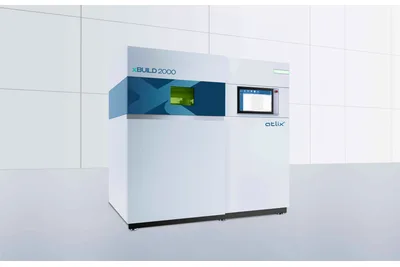
ATLIX xBUILD 2000
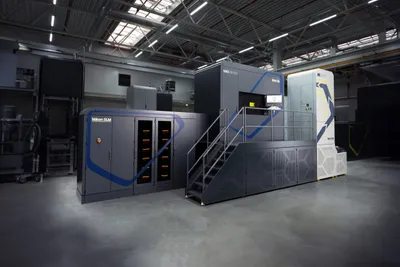
SLM Solutions NXG XII 600
GE Additive Arcam Spectra H
Markforged FX20
DN Solutions DLX 420