Industrial CNC Machine Directory

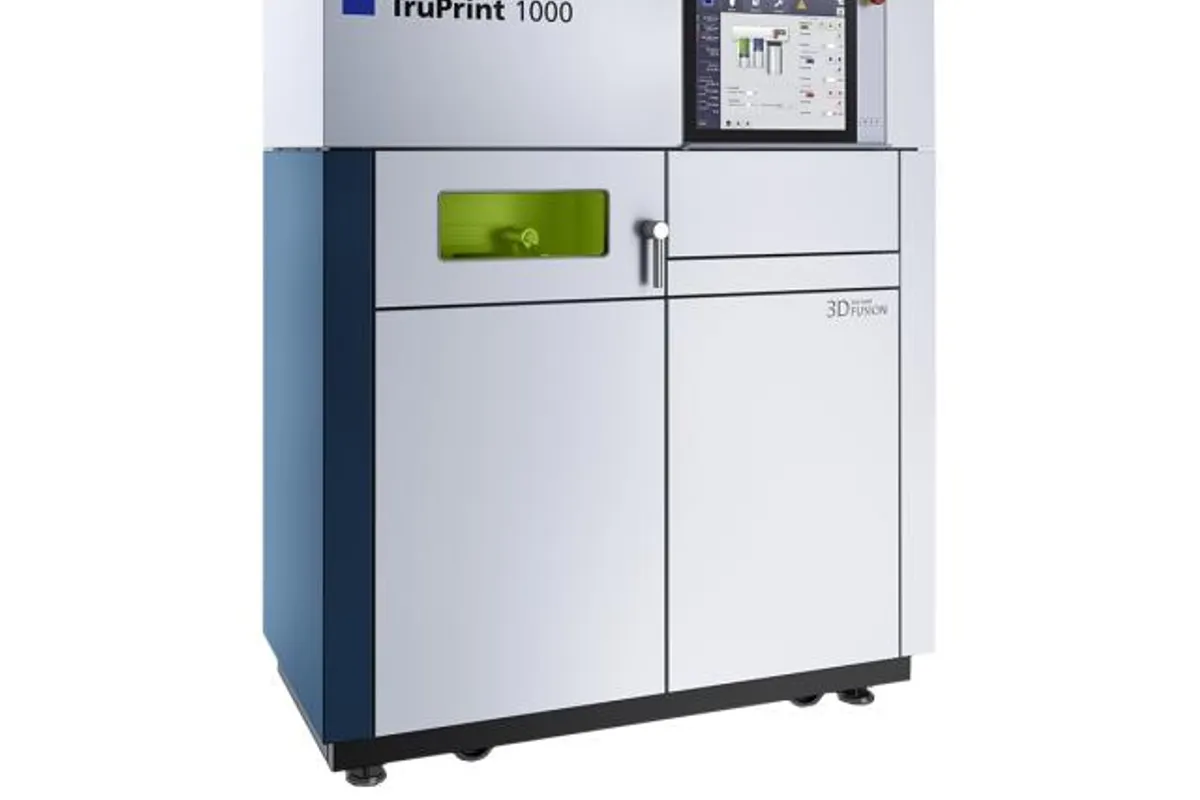
Trumpf TruPrint 1000

$170,000 - $250,000 (new, configuration dependent) Updated 2025-03-15
01

Key Specifications

build volume

Cylindrical: 100 mm (3.9 in) diameter x 100 mm (3.9 in) height

laser type

Trumpf fiber laser

laser power

200 W

beam diameter

~55 um (0.0022 in)

layer thickness

10 - 50 um (0.0004 - 0.002 in)

inert gas

Nitrogen or Argon

02

Overview

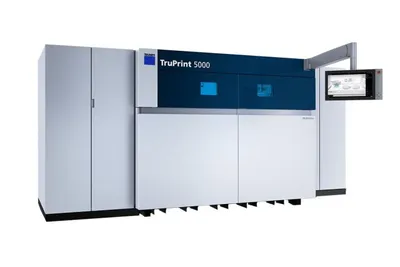
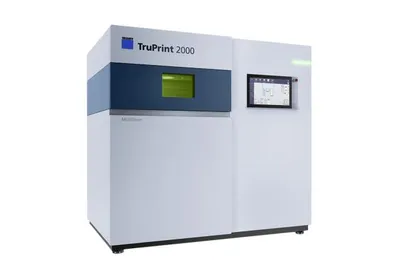
The Trumpf TruPrint 1000 is the entry-level system in Trumpf's laser powder bed fusion (LPBF) portfolio, built for small-format metal 3D printing of dental, medical, jewelry, and precision-engineering components. With a cylindrical build volume of 100 mm diameter by 100 mm height, it's not a production workhorse -- it's a compact, accessible platform for shops and labs that need to print small metal parts without the complexity and cost of Trumpf's larger TruPrint 2000, 3000, or 5000 systems.

The TruPrint 1000 uses a single Trumpf fiber laser at 200 W with a beam diameter of approximately 55 um, which delivers the resolution needed for fine-detail work like dental copings, crowns, bridges, small medical implants, and intricate jewelry pieces. Layer thickness ranges from 10 to 50 um depending on material and the balance between surface quality and build speed. The small build chamber and moderate laser power keep the system's energy consumption and inert gas usage low compared to larger LPBF platforms.

Powder handling on the TruPrint 1000 is designed for accessibility. The build cylinder and overflow cylinder are removable, allowing powder changes between materials with reasonable turnaround time. The system runs under inert gas atmosphere (nitrogen or argon depending on the alloy) for processing reactive and non-reactive metals. Supported materials include stainless steels (316L), tool steels, titanium alloys (Ti6Al4V), cobalt-chrome (CoCrMo), precious metals, and aluminum alloys.

The TruTops Print software handles build preparation including part orientation, support generation, slicing, and laser parameter assignment. Trumpf provides validated parameter sets for common alloys, and the system offers parameter access for users developing custom materials or optimizing existing processes. Build preparation can be done offline on a separate workstation while the machine runs.

The machine footprint is compact -- roughly 1,445 x 1,680 x 1,600 mm -- making it viable for dental labs, university research facilities, and small job shops that can't dedicate large floor areas to additive manufacturing equipment. Machine weight is approximately 600-700 kg, light enough for installation without special floor reinforcement.

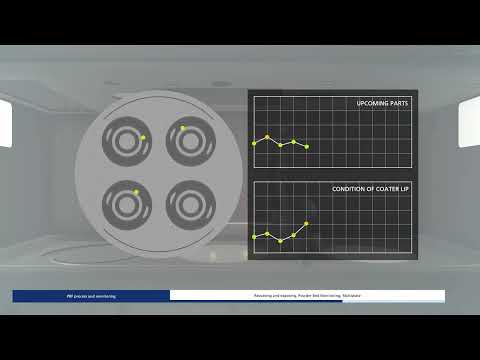
Melt Pool Monitoring is available as an option for in-process quality assurance, tracking the laser-material interaction during each layer to flag anomalies. This is important for medical and dental applications where part integrity is critical and regulatory documentation may be required.

New TruPrint 1000 systems typically start around $170,000 and can reach $250,000 with monitoring options and material packages. That positions it below the EOS M 100 and comparable small-format LPBF systems in price, making it one of the more accessible industrial metal 3D printers from a major manufacturer. Used systems are rare on the secondary market given the relatively small installed base.

03

Full Specifications

Parameter Value
Build Volume Cylindrical: 100 mm (3.9 in) diameter x 100 mm (3.9 in) height
Laser Type Trumpf fiber laser
Laser Power 200 W
Beam Diameter ~55 um (0.0022 in)
Layer Thickness 10 - 50 um (0.0004 - 0.002 in)
Inert Gas Nitrogen or Argon
Materials Stainless steels, tool steels, titanium alloys, cobalt-chrome, precious metals, aluminum alloys
Software TruTops Print
Monitoring Melt Pool Monitoring (optional)
Machine Dimensions ~1,445 x 1,680 x 1,600 mm (56.9 x 66.1 x 63.0 in)
Machine Weight ~600 - 700 kg (1,323 - 1,543 lb)
Electrical 230 V, single phase

Specifications sourced from trumpf.com — verified 2026-03-28

04

Strengths & Limitations

Strengths

  • Most affordable entry point into Trumpf's industrial metal 3D printing ecosystem at $170K-$250K -- accessible for dental labs, research facilities, and small shops
  • 55 um beam diameter and 10-50 um layer thickness deliver fine detail resolution for dental copings, small implants, and jewelry applications
  • Compact footprint under 1.5 x 1.7 meters fits in dental labs and small production areas without dedicated large-format floor space
  • Removable build and overflow cylinders enable material changes between different alloys with reasonable turnaround time
  • Trumpf's in-house fiber laser technology provides tighter beam quality and process control than systems using third-party laser sources
  • TruTops Print software with validated parameter sets reduces the learning curve for shops new to metal additive manufacturing

Limitations

  • 100 mm diameter x 100 mm height build volume severely limits part size -- anything larger requires stepping up to the TruPrint 2000 or 3000
  • Single 200 W laser means slower build speeds than higher-powered or multi-laser systems -- not suitable for volume production
  • Smaller Trumpf AM install base compared to EOS means fewer third-party parameter sets, published research, and community knowledge available
  • No preheating capability limits processing of crack-sensitive materials that benefit from elevated build plate temperatures
  • Limited to single-laser configuration with no upgrade path to multi-laser -- capacity is fixed at purchase
05

Best For

Dental labs and dental manufacturing operations producing copings, crowns, bridges, and partial frameworks in CoCrMo and titanium Medical device companies prototyping and producing small patient-specific implants and surgical instruments in Ti6Al4V and CoCr Jewelry manufacturers printing intricate designs in precious metals and stainless steel that cannot be cast conventionally University research labs and R&D facilities running metal AM material development programs that need an affordable, compact industrial platform Small job shops and service bureaus entering the metal 3D printing market who need a capable but lower-cost entry point Precision engineering operations producing small complex tooling inserts, nozzles, and functional prototypes in tool steel and stainless
06

Frequently Asked Questions

01 What does a new Trumpf TruPrint 1000 cost?

New TruPrint 1000 systems start around $170,000 and can reach $250,000 with Melt Pool Monitoring, additional material packages, and accessories. That makes it one of the more affordable industrial metal LPBF systems from a major manufacturer. Material costs (metal powder) run $50-$400/kg depending on the alloy. Used systems rarely appear on the secondary market.

02 What's the difference between the TruPrint 1000 and TruPrint 2000?

The TruPrint 2000 steps up to a 200 mm diameter x 200 mm height build volume (8x the volume), higher laser power, preheating capability, and more sophisticated powder management. It's designed for production use rather than the dental/jewelry/small-part focus of the TruPrint 1000. The price roughly doubles. Choose the 1000 if your parts fit within 100 mm; go to the 2000 for larger components or production volumes.

03 What materials can the TruPrint 1000 process?

The TruPrint 1000 processes stainless steels (316L), tool steels, titanium alloys (Ti6Al4V), cobalt-chrome (CoCrMo), precious metals (gold, platinum alloys), and aluminum alloys (AlSi10Mg). The system switches between nitrogen atmosphere (steels, aluminum) and argon (titanium, cobalt-chrome). Trumpf provides validated parameter sets for common alloys, and open parameter access is available for custom material development.

04 Is the TruPrint 1000 suitable for production or just prototyping?

It handles small-volume production of parts that fit within the 100 mm build volume -- dental copings, small implants, jewelry pieces. For true series production, the small build volume and single laser limit throughput. Most users run it for prototyping, small-batch production, and R&D. If you need production volumes, the TruPrint 2000 or 3000 with multi-laser options is the better platform.

05 How does the TruPrint 1000 compare to the EOS M 100?

Both are small-format LPBF systems targeting dental, jewelry, and small-part applications. The EOS M 100 offers a similar 100 mm diameter build area with a slightly different laser configuration. EOS has a larger installed base and more published parameter sets. Trumpf brings its in-house laser expertise and TruTops Print software ecosystem. Pricing is comparable. The decision often comes down to material parameter availability and regional service coverage.

06 What post-processing is required for TruPrint 1000 parts?

Parts require removal from the build plate (typically wire EDM or band saw), support structure removal, and stress-relief heat treatment. Surface finish as-built is typically Ra 5-15 um depending on material and parameters. Additional post-processing may include bead blasting, machining of critical surfaces, HIP (Hot Isostatic Pressing) for structural applications, and surface finishing for cosmetic requirements.

07

Videos

Trumpf TruPrint 1000 | Additive Production System

Trumpf TruPrint 1000 | Additive Production System

3D Prime Technologies

TRUMPF TruPrint 1000: Compact and Robust 3D Printing

TRUMPF TruPrint 1000: Compact and Robust 3D Printing

Icon Machine Tool, Inc.

Trumpf TruPrint 1000 | Multiplate option

Trumpf TruPrint 1000 | Multiplate option

3D Prime Technologies

TRUMPF steals show with TruPrint 1000 metal 3D printer in Amsterdam

TRUMPF steals show with TruPrint 1000 metal 3D printer in Amsterdam

3ders.org

08

Community Discussions

09

Comparisons

10

Related Machines