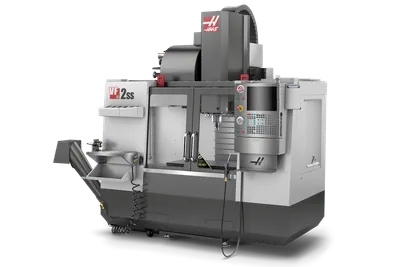
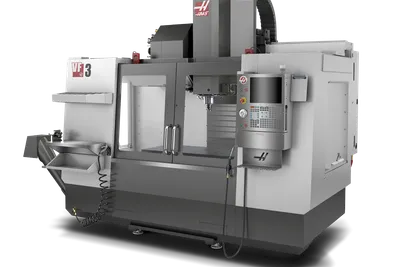
Quaser VB630
Key Specifications
X Travel
Y Travel
Z Travel
Max Spindle
Spindle Taper
Table Size
Overview
The Quaser VB630 is a bridge-style vertical machining center with a 630 mm X-travel class work envelope, positioned in Quaser's lineup to serve mid-size mold and die, aerospace, and precision engineering applications requiring a larger work area than compact VMCs while maintaining the accuracy and rigidity standards that characterize the Quaser brand. The VB designation indicates a vertical machining center with a box-way or bridge-style structural configuration, emphasizing cutting rigidity and surface finish quality over the rapid-traverse speeds prioritized in linear-guideway VMCs.
Bridge-style construction on the VB630 provides a mechanical advantage over conventional column-and-saddle VMCs for demanding cutting applications. The symmetrical moving-column design (or fixed gantry in some configurations) distributes the structural load more evenly, reducing the bending moments that cause accuracy degradation in heavy milling of hard materials. For mold and die shops cutting pre-hardened tool steel, P20, H13, and D2, the VB630's structural rigidity directly translates into better surface finish, longer tool life, and greater dimensional consistency across deep-cavity operations.
The VB630 spindle is typically BT 40 or BT 50, depending on the configured power class, running to 12,000 RPM standard with 15,000 RPM as an option. This spindle speed range covers both conventional steel roughing and high-speed finishing of hardened tool steel — the combination most useful in mold manufacturing, where the same machine must rough pre-hardened blocks and finish-mill complex parting surfaces and cavity details. The Fanuc 0i-MF Plus is standard, with Fanuc 31i-B and Heidenhain iTNC 640 available as options for complex surface contouring applications.
Quaser applies its standard factory acceptance testing to the VB630, including Renishaw ballbar circularity verification, laser interferometer calibration on all three axes, and geometric verification of squareness, straightness, and spindle perpendicularity to the table. The bridge configuration's thermal symmetry reduces thermally-induced accuracy drift during extended shifts — an important characteristic for mold shops running unmanned overnight programs on long cavity operations that cannot be interrupted for re-calibration.
Pricing for the Quaser VB630 is estimated between $120,000 and $180,000 depending on spindle specification, control option, and installed accessories including through-spindle coolant, probing, and fourth-axis preparation. This positions it competitively against Taiwanese rigid-structure VMCs from OKK and YCM in the 630 mm travel class, while pricing below equivalent Japanese-built VMCs in the same rigidity tier.
Full Specifications
| Parameter | Value |
|---|---|
| X-Axis Travel | 630 mm (24.8 in) |
| Y-Axis Travel | 500 mm (19.7 in) |
| Z-Axis Travel | 500 mm (19.7 in) |
| Table Size | 900 x 500 mm (35.4 x 19.7 in) |
| Max Workpiece Weight | 700 kg (1,543 lb) |
| Max Spindle Speed | 12,000 RPM (15,000 RPM optional) |
| Spindle Taper | BT 40 / BT 50 |
| Spindle Motor Power | 15 kW (20 hp) standard; 18.5 kW (25 hp) optional |
| Rapid Traverse Rate | 32 m/min (X/Y); 24 m/min (Z) |
| Feed Rate Max | 12,000 mm/min |
| Tool Changer Capacity | 30 tools (arm-type ATC; 40-tool optional) |
| Tool Change Time | 2.2 sec (tool-to-tool) |
| Positioning Accuracy | ±0.003 mm |
| Repeatability | ±0.002 mm |
| Guideway Type | Box ways (X/Y/Z) for maximum rigidity |
| Through Spindle Coolant | 40 bar / 70 bar optional |
| CNC Control | Fanuc 0i-MF Plus (Fanuc 31i-B / Heidenhain iTNC 640 optional) |
| Machine Weight | 9,500 kg (20,944 lb) approx. |
Specifications compiled from manufacturer literature and industry references. Not independently verified against a published spec sheet — confirm with the manufacturer or an authorised dealer before making a purchasing decision.
Strengths & Limitations
Strengths
- Bridge-style structural design with box-way guideways provides significantly higher static and dynamic rigidity than equivalent linear-guideway VMCs, enabling heavier cuts in tool steel, cast iron, and titanium with better surface finish and tool life
- 630 mm X-travel accommodates a wide range of mid-size mold blocks, aerospace plates, and fixture assemblies that exceed the capacity of compact VMCs while remaining manageable in footprint for most job shops and mold houses
- Quaser's factory calibration protocol with Renishaw ballbar and laser interferometer verification ensures geometric accuracy is confirmed before shipment — critical for mold shops where cavity tolerances are unforgiving
- Box-way thermal symmetry in the bridge design reduces accuracy drift during long unmanned operations, supporting lights-out finishing programs on mold cavities without operator intervention to compensate for thermal growth
- Optional 15,000 RPM spindle enables both aggressive roughing of pre-hardened tool steel and high-speed finishing of cavity surfaces with small ball-end mills, covering the full mold manufacturing workflow on a single machine
Limitations
- Box-way rapid traverse speeds (32 m/min) are lower than linear-guideway VMC competitors — shops where rapid traverse time significantly impacts cycle time (large, low-depth parts with many rapid moves) will find the VB630 slower than equivalent linear-guideway machines
- At 9,500 kg, the VB630 requires a substantial concrete foundation and floor loading capacity — job shops in leased facilities with standard floor loading specifications may need structural engineering assessment before installation
- Box-way machines require more rigorous preventive maintenance (way lubrication, clearance adjustment) than linear-guideway alternatives; shops without experienced maintenance personnel may find the maintenance discipline more demanding
Best For
Frequently Asked Questions
01
Box ways provide higher static rigidity and better damping of cutting vibrations than linear roller guideways, making them the preferred choice for heavy milling of hardened tool steel, cast iron, and titanium. Linear guideways offer lower friction (enabling faster rapid traverse) and better positioning accuracy at low loads, which is why they dominate in precision VMCs and high-speed machining applications. The VB630's box-way design is an intentional choice for rigidity-first applications like mold and die machining, where the cutting forces and vibration characteristics of hard material machining make damping more important than rapid traverse speed.
02
Yes. The VB630's rigid box-way structure, high-torque spindle, and thermally-stable bridge design make it suitable for hard milling of materials up to approximately 60–62 HRC with appropriate carbide or CBN tooling. Successful hard milling at these hardness levels requires careful attention to cutting parameters (high speed, light chip load with fine-grain carbide), tool clamping rigidity, and workholding stability — all areas where the VB630's construction provides advantages over lighter-duty linear-guideway VMCs. Through-spindle coolant at 40–70 bar is recommended for tool life in hardened steel.
03
Yes. The VB630 supports fourth-axis rotary table integration as either a factory option or a field-installed accessory. Quaser offers both floor-mount and table-mount rotary table configurations in various trunnion diameters. The fourth axis enables efficient machining of cylindrical and wrapped features and can reduce setups on complex prismatic parts. Full simultaneous 4-axis contouring requires the Fanuc 31i-B control; 4th axis positioning (indexing) is supported on the standard 0i-MF Plus control.
04
Both machines target rigidity-focused applications in the 500–630 mm X-travel class. The OKK VM53R is a Japanese-built machine with OKK's precision manufacturing heritage, typically priced higher than the Quaser VB630. The VB630 offers Quaser's factory calibration standards that are competitive with Japanese mid-range VMCs. OKK has a longer established reputation specifically for rigid vertical machining centers, particularly in the Japanese domestic mold and die market. The choice between them often comes down to the buyer's tolerance for a higher price for OKK's Japanese brand credentials versus Quaser's value positioning with comparable accuracy specifications.
05
The VB630 is equipped with a 30-tool arm-type ATC as standard, with a 40-tool configuration available as a factory option. For complex mold and die programs requiring 30+ different tools — a common scenario in full-cavity machining with multiple roughing, semi-finishing, and finishing tool sizes — the 40-tool option is strongly recommended to enable unmanned operation without tool magazine replenishment. Tool length and diameter ranges supported by the magazine are compatible with standard end mill, drill, tap, and boring bar tooling used in mold machining workflows.
Videos

toshi1018

toshi1018

Sony

takashi fujita
Community Discussions
Owner experience and review — Thoughts on Quaser Verticals - Practical Machinist
Pricing and buying discussion for this machine model.
Community discussion about this machine.
Pricing and buying discussion — need tp purchase a VMC, Doosan dnm500, okuma m560, or quaser 184P
Maintenance and service — Need Help! Needed: Amada Alarm Code definitions! - CNCzone
Troubleshooting and problem-solving — Need Help! Quaser Tool Change Problem - cnczone.com
Electrical and installation requirements — Bridgeport/Quaser UX600/XR600 - cnczone.com
Community discussion — holders sticking in spindle - CNCzone
Links to community discussions. Summaries are editorial — visit the original thread for full context.