Okuma MULTUS B200II
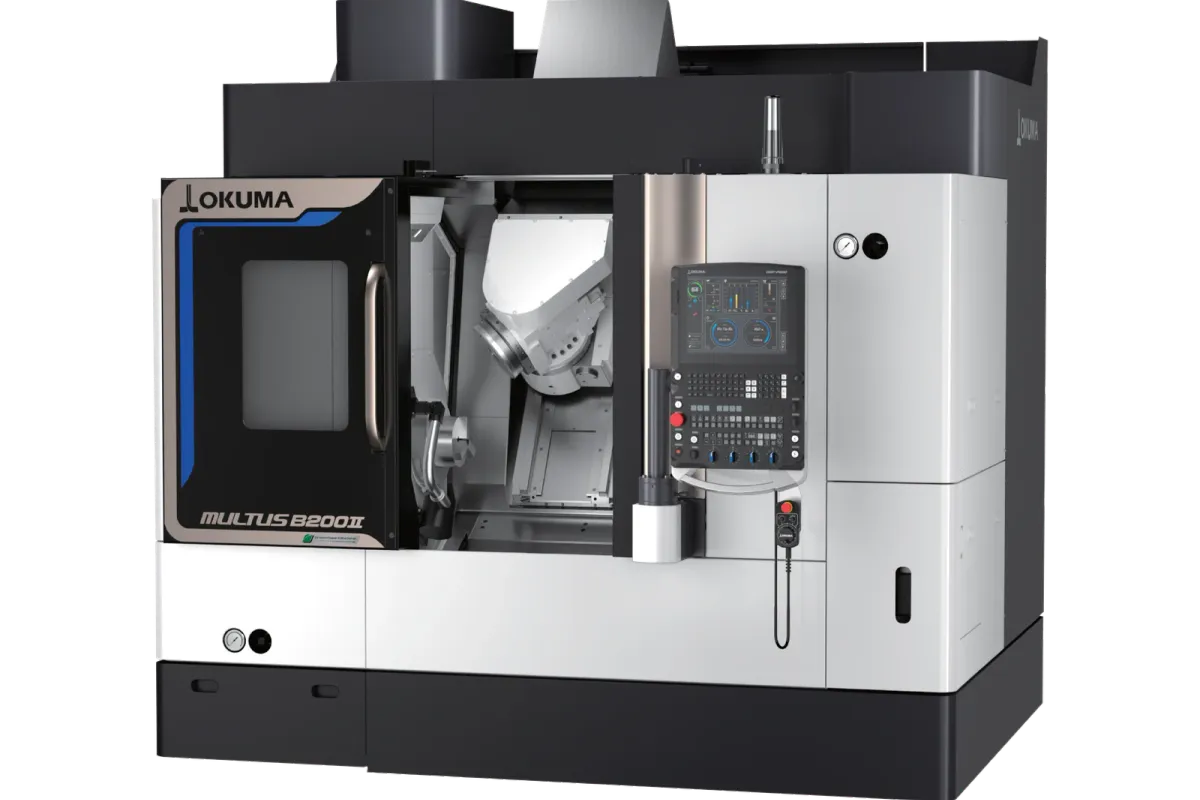
Image: d30jruhmdicmo0.cloudfront.net, Okuma
Key Specifications
Tool Capacity
Rapid Traverse
standard chuck size
max machining diameter
max work length
spindle speed
How much does the Okuma MULTUS B200II cost?
Estimated price range
Our best estimate for a mill-turn / multi-tasking machine in this class — not a quote from Okuma. Configuration moves it a long way.
Overview
The Okuma MULTUS B200II is a multitasking mill-turn machine with a 6 in standard chuck, a maximum machining diameter of 600 mm (23.62 in) and a main spindle that runs 50~6,000 min⁻¹. Work length is listed as 550 / 750 mm (21.65 / 29.53 in).
A 600 mm machining diameter over a 6 in chuck says a lot about the intended parts. The chuck and the 11/7.5 kW (15/10 hp) PREX spindle motor, rated 20 min/cont, are sized for bar and small chucked work, while the large swing gives room for milling tools to reach around a part and for fixtures or odd-shaped workpieces to clear. The Multus B250II shares the 600 mm (23.62 in) diameter but lists 22/15 kW (30/20 hp), twice the motor rating, so the choice between them is about how hard the turning cuts are, not how big the part is.
Two options sit in brackets: a 45~5,000 min⁻¹ speed range and a JIS A2-6 spindle nose in place of the standard Ø140 flat nose. The table does not say that they come as a pair, though a larger nose with a lower top speed is the usual pattern, so confirm what a quoted machine has. Rapid traverse is 40 m/min (1,575 ipm) in X and Z and 26 m/min (1,024 ipm) in Y, and the magazine holds 20 tools.
Okuma lists two sets of machine dimensions, 3,080 × 2,210 × 2,582 mm (121.26 × 87.01 × 101.65 in) and 3,620 × 2,210 × 2,582 mm (142.52 × 87.01 × 101.65 in), which lines up with the two work lengths: the footprint grows in length and keeps its width and height. A W specification with a second spindle is also listed, for parts that need both ends machined without a manual flip.
Full Specifications
| Parameter | Value |
|---|---|
| Standard Chuck Size | 6 in |
| Max Machining Diameter | 600 mm (23.62 in) |
| Max Work Length | 550 / 750 mm (21.65 / 29.53 in) |
| Spindle Speed | 50~6,000 min⁻¹ [45~5,000 min⁻¹ optional] |
| Spindle Nose | Ø140 flat [JIS A2-6] |
| Spindle Motor | PREX 11/7.5 kW (15/10 hp), 20 min/cont |
| Rapid Traverse Rate | 40/26 m/min (1,575/1,024 ipm), X,Z/Y |
| Tool Capacity | 20 tools |
| Machine Dimensions | 3,080 × 2,210 × 2,582 mm (121.26 × 87.01 × 101.65 in); 3,620 × 2,210 × 2,582 mm (142.52 × 87.01 × 101.65 in) |
| Spec Extension | W (second-spindle specification) |
Specifications sourced from okuma.co.jp — verified 2026-08-09
Strengths & Limitations
Strengths
- Main spindle speed of 50~6,000 min⁻¹ as standard, suited to small-diameter bar and chucked parts
- Maximum machining diameter of 600 mm (23.62 in) around a 6 in chuck leaves clearance for milling on awkward shapes
- Two work lengths, 550 / 750 mm (21.65 / 29.53 in), with the footprint growing only in length
- W specification adds a second spindle for machining both ends in one cycle
- Rapid traverse of 40 m/min (1,575 ipm) in X and Z
Limitations
- The 11/7.5 kW (15/10 hp) PREX motor is half the 22/15 kW (30/20 hp) listed for the Multus B250II, so heavy turning cuts are limited
- The magazine holds 20 tools, which fills quickly on parts that mix turning and milling
- Y rapid is 26 m/min (1,024 ipm), slower than the 40 m/min (1,575 ipm) of X and Z
- The JIS A2-6 nose and the 45~5,000 min⁻¹ range are options, and no milling spindle or B-axis figures are listed
Best For
Frequently Asked Questions
01
A 6 in standard chuck on a spindle that runs 50~6,000 min⁻¹, with a 45~5,000 min⁻¹ range listed as an option. The standard nose is Ø140 flat and JIS A2-6 is the bracketed alternative. The motor is a PREX type rated 11/7.5 kW (15/10 hp) at 20 min and continuous.
02
Okuma lists two work lengths, 550 mm (21.65 in) and 750 mm (29.53 in). Two sets of machine dimensions are listed as well: 3,080 × 2,210 × 2,582 mm and 3,620 × 2,210 × 2,582 mm, so only the length of the footprint changes.
03
The table lists W as a second-spindle specification. A second spindle lets the part be handed over and finished on its back face in the same cycle. No speed, power or chuck figures for that spindle are in the listed rows, so ask Okuma for them.
04
The MULTUS B300II lists an 8 in standard chuck, a 630 mm (24.80 in) maximum turning diameter and a 45–5,000 rpm spindle with a JIS A2-6 nose as standard. The MULTUS B200II has a 6 in chuck, 600 mm (23.62 in) and 50~6,000 min⁻¹. Both list 20 tools and rapids of 40/26 m/min (1,575/1,024 ipm).
Videos

LüneHanse Vertriebs GmbH

MTDCNC

Automatics & Machinery

GINDUMAC GmbH
Community Discussions
Maintenance and service
Links to community discussions. Summaries are editorial — visit the original thread for full context.
Comparisons
More from Okuma
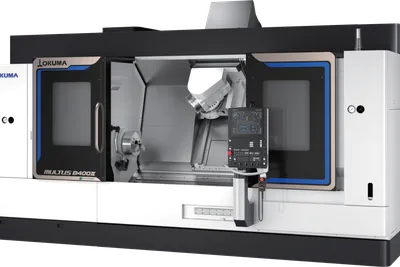
Other Mill-Turn / Multi-Tasking Machines
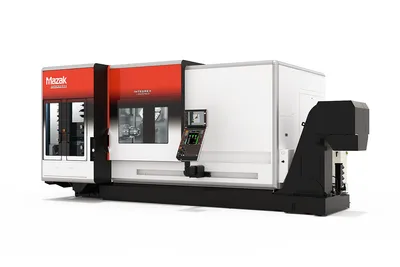
Mazak INTEGREX i-100S NEO
Mazak INTEGREX i-350S
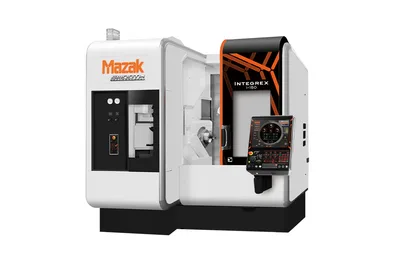
Mazak INTEGREX i-150
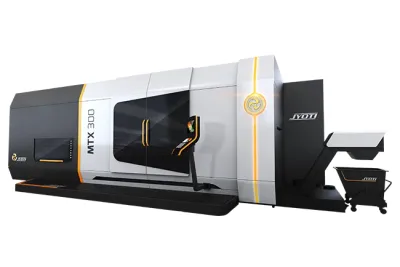
Huron MTX 300
Hurco TMX-8MY