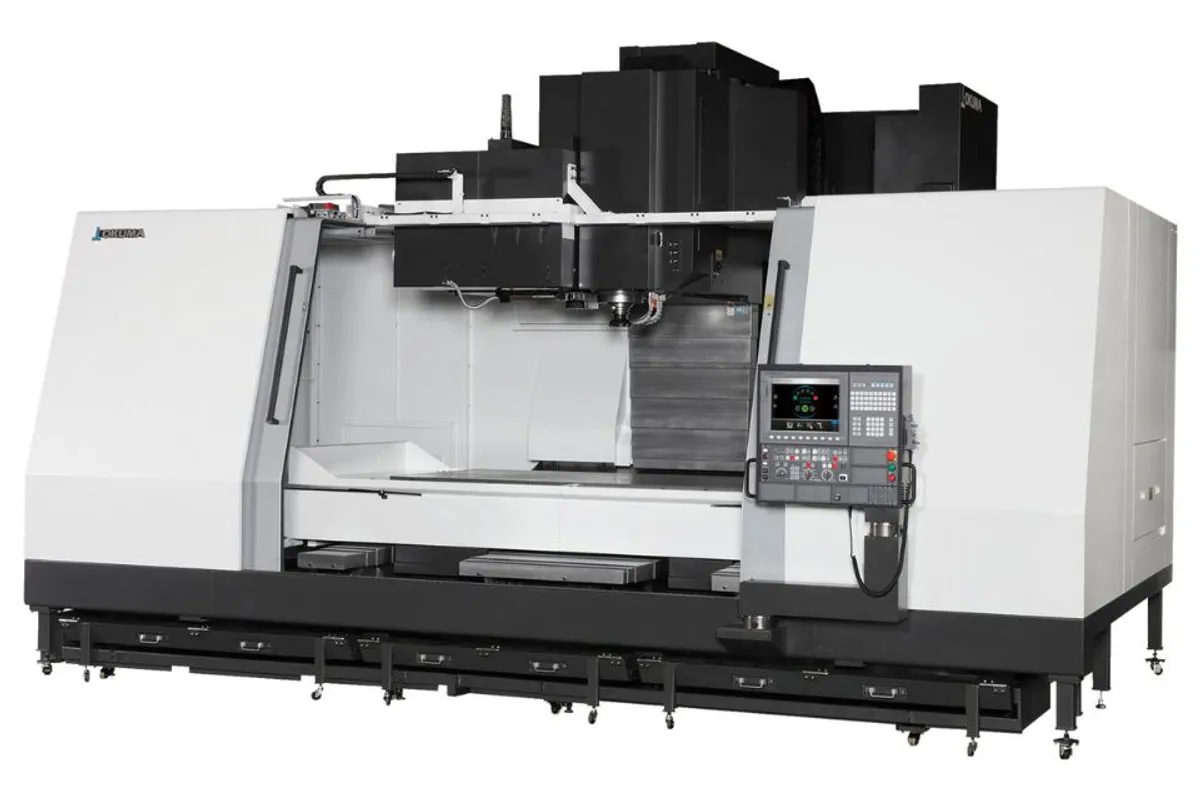
Okuma MILLAC 1052V II
Key Specifications
Spindle Taper
Table Size
Rapid Traverse
Spindle Power
max table load
travel x y z
How much does the Okuma MILLAC 1052V II cost?
Estimated price range
Our best estimate for a vertical machining centers (vmc) in this class — not a quote from Okuma. Configuration moves it a long way.
Overview
The Okuma MILLAC 1052V II is a 50-taper vertical machining center that starts with a 22/18.5 kW (30/25 hp) spindle motor on a No. 50 (BT 50) taper. X travel is 2,050 mm (80.71 in), and the table is rated for 2,500 kg (5,511 lbs).
The motor is what sets its listed figures apart. The MILLAC 852V II and the MILLAC 761V II both begin at 18.5/15 kW (25/20 hp), and the MILLAC 561V II at 15/11 kW (20/15 hp). The upgrade Okuma lists for the MILLAC 1052V II is 26/18.5 kW (35/25 hp). Only the first number of that pair goes up, while the second stays at 18.5 kW, so the option raises the higher rating and leaves the lower one where the standard motor already is. A shop that runs long roughing passes should weigh that before paying for it.
Spindle speed is 20–4,000 rpm as standard. Okuma also lists 30–6,000 rpm, 50–12,000 rpm and 50–15,000 rpm ranges as options, without saying which motor each is paired with.
Length comes in two steps. Beside the standard 2,050 mm, Okuma lists 3,050 mm (120.08 in) of X as an option, with the table going from 2,200 mm (86.61 in) long to 3,200 mm. The optional load figure is 3,800 kg (8,360 lbs), and the optional rapids are 12 / 12 / 16 m/min (39 / 39 / 52 fpm) against 16 / 16 / 16 m/min (52 / 52 / 52 fpm) as standard. When a part is longer still, the MCV-AII is the Okuma to price: it lists 2,000 mm of X with 3,000, 4,000 and 5,000 mm options. Take the Y and Z travels and the table width for the MILLAC 1052V II from Okuma's brochure or quotation before a wide part is planned on it.
Full Specifications
| Parameter | Value |
|---|---|
| Spindle Taper | No. 50 (BT 50) |
| Spindle Motor Power | 22/18.5 [26/18.5] kW (30/25 [35/25] hp) |
| Max Table Load | 2,500 [3,800] kg (5,511 [8,360] lbs) |
| Rapid Traverse Rate | 16 / 16 / 16 [12 / 12 / 16] m/min (52 / 52 / 52 [39 / 39 / 52] fpm) |
| Travel X Y Z | 2,050 x 850 x 750 [3,050 x 850 x 750] |
| Max Load | 2,500 [3,800] |
| Table Dimensions | 2,200 x 850 [3,200 x 850] |
| Spindle Speed | 20–4,000 [30–6,000; 50–12,000; 50–15,000] rpm |
| Table Size | 2,200 × 850 [3,200 × 850] mm (86.61 × 41.34 [125.95 × 41.34] in) |
| Max Machining Volume | 2,050 × 850 × 750 [3,050 × 850 × 750] mm (80.71 × 41.73 × 31.50 [120.08 × 41.73 × 31.50] in) |
Specifications sourced from okuma.com — verified 2026-10-03
Strengths & Limitations
Strengths
- 22/18.5 kW (30/25 hp) standard spindle motor, against 18.5/15 kW (25/20 hp) on the MILLAC 852V II
- No. 50 (BT 50) spindle taper for heavy face mills, large drills and boring bars
- 2,050 mm (80.71 in) of X travel, with 3,050 mm (120.08 in) listed as an option
- Table load of 2,500 kg (5,511 lbs) as standard and 3,800 kg (8,360 lbs) in the optional figures
- Spindle speed options of 30–6,000 rpm, 50–12,000 rpm and 50–15,000 rpm beside the standard 20–4,000 rpm
Limitations
- The optional 26/18.5 kW (35/25 hp) motor lifts only the first rating; the second stays at 18.5 kW as on the standard motor
- Rapid traverse is 16 / 16 / 16 m/min (52 / 52 / 52 fpm), and 12 m/min (39 fpm) in X and Y in the optional figures
- The standard spindle tops out at 4,000 rpm; higher speeds are options
- X travel ends at 3,050 mm even with the option, where the MCV-AII lists up to 5,000 mm
Best For
Frequently Asked Questions
01
The standard motor is rated 22/18.5 kW (30/25 hp) and drives a No. 50 (BT 50) spindle. Okuma lists 26/18.5 kW (35/25 hp) as the option. The second figure is 18.5 kW in both cases, so the option increases only the higher of the two ratings.
02
In the headline figures Okuma publishes for both, the clear difference is the standard motor: 22/18.5 kW (30/25 hp) on the MILLAC 1052V II against 18.5/15 kW (25/20 hp) on the MILLAC 852V II. Taper, the 2,500 kg (5,511 lbs) table load, the optional 3,800 kg (8,360 lbs) figure and the 16 / 16 / 16 m/min rapids are listed the same for both. Compare the Y travel and table width on Okuma's own sheets.
03
Yes, as an option. X travel goes from 2,050 mm (80.71 in) to 3,050 mm (120.08 in) and the table from 2,200 mm to 3,200 mm in length. The optional figures also show a 3,800 kg (8,360 lbs) table load and rapids of 12 / 12 / 16 m/min (39 / 39 / 52 fpm).
04
Four are listed. The standard range is 20–4,000 rpm, and the options are 30–6,000 rpm, 50–12,000 rpm and 50–15,000 rpm. Okuma's page does not match the 22/18.5 kW and 26/18.5 kW motors to particular ranges, so ask which motor a high-speed spindle is supplied with.
05
When X travel beyond 3,050 mm is needed. The MCV-AII lists 2,000 mm of X as standard with 3,000, 4,000 and 5,000 mm as options, and its standard motor is also 22/18.5 kW. The MILLAC 1052V II covers 2,050 mm (80.71 in), or 3,050 mm (120.08 in) with the option.
Videos

Power Repair Service, Inc.

Group Engineering Product

PrestigeEquipment
More from Okuma
Other Vertical Machining Centers (VMC)
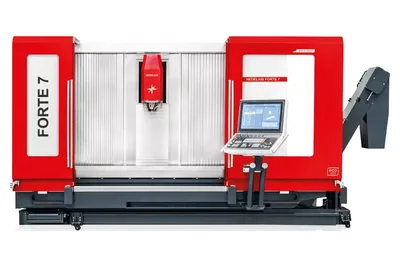
Hedelius FORTE 7-2000 NEO
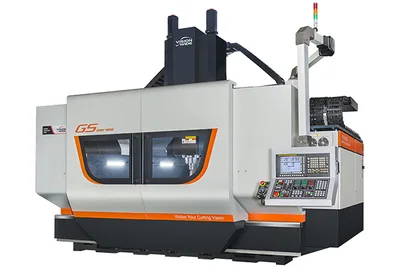
Vision Wide GS-1220
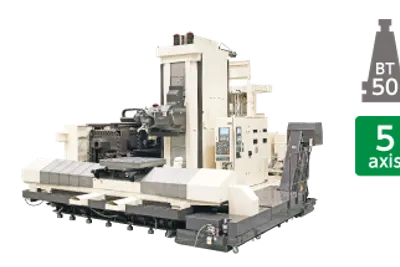
Yasda YBM 10T-TH
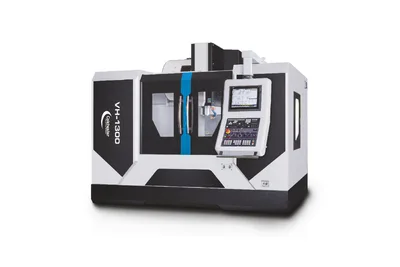
Colchester Storm VH-1300
Makino L2 Table