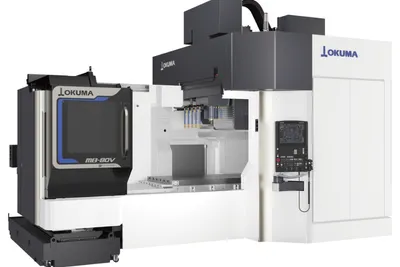
Okuma MCR-AF
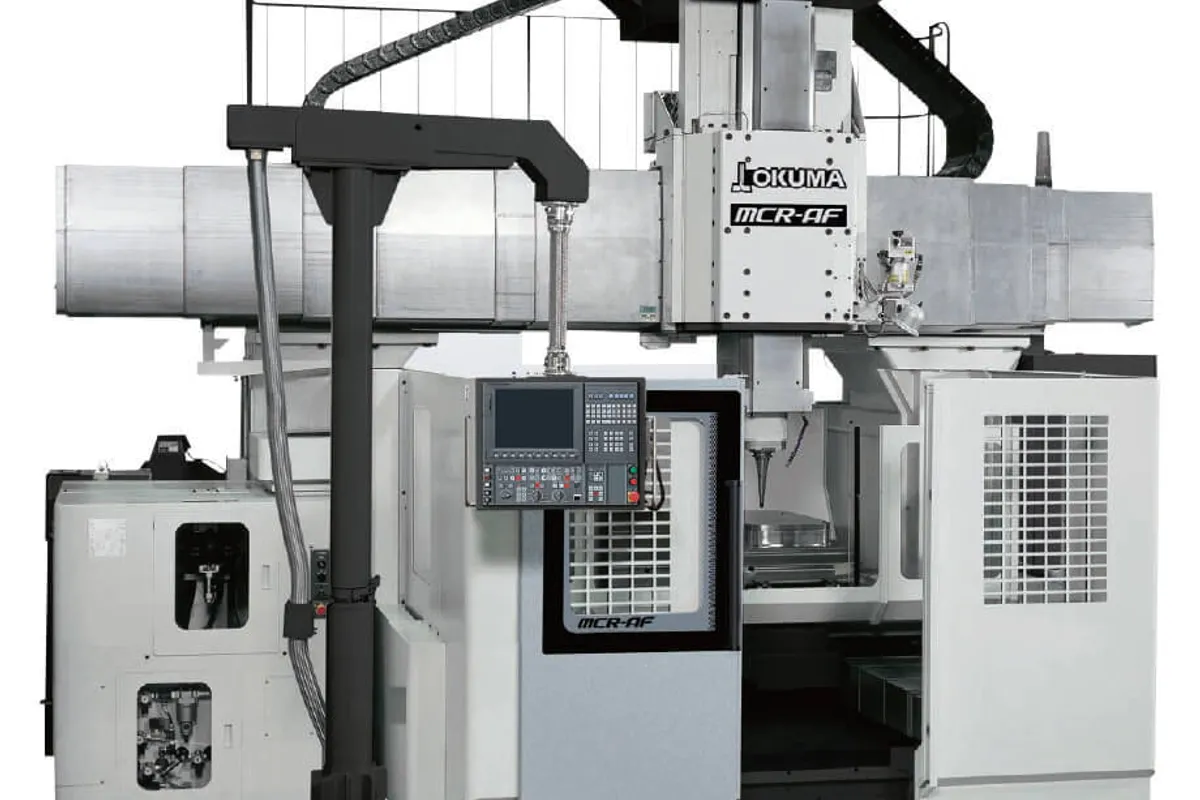
Image: d30jruhmdicmo0.cloudfront.net, Okuma
Key Specifications
X Travel
Tool Capacity
Rapid Traverse
Spindle Power
effective gate width
rapid traverse xy
How much does the Okuma MCR-AF cost?
Estimated price range
Our best estimate for a vertical machining centers (vmc) in this class — not a quote from Okuma. Configuration moves it a long way.
Overview
The Okuma MCR-AF is a double-column machining center whose spindle list reads more like a finishing machine than a heavy mill: 8,000 rpm as standard, with 12,000, 15,000 and 25,000 rpm options. The MCR-A5CII, by comparison, lists 4,000 rpm with 6,000 and 10,000 rpm options.
The frame is listed at 2,600 mm (102.36 in) between columns, with an effective gate width of 2,600 mm (102.4 in), and X-axis travel is also 2,600 mm (102.36 in). No alternative table lengths or column widths are bracketed, so as published this is a single-size machine.
Five motor ratings appear. The standard is 26/22 kW (35/30 hp); the bracketed alternatives are 37/26 kW (50/35 hp), 22/18.5 kW (30/25 hp), 30/22 kW (40/30 hp) and 15/11 kW (20/15 hp). The product page does not say which motor goes with which spindle, and a faster spindle commonly carries a smaller motor, so ask for the power and torque curve of the exact spindle quoted.
X and Y rapid traverse is 20 m/min (787 ipm); the three-axis row reads 20 / 10 m/min (787 / 394 ipm), and maximum cutting feed is 10 m/min (394 ipm). The magazine starts at 24 tools, with 32, 48, 50, 72 and 100 as options.
Full Specifications
| Parameter | Value |
|---|---|
| Effective Gate Width | 2,600 mm (102.4 in) |
| Spindle Motor Power | 26/22 [37/26, 22/18.5, 30/22, 15/11] kW (35/30 [50/35, 30/25, 40/30, 20/15] hp) |
| Rapid Traverse Xy | 20 m/min (787 ipm) |
| Cutting Feed Max | 10 m/min (394 ipm) |
| Tool Capacity | 24 [32, 48, 50, 72, 100] |
| Width Between Columns | 2,600 mm (102.36 in) |
| Table Travel | 2,600 |
| Spindle Range | 8,000 [12,000, 15,000, 25,000] |
| Rapid Traverse Rate X Y Z | 20 / 10 m/min (787 / 394 ipm) |
| X-Axis Travel | 2,600 mm (102.36 in) |
| Spindle Speed | 8,000 [12,000, 15,000, 25,000] rpm |
| Rapid Traverse Rate | 20 / 10 m/min (787 / 394 ipm) |
Specifications sourced from okuma.com — verified 2026-10-03
Strengths & Limitations
Strengths
- Spindle options of 12,000, 15,000 and 25,000 rpm above the 8,000 rpm standard
- Five motor ratings, from 15/11 kW (20/15 hp) to 37/26 kW (50/35 hp)
- 2,600 mm (102.36 in) between columns with 2,600 mm (102.36 in) of X travel
- Cutting feed up to 10 m/min (394 ipm)
- Magazine expandable from 24 to 100 tools
Limitations
- Only one X travel, 2,600 mm (102.36 in), is listed; the MCR-A5CII offers 3,050 - 12,050 mm (120.08 - 474.41 in)
- Rapid traverse of 20 m/min (787 ipm) in X and Y is below the 30 m/min X and Y rapids listed for the MCR-A5CII
- Standard magazine is 24 tools; larger magazines are options
- No spindle taper or table load is stated among the published rows
Best For
Frequently Asked Questions
01
8,000 rpm is standard. The options are 12,000, 15,000 and 25,000 rpm. Okuma's product page does not state the taper for each spindle, and high-speed spindles often use a different tool interface from the standard one, so confirm the tooling before ordering holders.
02
The width between columns is 2,600 mm (102.36 in) and the effective gate width is given as 2,600 mm (102.4 in). X-axis travel is 2,600 mm (102.36 in). The published rows do not include Y or Z travel or table load, so those need to come from Okuma's specification sheet.
03
The standard motor is 26/22 kW (35/30 hp). Four alternatives are bracketed: 37/26 kW (50/35 hp), 22/18.5 kW (30/25 hp), 30/22 kW (40/30 hp) and 15/11 kW (20/15 hp). Each rating is a pair of figures; base long roughing cuts on the lower of the two.
04
Rapid traverse in X and Y is 20 m/min (787 ipm). The combined X-Y-Z rapid row reads 20 / 10 m/min (787 / 394 ipm), and the maximum cutting feed is 10 m/min (394 ipm). A cutting feed that high matters for light, fast finishing passes with the optional high-speed spindles.
05
24 tools as standard. Optional magazines hold 32, 48, 50, 72 or 100 tools. Finishing large moulds uses many cutter sizes plus spares for long runs, so the larger magazines are worth deciding on at the order stage.
Videos

Okuma America Corporation
Phuc Le Hong
Phuc Le Hong
More from Okuma
Other Vertical Machining Centers (VMC)
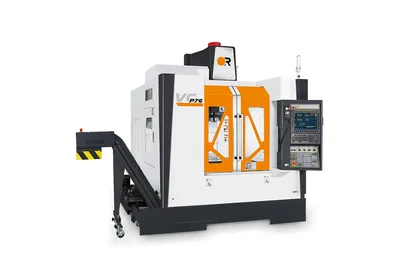
Victor Taichung Vcenter-P76
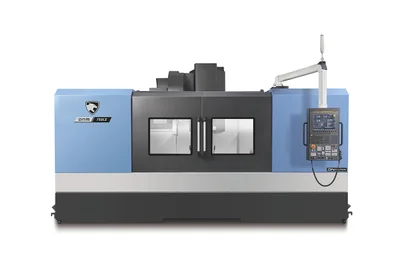
Doosan DNM 750 II
Röders RXU1401
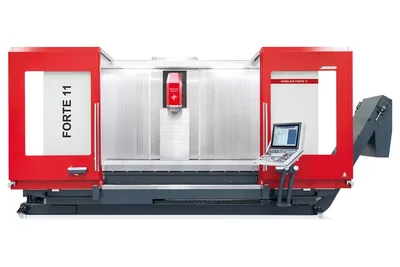
Hedelius FORTE 11-2600