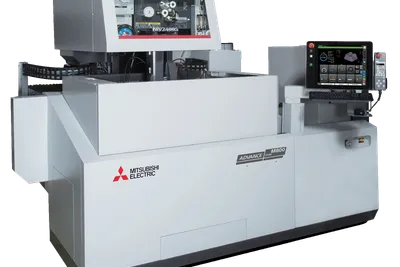
Mitsubishi Electric MV4800S
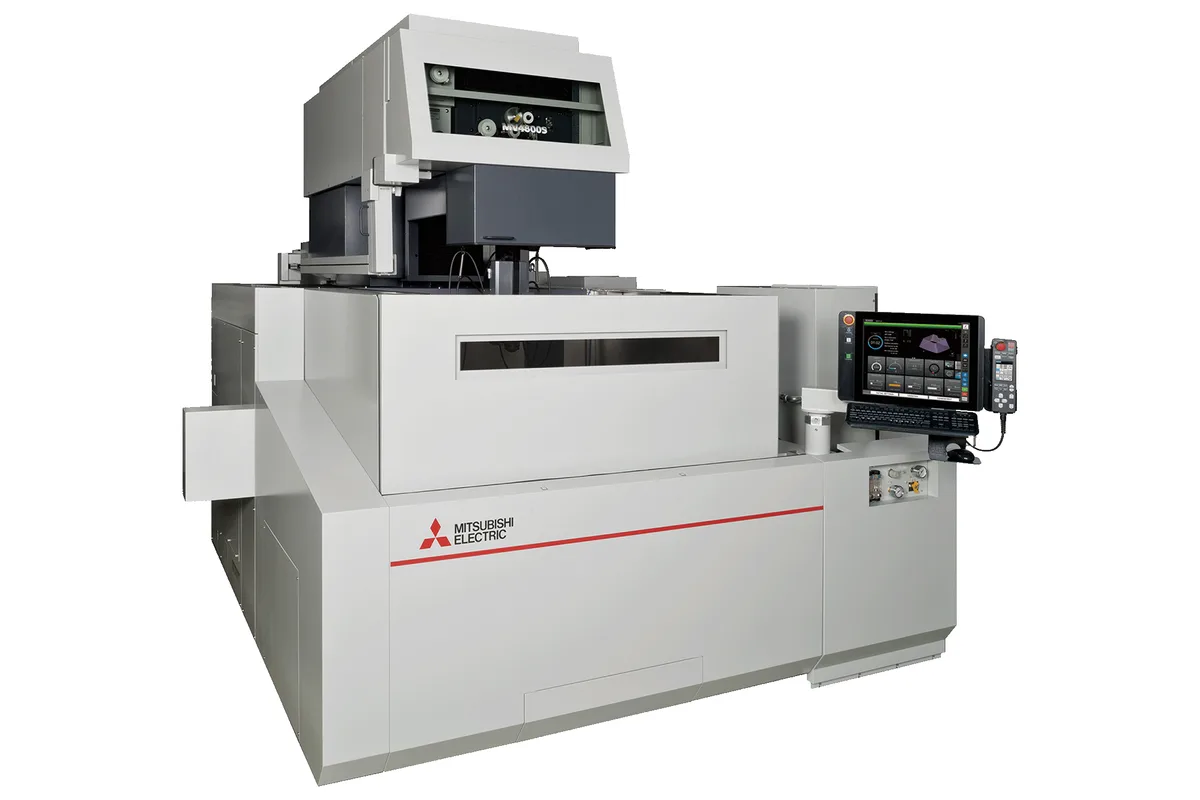
Image: mcmachinery.com, Mitsubishi Electric
Key Specifications
X Travel
Y Travel
Z Travel
Table Size
Rapid Traverse
uv taper range
How much does the Mitsubishi Electric MV4800S cost?
Estimated price range
Our best estimate for a wire edm in this class — not a quote from Mitsubishi Electric. Configuration moves it a long way.
Overview
The Mitsubishi Electric MV4800S is a large wire EDM: 31.5 in (800 mm) of X travel, 23.6 in (600 mm) of Y and 20.1 in (510 mm) of Z, for workpieces up to 6,600 lb (3,000 kg). Parts of that weight are crane work, and most of what matters about the machine follows from it.
It accepts a workpiece of 49.2 × 40.2 × 19.9 in (1,250 × 1,020 × 505 mm) on a 42.5 × 34.3 in (1,080 × 870 mm) table, which is listed with a back rail. The 19.9 in (505 mm) height is the figure that sets this machine apart. The MV2400S stops at 12.2 in (310 mm) of Z travel and the MV1200S at 8.7 in (220 mm), so tall mold blocks, stacked plates and thick extrusion tooling that those frames cannot clear belong here.
U and V travel is ±4.0 × ±4.0 in (±100 × ±100 mm). Wire is listed from 0.006–0.012 in (0.15–0.3 mm), so the fine end of the range begins at 0.006 in (0.15 mm) and very small corner radii are not what this machine is for. Start holes go down to 0.02 in (0.5 mm), and the generator is the V350-V.
Rapid traverse is 51.2 in/min (1,300 mm/min), the same figure the MV2400S carries on shorter axes, so a move across the full 31.5 in (800 mm) of X takes noticeable time. On a plate with openings scattered across it, order the cuts to keep repositioning short. Connectivity is listed as Ethernet, remote monitoring and an Industry 4.0 interface, which helps when long unattended cuts need watching from elsewhere.
Plan the building before the purchase. The machine weighs 13,007 lb (5,900 kg), holds 391 gal (1,480 L) of dielectric, covers 122.0 × 135.6 in (3,100 × 3,445 mm) and stands 110.8 in (2,815 mm) tall. Door height, crane hook height and slab capacity all need checking against those figures.
Full Specifications
| Parameter | Value |
|---|---|
| X-Axis Travel | 31.5 in (800 mm) |
| Y-Axis Travel | 23.6 in (600 mm) |
| Z-Axis Travel | 20.1 in (510 mm) |
| Uv Taper Range | ±10° / 100 mm height |
| Max Workpiece Weight | 6,600 lb (3,000 kg) |
| Wire Diameter Range | 0.006–0.012 in (0.15–0.3 mm) |
| Generator | V350-V |
| Machine Weight | 13,007 lb (5,900 kg) |
| Connectivity | Ethernet, remote monitoring, Industry 4.0 interface |
| Max Workpiece Size | 49.2 × 40.2 × 19.9 in (1,250 × 1,020 × 505 mm) |
| Table Size | 42.5 × 34.3 in (1,080 × 870 mm) w Back Rail |
| Uv Travel | ±4.0 × ±4.0 in (±100 × ±100 mm) |
| Max Taper Angle | 15 deg.@ 14.3 in (15 deg.@ 365 mm) |
| Rapid Traverse Rate | 51.2 in/min (1,300 mm/min) |
| Min Start Hole | 0.02 in (0.5 mm) |
| Dielectric Capacity | 391 gal (1,480 L) |
| Floor Space Required | 122.0 × 135.6 in (3,100 × 3,445 mm) |
| Machine Height | 110.8 in (2,815 mm) |
Specifications sourced from mcmachinery.com — verified 2026-10-03
Strengths & Limitations
Strengths
- 20.1 in (510 mm) of Z travel and a 19.9 in (505 mm) workpiece height limit
- Workpieces up to 6,600 lb (3,000 kg) and 49.2 × 40.2 in (1,250 × 1,020 mm) in plan
- 42.5 × 34.3 in (1,080 × 870 mm) table, listed with a back rail
- ±4.0 × ±4.0 in (±100 × ±100 mm) of U and V travel
- Ethernet, remote monitoring and an Industry 4.0 interface are listed under connectivity
Limitations
- The wire range starts at 0.006 in (0.15 mm); finer wire is not listed
- Rapid traverse of 51.2 in/min (1,300 mm/min) is slow across 31.5 in (800 mm) of X
- Demands space and structure: 13,007 lb (5,900 kg), 122.0 × 135.6 in (3,100 × 3,445 mm) of floor and 110.8 in (2,815 mm) of height
- 391 gal (1,480 L) of dielectric to supply, maintain and dispose of
Best For
Frequently Asked Questions
01
The workpiece can be up to 49.2 × 40.2 × 19.9 in (1,250 × 1,020 × 505 mm) and 6,600 lb (3,000 kg). Travel is 31.5 in (800 mm) in X, 23.6 in (600 mm) in Y and 20.1 in (510 mm) in Z, so the wire covers most but not all of the largest plate in one clamping.
02
The MV2400R has 23.6 in (600 mm), 15.7 in (400 mm) and 12.2 in (310 mm) of travel on a 33.0 × 25.2 in (840 × 640 mm) table and weighs 7,716 lb (3,500 kg). The MV4800S has 31.5 in (800 mm), 23.6 in (600 mm) and 20.1 in (510 mm) on a 42.5 × 34.3 in (1,080 × 870 mm) table and weighs 13,007 lb (5,900 kg). The gain is greatest in Z, and the rapid traverse is 51.2 in/min (1,300 mm/min) on both.
03
The listed wire diameter range is 0.006–0.012 in (0.15–0.3 mm), and the minimum start hole is 0.02 in (0.5 mm). Thick wire suits the tall sections this machine is built around. Wire thinner than 0.006 in (0.15 mm) is not in the table, so fine-detail work in thin plate is better placed on a smaller machine.
04
A floor area of 122.0 × 135.6 in (3,100 × 3,445 mm), clear height above the machine's 110.8 in (2,815 mm), and a slab that carries 13,007 lb (5,900 kg) of machine plus 391 gal (1,480 L) of dielectric and a workpiece of up to 6,600 lb (3,000 kg). A crane over the tank is a practical necessity at those part weights. Electrical and air figures are not in the table.
05
The connectivity row lists Ethernet, remote monitoring and an Industry 4.0 interface. The table does not say which protocols or software are involved, so if the machine has to report into an existing monitoring system, ask Mitsubishi Electric which interfaces are supported.
Videos
![[PV] MV4800シリーズ ワイヤ放電加工機|三菱電機FA](https://i.ytimg.com/vi/zDv9nfWhsk0/hqdefault.jpg)
MITSUBISHI ELECTRIC MECHATRONICS

CIA Industrial, LLC

MTDCNC
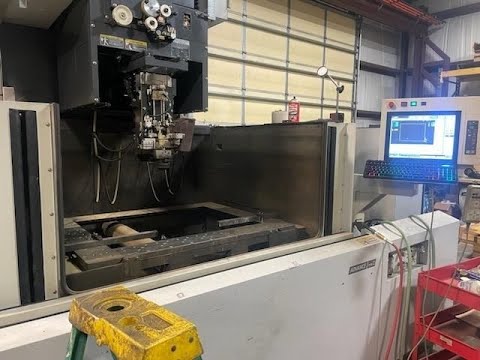
HitechMachinery
Community Discussions
Troubleshooting and problem-solving
Links to community discussions. Summaries are editorial — visit the original thread for full context.
More from Mitsubishi Electric
Mitsubishi Electric MG12
Mitsubishi Electric FA30 Advance
Mitsubishi Electric MG Series Advanced Wire EDM
Mitsubishi Electric MV2400R