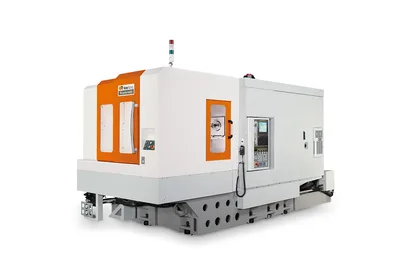
Mazak HCN-4000 III
This model was not found in Yamazaki Mazak's current lineup when we checked on 2026-10-02 (lineup page). It may be a superseded or older model; the specifications below are as we last recorded them.
Key Specifications
X Travel
Y Travel
Z Travel
Max Spindle
Spindle Taper
Tool Capacity
How much does the Mazak HCN-4000 III cost?
Estimated price range
Our best estimate for a horizontal machining centers (hmc) in this class — not a quote from Yamazaki Mazak. Configuration moves it a long way.
Overview
The Mazak HCN-4000 III is a horizontal machining center that Mazak does not show in its current lineup, so most people reading about it are weighing up a used machine. The listed figures describe a two-pallet machine with a 400 mm (15.7 in) square pallet and 560 mm (22.0 in) of travel on each of X, Y and Z.
The listed spindle is HSK-A63 at 15,000 RPM, with 22 kW (30 hp) and 120 Nm (89 ft-lb), both at 25% ED. Those are short-duty ratings and the table carries no continuous figure, so they are no basis for sizing a long roughing cut. Maximum workpiece is 500 mm dia x 800 mm H (19.7 x 31.5 in) at 300 kg (661 lb), which a tombstone with fixtures and parts can reach quickly.
Two items vary from machine to machine and need checking on the one in front of you. The B axis indexes in 1-degree increments as standard, with a 0.001-degree CNC table listed as an option; only the second allows angles between whole degrees. The magazine is 48 tools as standard, with 80, 120 or 160 tools listed as options. Rapid traverse is 60 m/min (2,362 ipm), machine weight is 13,000 kg (28,660 lb) and the listed control is MAZATROL SmoothAi.
Tooling does not carry over to the HCN-4000 in Mazak's lineup today, which is a CAT No.40 machine with a 12,000 rpm spindle, a 40-tool magazine and travels of 22 in (559 mm) × 25 in (635 mm) × 25 in (635 mm).
Full Specifications
| Parameter | Value |
|---|---|
| Pallet Size | 400 mm (15.7 in) square |
| Number of Pallets | 2 (standard) |
| X-Axis Travel | 560 mm (22.0 in) |
| Y-Axis Travel | 560 mm (22.0 in) |
| Z-Axis Travel | 560 mm (22.0 in) |
| B Axis Indexing | 1-degree increments (0.001-degree CNC optional) |
| Max Spindle Speed | 15,000 RPM |
| Spindle Taper | HSK-A63 |
| Spindle Motor Power | 22 kW (30 hp) at 25% ED |
| Spindle Torque | 120 Nm (89 ft-lb) at 25% ED |
| Max Workpiece Size | 500 mm dia x 800 mm H (19.7 x 31.5 in) |
| Max Workpiece Weight | 300 kg (661 lb) |
| Rapid Traverse Rate | 60 m/min (2,362 ipm) |
| Tool Capacity | 48 tools standard (80, 120, 160 optional) |
| Machine Weight | 13,000 kg (28,660 lb) |
| CNC Control | MAZATROL SmoothAi CNC |
Specifications compiled from manufacturer literature and industry references. Not independently verified against a published spec sheet — confirm with the manufacturer or an authorised dealer before making a purchasing decision.
Strengths & Limitations
Strengths
- Listed spindle speed of 15,000 RPM on an HSK-A63 interface
- Equal travels of 560 mm (22.0 in) on X, Y and Z around a 400 mm (15.7 in) square pallet
- Magazine of 48 tools as standard, with 80, 120 or 160 tools listed as options
- Rapid traverse of 60 m/min (2,362 ipm)
- Two pallets as standard, so parts can be loaded while the machine cuts
Limitations
- Not in Mazak's current lineup, and the listed figures should be confirmed against the machine's own documents
- Workpiece weight is limited to 300 kg (661 lb), fixture included
- Standard B-axis indexing is in 1-degree increments; the 0.001-degree CNC table is an option a given machine may not have
- Power and torque are stated only at 25% ED: 22 kW (30 hp) and 120 Nm (89 ft-lb)
Best For
Frequently Asked Questions
01
No. Mazak does not show the HCN-4000 III in its current lineup. The model it lists today is the HCN-4000, a CAT No.40 machine with a 12,000 rpm spindle and travels of 22 in (559 mm) × 25 in (635 mm) × 25 in (635 mm), alongside the HCN-4000 NEO.
02
The listed travels are 560 mm (22.0 in) on X, 560 mm (22.0 in) on Y and 560 mm (22.0 in) on Z. The pallet is 400 mm (15.7 in) square, and two pallets are standard. Maximum workpiece is 500 mm dia x 800 mm H (19.7 x 31.5 in) and 300 kg (661 lb).
03
An HSK-A63 spindle with a maximum of 15,000 RPM. Listed power is 22 kW (30 hp) at 25% ED and listed torque is 120 Nm (89 ft-lb) at 25% ED. No continuous rating is given, so ask the seller for the spindle data plate or the original specification sheet.
04
Three things follow from the listed figures. Check whether the B axis is the standard 1-degree indexing table or the optional 0.001-degree CNC table. Count the magazine: 48 tools is standard and 80, 120 and 160 tools are options. Confirm the control, listed as MAZATROL SmoothAi, and the machine weight of 13,000 kg (28,660 lb) for rigging.
Videos

Mazak North America

MazakEurope

Mazak North America

The HEH Group
Community Discussions
Comparison and buying advice
Comparison and buying advice
Links to community discussions. Summaries are editorial — visit the original thread for full context.
More from Yamazaki Mazak
Other Horizontal Machining Centers (HMC)
Niigata HN130D-FC
SW BA W08-21 space
Heckert HEC 1000
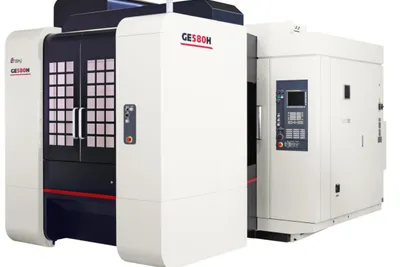
Enshu GE580H
Okuma MB-4000H