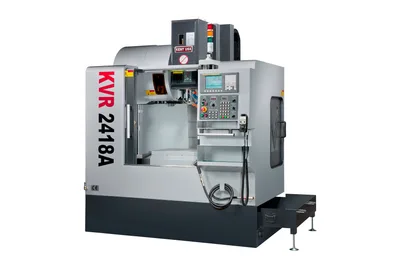
Mazak FJV-35/60
Key Specifications
X Travel
Y Travel
Z Travel
Max Spindle
Spindle Taper
Tool Capacity
How much does the Mazak FJV-35/60 cost?
Estimated price range
Our best estimate for a vertical machining centers (vmc) in this class — not a quote from Yamazaki Mazak. Configuration moves it a long way.
Overview
The Mazak FJV-35/60 is a CAT No.50 double-column vertical machining center with 59.06 in (1,500 mm) × 31.5 in (800 mm) × 25.98 in (660 mm) of travel and a 68.5 in (1,740 mm) × 29.53 in (750 mm) table rated for 5,512 lb (2,500 kg). Mazak groups it with the FJV models that have 33.9 in (861 mm) between the columns.
Y travel is longer than the table is wide, 31.5 in (800 mm) against 29.53 in (750 mm), so the spindle can reach both long edges of a part that fills the table. X is the other way round: 59.06 in (1,500 mm) of travel on a 68.5 in (1,740 mm) table, which leaves room at the ends for clamps outside the cutting zone. Where a longer part has to be machined end to end, the FJV-35/80 keeps the same Y and Z and extends X to 78.74 in (2,000 mm).
The spindle runs to 10,000 rpm and is rated 30 kW (40 HP) continuous and 37 kW (50 HP) (40% ED), with 176 ft-lb (239 Nm) continuous and 258 ft-lb (350 Nm) (40% ED) of torque. Mazak describes the series spindle as an integral spindle/motor with no drive gear. For rough machining of steel and cast iron it lists a 7,000 rpm high-torque spindle as an option, and a BT40 18,000 rpm high-speed spindle as another.
The 30-tool magazine accepts tools up to Ø4.92 in (125 mm), or Ø8.27 in (210 mm) with adjacent pockets empty, 14.96 in (380 mm) long and 44 lb (20 kg). Spindle end to table top ranges from 6.3 in (160 mm) to 32.3 in (820 mm).
It is a large installation for its travels: 141.54 in (3,595 mm) × 221.93 in (5,637 mm) of floor, 137.8 in (3,500 mm) high and 38,800 lb (17,599 kg). Rapids are 1,575 ipm (40 m/min) on X and Y and 1,181 ipm (30 m/min) on Z.
Full Specifications
| Parameter | Value |
|---|---|
| Table Size | 68.5 in (1,740 mm) × 29.53 in (750 mm) |
| Table Distance Between Columns | 33.9 in (861 mm) |
| Max Table Load | 5,512 lb (2,500 kg) |
| Spindle Taper | CAT No.50 |
| Max Spindle Speed | 10,000 rpm |
| Spindle Torque Intermittent | 258 ft-lb (350 Nm) (40% ED) |
| Spindle Torque | 176 ft-lb (239 Nm) continuous |
| Spindle Power Intermittent | 37 kW (50 HP) (40% ED) |
| Spindle Motor Power | 30 kW (40 HP) continuous |
| Tool Capacity | 30 tools |
| Max Tool Diameter (full magazine) | Ø4.92 in (125 mm) |
| Max Tool Diameter (adjacent pockets empty) | Ø8.27 in (210 mm) |
| Max Tool Length | 14.96 in (380 mm) |
| Max Tool Weight | 44 lb (20 kg) |
| X-Axis Travel | 59.06 in (1,500 mm) |
| Y-Axis Travel | 31.5 in (800 mm) |
| Z-Axis Travel | 25.98 in (660 mm) |
| Distance From Table Top Face to Spindle End | 6.3 in (160 mm) to 32.3 in (820 mm) |
| Rapid Traverse X | 1,575 ipm (40 m/min) |
| Rapid Traverse Y | 1,575 ipm (40 m/min) |
| Rapid Traverse Z | 1,181 ipm (30 m/min) |
| Floor Space Required | 141.54 in (3,595 mm) × 221.93 in (5,637 mm) (W × L, MAZATROL SmoothG) |
| Machine Height | 137.8 in (3,500 mm) |
| Machine Weight | 38,800 lb (17,599 kg) |
Specifications sourced from mazak.com — verified 2026-10-02
Strengths & Limitations
Strengths
- 30 kW (40 HP) continuous and 176 ft-lb (239 Nm) continuous on a 10,000 rpm CAT No.50 spindle
- Y travel of 31.5 in (800 mm) exceeds the 29.53 in (750 mm) table width, so the full table depth is within reach
- Tools up to 44 lb (20 kg) and Ø8.27 in (210 mm) with adjacent pockets empty, which admits large face mills and boring tools
- 25.98 in (660 mm) of Z with up to 32.3 in (820 mm) from table top to spindle end
- Options Mazak lists for the series include a 2-pallet changer, an additional fourth axis and a multi-surface machining attachment
Limitations
- X travel is 59.06 in (1,500 mm); the FJV-35/80 gives 78.74 in (2,000 mm) on the same Y and Z
- Table load of 5,512 lb (2,500 kg) is below the 6,614 lb (3,000 kg) of the FJV-35/80 and the 8,818 lb (4,000 kg) of the FJV-60/80
- Z rapid is 1,181 ipm (30 m/min), slower than the 1,575 ipm (40 m/min) of X and Y
- Needs 141.54 in (3,595 mm) × 221.93 in (5,637 mm) of floor and 137.8 in (3,500 mm) of headroom, and weighs 38,800 lb (17,599 kg)
- The 7,000 rpm high-torque spindle for steel and cast iron roughing is an option, not standard
Best For
Frequently Asked Questions
01
X is 59.06 in (1,500 mm), Y is 31.5 in (800 mm) and Z is 25.98 in (660 mm). The table measures 68.5 in (1,740 mm) × 29.53 in (750 mm) and takes 5,512 lb (2,500 kg), and there is 33.9 in (861 mm) between the columns.
02
Length. The FJV-35/80 has 78.74 in (2,000 mm) of X travel and an 88.19 in (2,240 mm) × 29.53 in (750 mm) table carrying 6,614 lb (3,000 kg), and it weighs 42,110 lb (19,101 kg). The FJV-35/60 has 59.06 in (1,500 mm) of X, a 68.5 in (1,740 mm) × 29.53 in (750 mm) table for 5,512 lb (2,500 kg) and weighs 38,800 lb (17,599 kg). Y, Z, spindle and rapids are the same on both.
03
30 kW (40 HP) continuous and 37 kW (50 HP) at 40% ED, with 176 ft-lb (239 Nm) of continuous torque and 258 ft-lb (350 Nm) at 40% ED, up to 10,000 rpm on a CAT No.50 taper. Mazak lists a 7,000 rpm high-torque spindle and a BT40 18,000 rpm high-speed spindle as options for the series.
04
For the FJV (CAT No.50) series Mazak lists a multi-surface machining attachment that enables four face machining with one angle tool, an additional axis controlled as a fourth axis from the machining program, and a 2-pallet changer for loading the next workpiece while the current one is machined. All three are optional.
05
The footprint is 141.54 in (3,595 mm) × 221.93 in (5,637 mm) (W × L, with the MAZATROL SmoothG) and the height is 137.8 in (3,500 mm). The machine weighs 38,800 lb (17,599 kg), so check floor capacity and the rigging route before ordering.
Videos
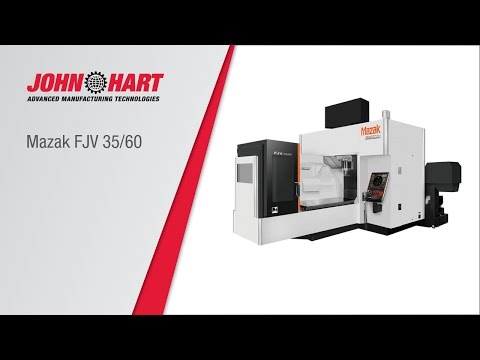
John Hart

John Hart

G+S Werkzeugmaschinen
Community Discussions
Links to community discussions. Summaries are editorial — visit the original thread for full context.
More from Yamazaki Mazak
Other Vertical Machining Centers (VMC)
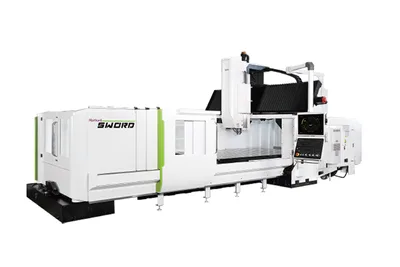
Hartford SW-326
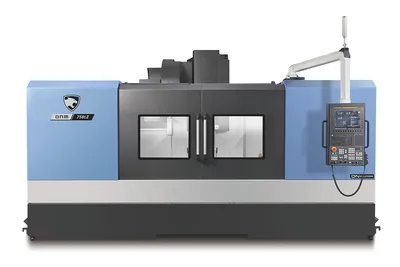
DN Solutions DNM 750 II
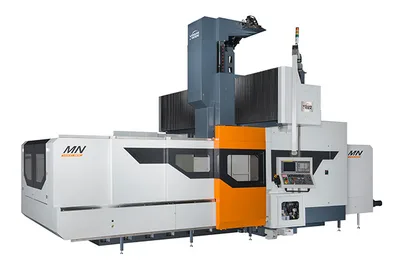
Vision Wide MN-5026 / MN-5033
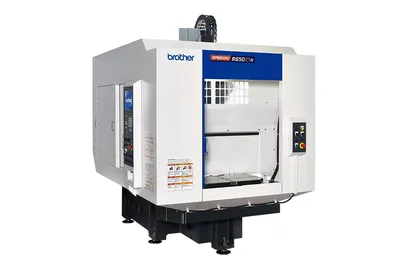
Brother SPEEDIO R650X1N
YCM NSV66AM