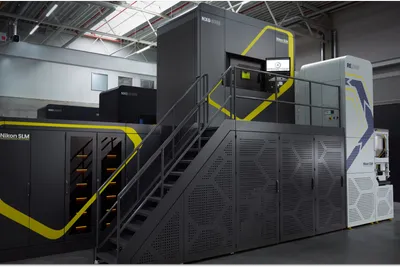
Markforged X7
Key Specifications
physical dimensions width
physical dimensions depth
physical dimensions height
machine weight
build volume width
build volume depth
How much does the Markforged X7 cost?
Estimated price range
Our best estimate for a metal additive manufacturing in this class — not a quote from Markforged. Configuration moves it a long way.
Overview
The Markforged X7 is a continuous fiber reinforcement (CFR) printer with a build volume 330 mm wide, 270 mm deep and 200 mm high. It prints a composite base filament and lays continuous fiber inside it, and its list of both is the longest reason to consider it.
On the base side the table lists Onyx, Onyx FR, Onyx ESD, Nylon, Precise PLA and Smooth TPU 95A. That last pair matters: a rigid, easy-printing plastic and a flexible one extend the machine beyond structural parts into check models and soft-contact details. On the fiber side there are Carbon Fiber, Carbon Fiber FR, Fiberglass, Aramid Fiber (Kevlar) and HSHT Fiberglass. The table does not state which fiber goes with which base, so confirm the pairing a part depends on.
Reinforced parts are built with closed cell infill and continuous fiber, layer by layer, at a Z layer resolution from 50 μm to 250 μm. Fiber is laid in the plane of each layer, so a part should be oriented with its main load running along the bed and not up through the layers. With 330 mm of width available, that usually means laying a long part flat.
The print bed is precision ground composite. The cabinet is 584 mm wide, 483 mm deep and 914 mm high and weighs 48 kg (106 lbs), which two people can position on a sturdy bench or stand. The FX20, by contrast, is listed at 530 kg (1170 lbs).
No electrical, connectivity or software rows appear in the table for this model, and neither do strength figures for reinforced parts. Material data sheets are the place to get those before a printed part replaces a machined one.
Full Specifications
| Parameter | Value |
|---|---|
| Physical Dimensions Width | 584 mm |
| Physical Dimensions Depth | 483 mm |
| Physical Dimensions Height | 914 mm |
| Machine Weight | 48 kg (106 lbs) |
| Build Volume Width | 330 mm |
| Build Volume Depth | 270 mm |
| Build Volume Height | 200 mm |
| Z Layer Resolution | 50 μm - 250 μm |
| Printing Media | Composite Base Filaments, Continuous Fibers |
| Internal Part Geometry | Closed Cell Infill with Continuous Fiber Reinforcement |
| Print Bed | Precision Ground Composite |
| Printing Process | Continuous Fiber Reinforcement (CFR) |
| Compatible Materials | Onyx®, Onyx FR™, Onyx ESD™, Nylon, Precise PLA, Smooth TPU 95A, Carbon Fiber, Carbon Fiber FR, Fiberglass, Aramid Fiber (Kevlar®), HSHT Fiberglass |
Specifications sourced from markforged.com — verified 2026-10-03
Strengths & Limitations
Strengths
- Continuous fiber reinforcement with five fibers listed: Carbon Fiber, Carbon Fiber FR, Fiberglass, Aramid Fiber (Kevlar) and HSHT Fiberglass
- Six base materials: Onyx, Onyx FR, Onyx ESD, Nylon, Precise PLA and Smooth TPU 95A
- Build volume 330 mm wide, 270 mm deep and 200 mm high
- Z layer resolution from 50 μm to 250 μm
- Weighs 48 kg (106 lbs), against 530 kg (1170 lbs) for the FX20
Limitations
- Height is limited to 200 mm, and no dimension exceeds 330 mm
- The table gives no strength, stiffness or temperature figure for reinforced parts
- Fiber and base material pairings are not stated in the table
- No metal is on the compatible-materials list
Best For
Frequently Asked Questions
01
Carbon Fiber, Carbon Fiber FR, Fiberglass, Aramid Fiber (Kevlar) and HSHT Fiberglass. The printing media are composite base filaments and continuous fibers, and the internal part geometry is closed cell infill with continuous fiber reinforcement.
02
Onyx, Onyx FR, Onyx ESD, Nylon, Precise PLA and Smooth TPU 95A are on the compatible-materials list. The table does not say which of them can be combined with continuous fiber, so check before planning a reinforced part in anything other than the Onyx grades.
03
330 mm wide, 270 mm deep and 200 mm high. The printer itself is 584 mm wide, 483 mm deep and 914 mm high, and weighs 48 kg (106 lbs).
04
Z layer resolution is 50 μm - 250 μm. The print bed is listed as precision ground composite. The table gives no bed flatness or dimensional accuracy figure for this model.
05
No. Its process is continuous fiber reinforcement (CFR), and every compatible material is a plastic filament or a fiber. For printed metal, the Metal X is the Markforged model listed with bound powder filament; it weighs 75 kg (165 lbs).
More from Markforged
Markforged Metal X
Markforged Metal X System
Markforged X3
Markforged FX20
Markforged Metal X Gen 2
Markforged Metal X Gen 2 Metal 3D Printer
Other Metal Additive Manufacturing
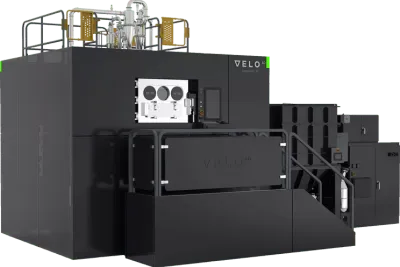
Velo3D Sapphire XC
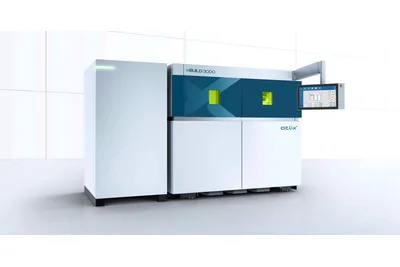
ATLIX xBUILD 3000
GE Additive M2 Series
Desktop Metal Production System P-50
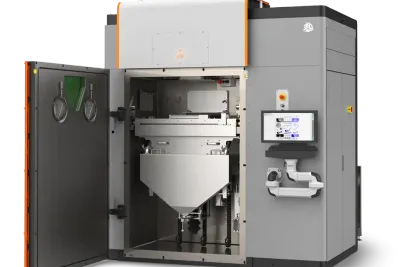
3D Systems DMP Flex 350