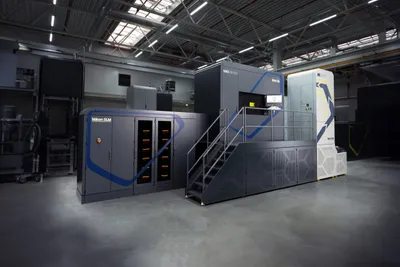
Markforged Onyx One
Key Specifications
build volume
layer resolution
matrix material
fiber materials
print process
tensile strength
Overview
The Markforged Onyx One is the entry-level industrial 3D printer in Markforged's lineup, designed to introduce manufacturing teams to the performance and workflow advantages of Onyx — Markforged's proprietary chopped carbon fiber-filled nylon — without the additional cost of continuous fiber reinforcement hardware. While it lacks the fiber placement capability of the X3 and X7, the Onyx One produces parts substantially stronger, stiffer, and more chemically resistant than standard nylon or ABS FDM prints, positioning it above consumer-grade printers and hobby machines in industrial environments.
Onyx material is the foundation of the entire Markforged composite printing system. The chopped carbon fiber dispersed throughout the nylon matrix provides approximately twice the stiffness and significantly better surface finish compared to standard nylon, along with improved heat deflection temperature. For non-structural and semi-structural applications — jigs, fixtures, inspection aids, housings, end caps, brackets, and lightweight assembly tools — Onyx One parts often meet requirements without needing continuous fiber reinforcement, making the machine's capability sufficient for a broad range of factory floor applications.
The Onyx One connects to Markforged's Eiger cloud software platform for slicing, print management, and part library access. This positions it within the broader Digital Forge ecosystem: shops that start with an Onyx One can scale to X3 or X7 machines and manage all printers through the same software environment. The cloud-based Eiger platform eliminates local software installation requirements and provides automatic updates, version-controlled part files, and multi-user access appropriate for engineering team environments.
The machine's build volume of 320 x 132 x 160 mm covers a practical range of small-to-medium industrial parts. The heated build chamber maintains dimensional stability during printing and supports the material properties of Onyx. Print resolution at 100 microns produces surfaces suitable for most tooling and fixtures applications directly off the machine, with light post-processing adequate for functional mating surfaces.
For manufacturers evaluating additive manufacturing for the first time, or for facilities that have already deployed X3 or X7 machines and want a lower-cost system for high-volume fixture and jig production where fiber reinforcement is unnecessary, the Onyx One provides a compelling value proposition. It is also commonly deployed in educational and R&D environments as an introduction to Markforged's ecosystem before committing to higher-capability continuous fiber systems.
Full Specifications
| Parameter | Value |
|---|---|
| Build Volume | 320 x 132 x 160 mm (12.6 x 5.2 x 6.3 in) |
| Layer Resolution | 100 microns (0.004 in) |
| Matrix Material | Onyx (chopped carbon fiber nylon) |
| Fiber Materials | None (Onyx-only; no continuous fiber) |
| Print Process | Fused Filament Fabrication (FFF) with Onyx |
| Tensile Strength | Approx. 35–40 MPa (Onyx, no fiber reinforcement) |
| Connectivity | Ethernet, Wi-Fi; Markforged Eiger cloud |
| Machine Weight | Approx. 19 kg (42 lb) |
Specifications compiled from manufacturer literature and industry references. Not independently verified against a published spec sheet — confirm with the manufacturer or an authorised dealer before making a purchasing decision.
Strengths & Limitations
Strengths
- Lowest-cost entry into the Markforged Eiger ecosystem with Onyx print quality
- Onyx material provides significantly better stiffness and surface finish than standard nylon FDM
- Cloud-based Eiger software with fleet management scales to X3/X7 later
- Compact footprint suitable for desktop or benchtop deployment on factory floors
- Practical for high-volume jig, fixture, and non-structural bracket production
Limitations
- No continuous fiber reinforcement limits part strength versus X3 and X7
- Smaller build volume than X3 and X7 restricts part size
- Onyx-only parts not appropriate for high-load structural or safety-critical applications
Best For
Frequently Asked Questions
01
No — the Onyx One is a single-extrusion system designed for Onyx material only. Continuous fiber reinforcement requires a dual-extrusion system (the fiber extrusion head is a separate hardware component), so upgrading to fiber capability requires purchasing an X3 or X7 machine.
02
Onyx parts are approximately twice as stiff as standard nylon FDM parts and have better surface finish and heat resistance. However, without continuous fiber reinforcement, tensile strength is roughly 35–40 MPa — suitable for non-structural tooling but well below the 700–900 MPa achievable with continuous carbon fiber on the X7.
03
Yes — the Onyx One fully integrates with Eiger, Markforged's cloud-based slicing and print management platform. This means parts and workflows created on the Onyx One can be transitioned to X3 or X7 machines in the same Eiger environment as a shop scales up.
04
The Onyx One excels for jigs, fixtures, assembly aids, inspection tools, housings, brackets, and other tooling where Onyx's improved stiffness and surface quality over standard nylon is sufficient. It is not recommended for high-load structural brackets or parts that would otherwise require machined aluminum.
05
The Onyx One produces higher-quality parts than consumer or prosumer FDM printers because Onyx material is stronger, stiffer, and more chemically resistant than ABS or PLA. The Eiger cloud platform also provides industrial workflow features — part version control, fleet management, secure dispatch — that consumer printer software lacks.
Videos
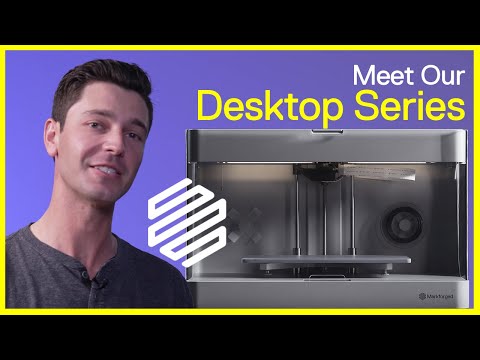
Markforged

Markforged

MakeHaven

VirtualFlat CAD

uic University Imaging Centers
Community Discussions
Community discussion — You folks familiar with the Markforged printer? Nylon-Carbon ...
Community discussion — Manual lathe- Lock all axis except the one being used?
Troubleshooting and problem-solving — LNS bar feeder error - Practical Machinist
Troubleshooting and problem-solving — homing problem
Troubleshooting and problem-solving — Solved Alarm - 1000#1 (1stcus) sensor - CNCzone
Community discussion — OneCNC - CNCzone
Troubleshooting and problem-solving — Need Help! Fanuc OI-MF control will not change tool 9 - CNCzone
Troubleshooting and problem-solving — Need Help! Fanuc 0T-F Alarm 1003 - CNCzone
Links to community discussions. Summaries are editorial — visit the original thread for full context.
Related Machines
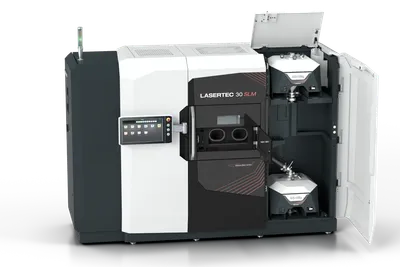
DMG Mori LASERTEC 30 SLM
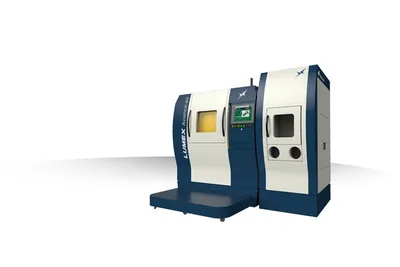
Matsuura LUMEX Avance-60
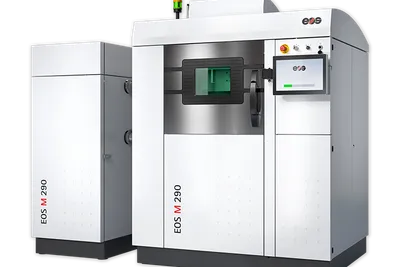
EOS M 290
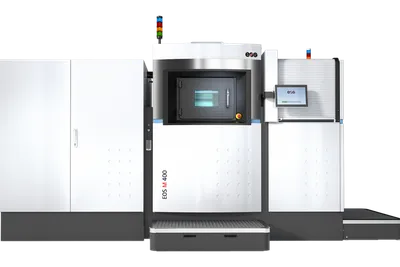
EOS M 400-4
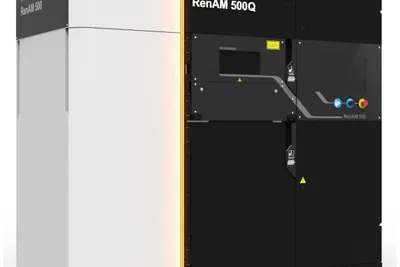
Renishaw RenAM 500Q