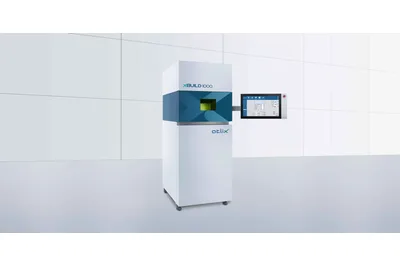
Markforged Metal X Gen 2
Key Specifications
physical dimensions width
physical dimensions depth
physical dimensions height
machine weight
build volume width
build volume depth
How much does the Markforged Metal X Gen 2 cost?
Estimated price range
Our best estimate for a metal additive manufacturing in this class — not a quote from Markforged. Configuration moves it a long way.
Overview
Designing for the Markforged Metal X Gen 2 starts from three rows of its table: a build volume of 300 mm by 220 mm by 180 mm (width, depth, height), a Z layer resolution of 85 μm - 170 μm measured post-sinter, and an internal geometry that is either triangular closed cell infill or fully solid.
The infill choice does most of the work. A closed cell interior means the inside of a thick boss or block is a lattice of sealed triangular cells behind a solid skin. That keeps wall sections even, and even walls are generally easier to take through a wash and a furnace cycle than a solid block. Solid printing is reserved for thin parts or for sections that must be dense all the way through.
Because the layer figure is given after sintering, a designer should treat it as the step size on the finished surface. At 170 μm a shallow slope shows visible steps; at 85 μm it is finer, with about twice the layer count for a given height. With only 180 mm of Z, even the fine setting keeps builds short compared with the downstream steps.
The bed is heated, levels itself automatically and takes replaceable print sheets, so a worn or damaged surface is a consumable rather than a repair. The release material is ceramic and becomes powder during the sintering process. A release layer of that kind is what lets supported features come free of their supports after the furnace.
The printer is listed at 575 mm wide, 467 mm deep and 1120 mm high, and 75 kg (165 lbs). The Metal X is listed at the same 75 kg (165 lbs), and the table used here does not give a figure that separates the two names. Anyone comparing a Gen 2 against an earlier machine should ask which hardware differs.
Full Specifications
| Parameter | Value |
|---|---|
| Physical Dimensions Width | 575 mm |
| Physical Dimensions Depth | 467 mm |
| Physical Dimensions Height | 1120 mm |
| Machine Weight | 75 kg (165 lbs) |
| Build Volume Width | 300 mm |
| Build Volume Depth | 220 mm |
| Build Volume Height | 180 mm |
| Z Layer Resolution | 85 μm - 170 μm (Post-Sinter) |
| Printing Media | Bound Powder Filament |
| Internal Part Geometry | Closed Cell Infill (Triangular) or Solid Parts |
| Print Bed | Heated, Auto Leveling, Replaceable Print Sheets |
| Printing Process | Metal FFF |
| Wash 1 External Dimensions | 609 x 685 x 1,067 mm |
| Wash 1 Weight | 136 kg (300 lbs) |
| Wash 1 Washing Time | 12-72 hrs typical |
| Wash 1 Solvent | Opteon SF-79 |
| Sinter 2 External Dimensions | 1,200 x 700 x 1,500 mm |
| Sinter 2 Weight | 350 kg (772 lbs) |
| Sinter 2 Peak Internal Temp | 1,300° C (2,372° F) |
| Compatible Materials | 17-4PH Stainless Steel, Copper, H13 Tool Steel, Inconel 625, A2 and D2 Tool Steel |
| Release Material | Ceramic — Becomes Powder During Sintering Process |
| Media Spools | Bound Powder Metal Filament |
Specifications sourced from markforged.com — verified 2026-10-03
Strengths & Limitations
Strengths
- Triangular closed cell infill is available as an alternative to solid parts, keeping wall sections even
- Z layer resolution of 85 μm - 170 μm is stated post-sinter, so it applies to the finished part
- Ceramic release material becomes powder during the sintering process, leaving a parting layer where it was printed
- Replaceable print sheets on a heated, auto leveling bed
- Printing process is Metal FFF with bound powder filament
Limitations
- Height is limited to 180 mm and depth to 220 mm, which rules out tall or deep parts
- The table gives no accuracy or tolerance figure, only layer resolution
- No row distinguishes the Gen 2 from the Metal X, which is listed at the same 75 kg (165 lbs)
- Printed parts depend on a separate wash and sinter stage before use
Best For
Frequently Asked Questions
01
The table lists internal part geometry as closed cell infill (triangular) or solid parts. With infill, the interior of a thick section is printed as sealed triangular cells inside a solid skin instead of solid metal. The table does not give cell size or skin thickness, so those are settings to review in the slicing software.
02
The Z layer resolution is 85 μm - 170 μm, and the table marks that range as post-sinter. It is therefore the layer step on the sintered part. The as-printed layer height is not listed.
03
The release material is ceramic and is listed as becoming powder during the sintering process. A material that turns to powder leaves a parting layer where it was printed, which is how supported features come free after sintering. The table gives no more detail on support removal than that.
04
Not in any figure listed here. Both names appear with the same weight, 75 kg (165 lbs), and this table has no row that sets the Gen 2 apart. Ask Markforged or the seller which hardware revision a given machine is and what changed.
05
A heated, auto leveling bed with replaceable print sheets. The build volume above it is 300 mm wide, 220 mm deep and 180 mm high. A sheet that wears or is damaged can be swapped without work on the bed itself.
More from Markforged
Markforged Metal X Gen 2 Metal 3D Printer
Markforged X7
Markforged Metal X
Markforged Metal X System
Markforged X3
Markforged FX20
Other Metal Additive Manufacturing
EOS M 100
Desktop Metal Shop System
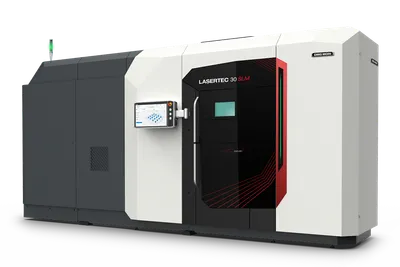
DMG Mori LASERTEC 30 SLM 3rd Generation
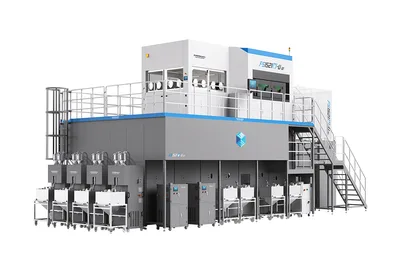
Farsoon FS1521M