Industrial CNC Machine Directory

Makino UPV-3

$200,000 - $280,000 Updated 2026-03-13
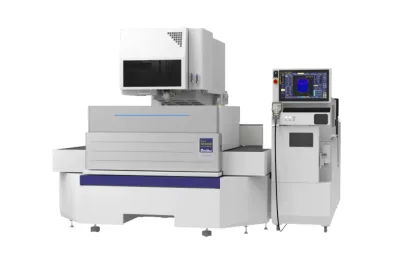
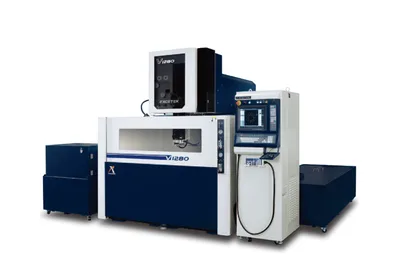
Makino UPV-3 Wire EDM
01

Key Specifications

X Travel

370 mm (14.6 in)

Y Travel

270 mm (10.6 in)

Z Travel

220 mm (8.7 in)

Table Size

500 x 350 mm (19.7 x 13.8 in)

Accuracy

+/-0.001 mm (+/-0.00004 in)

Repeatability

+/-0.0005 mm

02

Overview

The Makino UPV-3 is a high-precision wire EDM designed for ultra-fine surface finishes and tight tolerances in the die/mold and precision components industries. It's positioned above Makino's mainstream U-series wire EDMs, targeting applications where surface finish quality below 0.1 um Ra and positioning accuracy in the sub-micron range are non-negotiable requirements.

Axis travel measures 370 x 270 x 220 mm (14.6 x 10.6 x 8.7 in) on X/Y/Z, with U and V axes providing +/-50 mm (+/-2.0 in) of independent wire offset for taper cutting. The travel envelope is deliberately compact — this isn't a production wire EDM built for throughput. It's a precision instrument designed to hold the tightest tolerances the wire EDM process can deliver. The 4-sided hardened worktable spans 500 x 350 mm (19.7 x 13.8 in) with a workpiece capacity of 500 x 350 x 220 mm (19.7 x 13.8 x 8.7 in) and 200 kg (441 lb) maximum weight.

The UPV-3 achieves surface finishes down to 0.05 um Ra (2 uin Ra) using Makino's multi-pass finishing technology with fine wire. It runs wire diameters from 0.05 to 0.30 mm (0.002 to 0.012 in), including the ultra-fine wires needed for the highest-quality finishes. Positioning accuracy reaches +/-0.001 mm (+/-0.00004 in) with repeatability of +/-0.0005 mm, enabled by precision glass scales and a thermally controlled structure.

The machine uses Makino's Hyper-i touchscreen control with specialized UPV technology settings that optimize spark parameters for ultra-fine finishing. The dielectric system is temperature-controlled to maintain thermal stability during long finishing passes. Through-dielectric wire threading and a submerged cutting configuration maintain consistent flushing across the work zone.

The UPV-3 competes with the Mitsubishi MV1200R Connect, Sodick AP250L, and GF Machining Solutions CUT X 350 in the precision wire EDM segment. New pricing typically ranges from $200,000 to $280,000 depending on configuration.

03

Full Specifications

Parameter Value
X-Axis Travel 370 mm (14.6 in)
Y-Axis Travel 270 mm (10.6 in)
Z-Axis Travel 220 mm (8.7 in)
U Axis +/-1.97"
V Axis +/-1.97"
Table Size 500 x 350 mm (19.7 x 13.8 in)
Max Workpiece Size 500 x 350 x 220 mm (19.7 x 13.8 x 8.7 in)
Max Workpiece Weight 200 kg (441 lb)
Wire Diameter Range 0.05 - 0.30 mm (0.002 - 0.012 in)
Surface Finish 0.05 um Ra (2 uin Ra)
Positioning Accuracy +/-0.001 mm (+/-0.00004 in)
Repeatability +/-0.0005 mm
CNC Control Makino Hyper-i (touchscreen)
Dielectric System Temperature-controlled deionized water
Eventscontent Librarywebinar Archiveownersmakino Expertisesafety Data Sheetsnewsroomfinancing Financing OptionsMakino makes it easy to upgrade with flexible financing optionsLearn More
Metric English
Maximum Workpiece Size780 Mm X 590 Mm X 100 Mmmaximum Workpiece Weight350 Kgtank Size790 Mm X 610 Mm U-Axis:+/-1.97"V-Axis:+/-1.97"Maximum Workpiece Size:30.71" x 23.23" x 3.94"Maximum Workpiece Weight:771 lbsTank Size:31.1" x 24.05"
Maximum Workpiece Size 30.71" x 23.23" x 3.94"
Maximum Workpiece Weight 771 lbs
Tank Size 31.1" x 24.05"

Specifications sourced from makino.com — verified 2026-03-28

04

Strengths & Limitations

Strengths

  • Ultra-fine surface finish capability down to 0.05 um Ra sets it apart from mainstream wire EDMs limited to 0.2-0.4 um Ra
  • Sub-micron positioning accuracy (+/-0.001 mm) enables precision component and connector mold work that standard wire EDMs cannot achieve
  • Fine wire capability down to 0.05 mm diameter allows cutting of extremely small features and ultra-thin slots
  • Temperature-controlled dielectric system maintains thermal stability for consistent accuracy during long finishing passes
  • Hyper-i touchscreen control simplifies setup for complex precision jobs with intuitive parameter selection
  • 4-sided hardened worktable ensures long-term flatness and workpiece registration accuracy

Limitations

  • Compact travel envelope (370 x 270 mm) limits workpiece size significantly compared to production wire EDMs
  • 200 kg workpiece capacity restricts the machine to smaller precision parts and mold components
  • Premium pricing ($200K-$280K) is significantly higher than mainstream wire EDMs with larger travel
  • Ultra-fine finishing passes are inherently slow, making the UPV-3 a poor choice for shops prioritizing throughput over finish quality
  • Requires climate-controlled environment to achieve its rated accuracy specifications consistently
05

Best For

Connector mold shops cutting ultra-fine features and pin pitches that demand sub-micron accuracy Medical device manufacturers producing precision stamping dies for implant components with mirror-finish requirements Semiconductor and electronics tooling shops where feature sizes and tolerances are below what production wire EDMs can achieve Precision die makers producing IC leadframe dies, progressive dies for miniature components, and micro-machining applications Quality-focused tool rooms that need a dedicated precision wire EDM alongside production machines for final finishing operations
06

Frequently Asked Questions

01 What does a Makino UPV-3 cost?

New UPV-3 machines typically price between $200,000 and $280,000 depending on configuration and options. The precision platform commands a significant premium over mainstream U-series wire EDMs. Used UPV-3 machines are uncommon on the secondary market due to low production volumes, but when available, they typically trade between $90,000 and $160,000 for units from 2015-2020.

02 What is the difference between the UPV-3 and UPV-5?

The UPV-5 offers larger axis travels (500 x 400 x 310 mm vs 370 x 270 x 220 mm), a bigger table (700 x 500 mm vs 500 x 350 mm), and higher workpiece capacity (500 kg vs 200 kg). Both machines share the same precision pedigree and ultra-fine finish capability. Choose the UPV-3 for smaller precision components where the compact travel is sufficient; choose the UPV-5 when your precision work requires a larger envelope.

03 How does the UPV-3 compare to the Mitsubishi MV1200R?

Both are precision-class wire EDMs, but they serve slightly different niches. The MV1200R offers larger travel (400 x 300 x 220 mm) and the Tubular Shaft motor technology for smooth axis motion. The UPV-3 focuses on the ultimate in surface finish quality with its multi-pass finishing technology. The Mitsubishi has a broader dealer network in North America. Both achieve sub-micron positioning accuracy.

04 What wire types work best on the UPV-3?

For roughing passes, standard 0.20-0.25 mm brass wire delivers good cutting speed. For precision finishing, coated wires (zinc-coated, diffusion-annealed) in 0.10-0.20 mm diameter optimize surface finish. For ultra-fine work below 0.10 um Ra, tungsten or molybdenum wires in 0.05-0.10 mm diameter are used, though these are significantly more expensive than brass wire.

05 Does the UPV-3 require a special environment?

Yes. To achieve the rated +/-0.001 mm positioning accuracy and 0.05 um Ra surface finish, the UPV-3 should be installed in a climate-controlled room holding temperature within +/-1 degree C and humidity below 60%. Temperature fluctuations cause thermal expansion in both the machine structure and workpiece, directly degrading accuracy. Most shops install UPV-class machines in a dedicated temperature-controlled enclosure within the shop.

07

Videos

MAKINO, UPV-3, MAKINO MGW-SV CNTRL, NEW: 2014

MAKINO, UPV-3, MAKINO MGW-SV CNTRL, NEW: 2014

Machinery Resources International
Makino UPV-3 CNC Wire EDM

Makino UPV-3 CNC Wire EDM

MachineryNetwork

UPN-01 - Ultra-precise machining and surface finish for small/fine wire operations

UPN-01 - Ultra-precise machining and surface finish for small/fine wire operations

Makino Europe

MAKINO UP32J - 2012 with 5'700 working hours

MAKINO UP32J - 2012 with 5'700 working hours

REMIswiss Machine tools specialist

08

Community Discussions

Practical Machinist

Buy Wire EDM machine NEW vs. USED (pros and cons) Makino U3 ...

Pricing and buying discussion — Buy Wire EDM machine NEW vs. USED (pros and cons) Makino U3 ...

Practical Machinist

Makino Us false wire breakage - Practical Machinist

Community discussion — Makino Us false wire breakage - Practical Machinist

Practical Machinist

Buy Wire EDM machine NEW vs. USED (pros and cons) Makino U3 ...

Pricing and buying discussion — Buy Wire EDM machine NEW vs. USED (pros and cons) Makino U3 ...

Practical Machinist

EDM Machining | Getting into wire EDM ... - Practical Machinist

Community discussion — Getting into wire EDM ... - Practical Machinist

Reddit

Can you guys explain this please? : r/Machinists - RedditMachining - RedditInterviewing to work for Makino... Advice? : r/MachinistsWhat are your experience with okuma machines? : r/MachinistsHaas vs Makino : r/Machinists - RedditBest and worst CNC machines and brands you've ever used ...What does everyone see as the most trusted CNC ... - Reddit

Pricing and buying discussion — Can you guys explain this please? : r/Machinists - RedditMachining - RedditInterviewing to work for Makino... Advice? : r/MachinistsWhat are your experience with okuma machines? : r/MachinistsHaas vs Makino : r/Machinists - RedditBest and worst CNC machines and brands

Reddit

Interviewing to work for Makino... Advice? : r/Machinists

Troubleshooting and problem-solving — Interviewing to work for Makino... Advice? :

Reddit

Haas vs Makino : r/Machinists - Reddit

Comparison and buying advice — Haas vs Makino : r/Machinists - Reddit

Reddit

Best and worst CNC machines and brands you've ever used ...

Pricing and buying discussion — Best and worst CNC machines and brands you've ever used ...

Links to community discussions. Summaries are editorial — visit the original thread for full context.

09

Comparisons

10

Related Machines