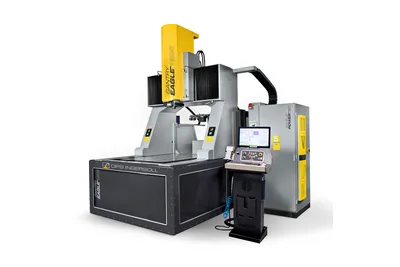
Makino EDNC-8
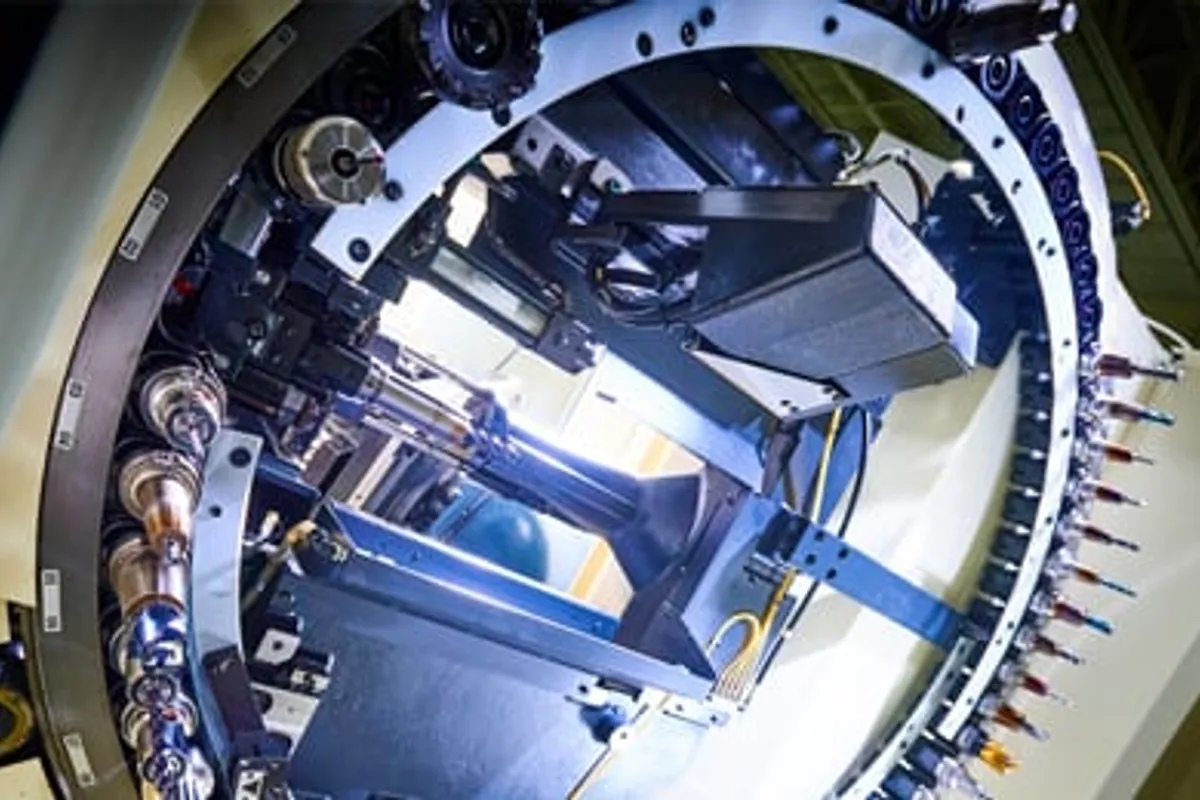
Image: makino.com, Makino
Key Specifications
X Travel
Y Travel
Z Travel
Tool Capacity
Table Size
Rapid Traverse
How much does the Makino EDNC-8 cost?
Estimated price range
Our best estimate for a sinker edm (ram edm) in this class — not a quote from Makino. Configuration moves it a long way.
Overview
The Makino EDNC-8 is the second machine of the EDNC sinker EDM series, with 800 x 500 mm (31.5 x 19.7 in) of X and Y travel, a 1,100 x 700 mm (43.3 in x 27.6 in) table and a 3,000 kg (6,614 lb) workpiece rating. Z is listed as 400 mm (15.8 in), with 500 mm (19.7 in) in brackets that the table does not explain.
Makino places it as the step up from the EDNC-6, which has 650 x 450 mm (25.6 x 17.7 in) of X and Y over an 800 x 550 mm (31.5 in x 21.7 in) table. Two tank configurations are offered. The standard EDNC-8 accepts workpieces up to 55.1” x 35.4” (1,400mm x 900mm), the same footprint as its 1,400 x 900 x 500 mm (55.1 in x 35.4 in x 19.7 in) work tank, and uses a three-sided programmable rise-and-fall tank. The wide-tank version takes parts up to 70.8” x 47.2” (1,800mm x 1,200mm) behind a programmable rise-and-fall front door.
Electrodes are rated up to 100 kg (220 lb). The generator row reads 60A ~ 240A, which covers a range rather than one machine, so put the current on the order. Rapid traverse is 5 m/min (197 in/min).
Two options change what the machine can do. The HS-Rib Z-axis gives jump motions up to 20 m/min with 1.5G acceleration and holds depth control through liquid core cooling of the ballscrew; Makino says it can reduce machining times by up to 60 percent. The optional ATC extends unattended running while leaving the whole stroke and work tank usable, and the table lists 16 or 32 tools.
The Hyper-i control includes EDM Assist, Makino's on-board digital manuals and training system, with E-Tech Doctor help functions, and runs the HyperCut and SuperSpark IV technologies.
Full Specifications
| Parameter | Value |
|---|---|
| Table Size | 1,100 x 700 mm (43.3 in x 27.6 in) |
| X-Axis Travel | 800 mm (31.5 in) |
| Y-Axis Travel | 500 mm (19.7 in) |
| Z-Axis Travel | 400 mm (500 mm) (15.8 in (19.7 in)) |
| Rapid Traverse Rate | 5 m/min (197 in/min) |
| Max Workpiece Weight | 3,000 kg (6,614 lb) |
| Tool Capacity | 16, 32 |
| Work Tank Size | 1,400 x 900 x 500 mm (55.1 in x 35.4 in x 19.7 in) |
| Max Electrode Weight | 100 kg (220 lb) |
| Max Machining Current | 60A ~ 240A |
Specifications sourced from makino.com — verified 2026-10-02
Strengths & Limitations
Strengths
- 3,000 kg (6,614 lb) workpiece rating, twice the 1,500 kg (3,307 lb) of the EDNC-6
- Standard version takes parts up to 55.1” x 35.4” (1,400mm x 900mm); the wide tank takes 70.8” x 47.2” (1,800mm x 1,200mm)
- HS-Rib Z-axis option: 20 m/min jumps at 1.5G with liquid core cooling of the ballscrew
- Optional ATC with 16 or 32 tools that leaves the full stroke and tank usable
- Hyper-i control with EDM Assist manuals and training and E-Tech Doctor help functions
Limitations
- The ATC and the HS-Rib Z-axis are both options, not standard
- Generator current is given only as 60A ~ 240A, so the fitted generator must be confirmed
- Z is 400 mm (15.8 in) with 500 mm (19.7 in) in brackets, and the table does not say what the larger stroke needs
- Electrodes are limited to 100 kg (220 lb)
Best For
Frequently Asked Questions
01
A standard version that supports workpieces up to 55.1” x 35.4” (1,400mm x 900mm) with a three-sided programmable rise-and-fall work tank, and a wide-tank version for parts up to 70.8” x 47.2” (1,800mm x 1,200mm) with a programmable rise-and-fall front door.
02
The EDNC-8 has 800 mm (31.5 in) of X against 650 mm (25.6 in), 500 mm (19.7 in) of Y against 450 mm (17.7 in), and a 1,100 x 700 mm (43.3 in x 27.6 in) table against 800 x 550 mm (31.5 in x 21.7 in) on the EDNC-6. Its workpiece rating is 3,000 kg (6,614 lb) against 1,500 kg (3,307 lb) on the EDNC-6.
03
A high-speed Z-axis with jump motions up to 20 m/min at 1.5G acceleration. Liquid core cooling of the ballscrew maintains depth control, and Makino says the option can reduce machining times by up to 60 percent, giving the speed of smaller machines on this larger platform.
04
The table gives 60A ~ 240A. That reads as a range rather than one figure, so the quotation should state which generator is fitted. Makino pairs the generator with the HyperCut and SuperSpark IV technologies run from the Hyper-i control.
Community Discussions
Troubleshooting and problem-solving
Links to community discussions. Summaries are editorial — visit the original thread for full context.
More from Makino
Other Sinker EDM (Ram EDM)
GF AgieCharmilles FORM P
Oscar EDM EX 2210-2H
GF Machining AgieCharmilles FORM X 400
CHMER D433CL