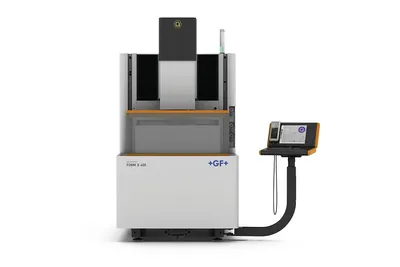
FORM E
This model was not found in GF Machining Solutions's current lineup when we checked on 2026-10-02 (lineup page). It may be a superseded or older model; the specifications below are as we last recorded them.
Key Specifications
x axis travel
y axis travel
z axis travel
work tank size l x w
max workpiece weight
max electrode weight
How much does the FORM E cost?
Estimated price range
Our best estimate for a sinker edm (ram edm) in this class — not a quote from GF Machining Solutions. Configuration moves it a long way.
Overview
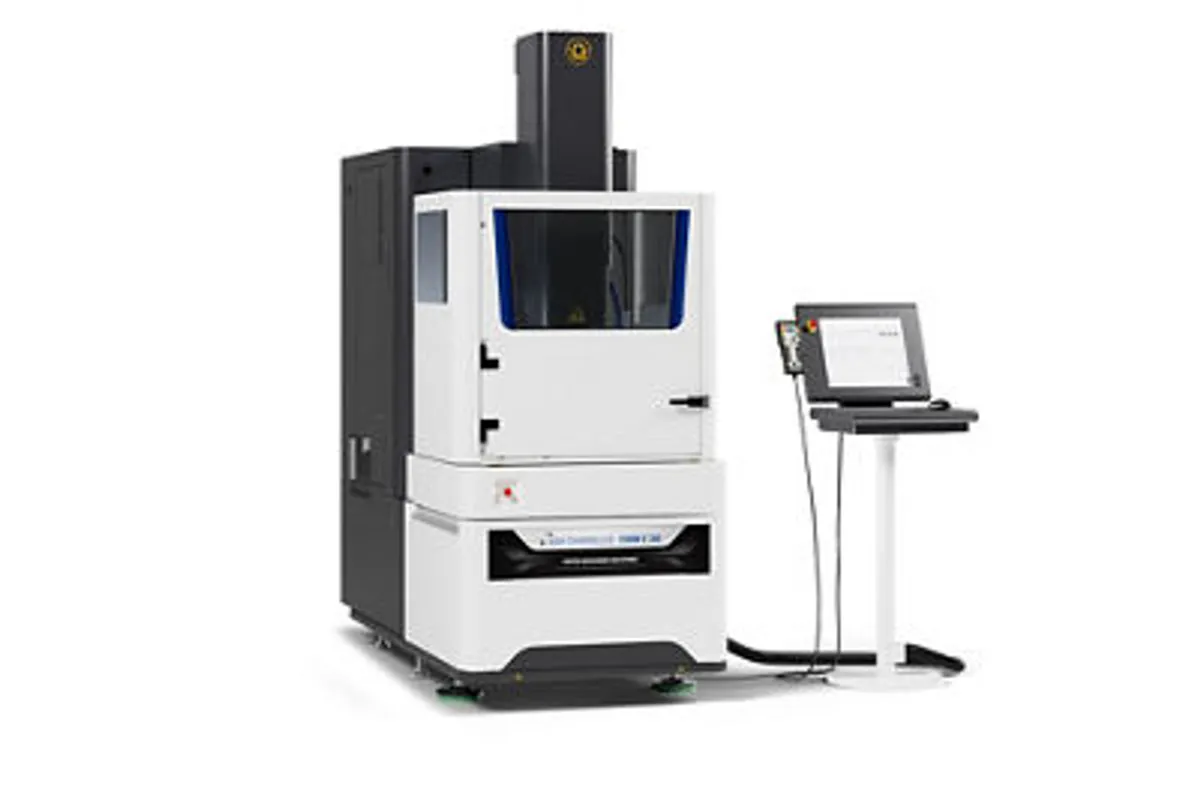
The FORM E is a compact die-sinking EDM listed with 350 x 250 x 250 mm of X, Y and Z travel, a 550 x 350 mm table inside a 770 x 550 mm work tank, and an iSPG generator under an AC Form HMI touchscreen control. It is not in GF Machining Solutions' current lineup, and its table has not been matched to a GF page, so the figures here are the listed ones.
It is a toolroom-sized sinker. Workpieces are listed up to 500 kg and electrodes up to 50 kg, which covers inserts, cores and small mould plates rather than full mould bases. The listed best surface finish of Ra 0.1 µm is fine enough for polished cavity detail straight off the machine. The dielectric tank holds approximately 350 L and the machine weighs approximately 2,800 kg, light for a sinker, though the floor rating should still be checked with a full tank.
Anyone weighing a used FORM E against a current machine can look at the AgieCharmilles FORM P 350, which has the same 350 mm X and 250 mm Y travel with 300 mm of Z. On the FORM E the 250 mm Z stroke is the figure most likely to limit long electrodes on deeper cavities.
Full Specifications
| Parameter | Value |
|---|---|
| X Axis Travel | 350 mm (13.8 in) |
| Y Axis Travel | 250 mm (9.8 in) |
| Z Axis Travel | 250 mm (9.8 in) |
| Work Tank Size L X W | 770 x 550 mm (30.3 x 21.7 in) |
| Max Workpiece Weight | 500 kg (1,102 lbs) |
| Max Electrode Weight | 50 kg (110 lbs) |
| Table Size L X W | 550 x 350 mm (21.7 x 13.8 in) |
| Best Surface Finish Ra | 0.1 µm (4 µin) |
| Generator | iSPG (Intelligent Speed Power Generator) |
| CNC Control | AC Form HMI (Touchscreen) |
| Dielectric Tank Capacity | Approx. 350 L (92 gal) |
| Machine Weight | Approx. 2,800 kg (6,173 lbs) |
Specifications compiled from manufacturer literature and industry references. Not independently verified against a published spec sheet — confirm with the manufacturer or an authorised dealer before making a purchasing decision.
Strengths & Limitations
Strengths
- Compact 350 x 250 x 250 mm envelope on a 550 x 350 mm table
- Listed best surface finish of Ra 0.1 µm for fine cavity detail
- Electrodes up to 50 kg and workpieces up to 500 kg
- Approximately 2,800 kg machine weight eases installation
Limitations
- Z travel of 250 mm is short for long electrodes and deep cavities
- Workpieces are limited to 500 kg, which excludes larger mould plates
- The table gives no peak current or generator power figure for the iSPG generator
Best For
Frequently Asked Questions
01
It does not appear in GF Machining Solutions' current lineup. The nearest current machine by size is the AgieCharmilles FORM P 350, with 350 x 250 x 300 mm of travel against the 350 x 250 x 250 mm listed for the FORM E.
02
The listed table is 550 x 350 mm in a 770 x 550 mm work tank, with travels of 350 x 250 x 250 mm. Workpieces up to 500 kg and electrodes up to 50 kg are listed.
03
The limit is set by the 250 mm Z travel together with the electrode length and holder. For deep ribs or cavities in tall inserts, compare that stroke with the AgieCharmilles FORM P 350, which has 300 mm of Z on the same 350 x 250 mm X and Y.
04
That the AC Form HMI touchscreen and iSPG generator work, that a test cut reaches a finish close to the listed Ra 0.1 µm, and that the dielectric system, approximately 350 L, is clean and filtering. The machine weighs approximately 2,800 kg for transport.
More from GF Machining Solutions
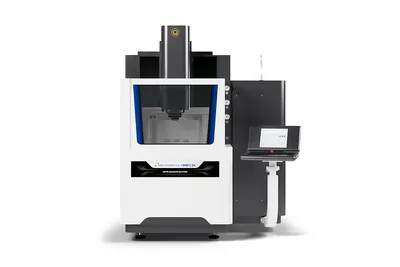
GF Machining AgieCharmilles FORM S 350
GF Machining Solutions AgieCharmilles FORM P 600
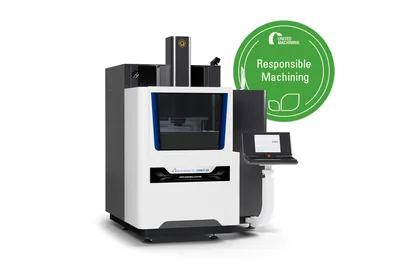
GF Machining AgieCharmilles FORM P 350
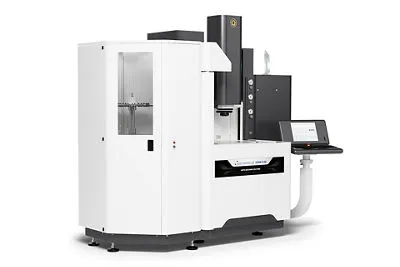
GF AgieCharmilles FORM S