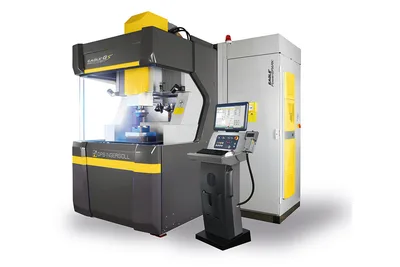
Makino EDNC-17
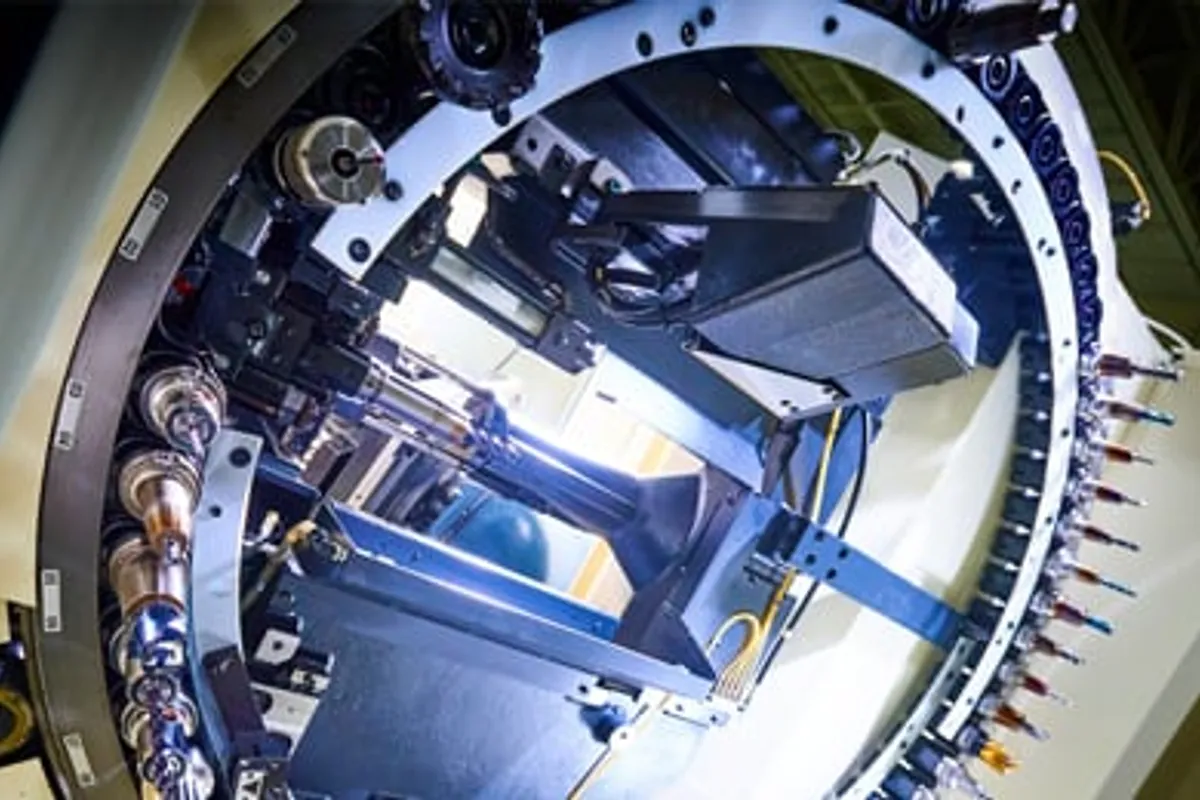
Image: makino.com, Makino
Key Specifications
X Travel
Y Travel
Z Travel
Tool Capacity
Table Size
Rapid Traverse
How much does the Makino EDNC-17 cost?
Estimated price range
Our best estimate for a sinker edm (ram edm) in this class — not a quote from Makino. Configuration moves it a long way.
Overview
The Makino EDNC-17 takes the EDNC-15 and widens the envelope: 1,700 x 1,150 x 800 mm (66.9 x 45.3 x 31.5 in) of travel over a 2,000 x 1,350 mm (78.7 in x 53.2 in) table, rated for 10,000 kg (22,046 lb). Makino describes it as offering the same utility and capability as the smaller EDNC-15 with larger X and Y strokes and a larger work tank.
Y travel is the change that matters. The EDNC-15 has 700 mm (27.6 in) of Y and a 1,000 mm wide table; the EDNC-17 has 1,150 mm (45.3 in) of Y and 1,350 mm of table width. Wide die halves, or several cavities laid out across the table, can be reached without moving the part.
Makino's description includes the HS-Rib high-speed Z-axis without calling it an option. It reaches jump speeds up to 20 m/min with 1.0G acceleration, uses a core-cooled ball screw with a dedicated closed-loop chiller unit, and covers the full 31.5” (800mm) of Z travel to keep depth control and blending of electrode features consistent. Makino aims it at die and mold rib electrode details and says it can reduce machining times by up to 60 percent.
The 4-sided programmable rise-and-fall work tank measures 2,500 x 1,600 x 800 mm (98.4 in x 63.0 in x 31.5 in), and Makino gives 98.4” x 63.0” (2,500 x 1,600) as the largest part size. Dropping all four sides simplifies loading large details and reduces what robot automation needs. ATC options of different sizes, with 8, 16 or 32 tools in the table, are mounted outside the tank.
Electrodes can weigh up to 100 kg (220 lb), the generator row reads 60A ~ 240A, and rapid traverse is 5,000 mm/min (197 ipm). SuperSpark IV and HyperCut run from the Hyper-i control on a 24” class touch screen.
Full Specifications
| Parameter | Value |
|---|---|
| Table Size | 2,000 x 1,350 mm (78.7 in x 53.2 in) |
| X-Axis Travel | 1,700 mm (66.9 in) |
| Y-Axis Travel | 1,150 mm (45.3 in) |
| Z-Axis Travel | 800 mm (31.5 in) |
| Rapid Traverse Rate | 5,000 mm/min (197 ipm) |
| Max Workpiece Weight | 10,000 kg (22,046 lb) |
| Tool Capacity | 8, 16, 32 |
| Work Tank Size | 2,500 x 1,600 x 800 mm (98.4 in x 63.0 in x 31.5 in) |
| Max Electrode Weight | 100 kg (220 lb) |
| Max Machining Current | 60A ~ 240A |
Specifications sourced from makino.com — verified 2026-10-02
Strengths & Limitations
Strengths
- 1,150 mm (45.3 in) of Y travel, against 700 mm (27.6 in) on the EDNC-15
- 800 mm (31.5 in) of Z with the HS-Rib high-speed axis at up to 20 m/min
- Parts up to 10,000 kg (22,046 lb) or 98.4” x 63.0” in size
- 4-sided rise-and-fall tank for loading large details and simpler robot automation
- ATC options of 8, 16 or 32 tools mounted outside the work tank
Limitations
- HS-Rib acceleration is given as 1.0G, against the 1.5G Makino quotes for the HS-Rib on the EDNC-6
- Generator current is given only as a 60A ~ 240A range
- Electrodes are limited to 100 kg (220 lb)
- X travel of 1,700 mm (66.9 in) is short of the 2,000 mm (78.7 in) on the EDNC-20
Best For
Frequently Asked Questions
01
Larger X and Y strokes and a larger tank. The EDNC-15 has 1,500 x 700 mm (59.0 x 27.6 in) of X and Y, a 2,000 x 1,000 mm (78.7 in x 39.4 in) table and 500 mm (19.7 in) of standard Z. The EDNC-17 has 1,700 x 1,150 x 800 mm (66.9 x 45.3 x 31.5 in) of travel and a 2,000 x 1,350 mm (78.7 in x 53.2 in) table.
02
Makino's description says the machine makes use of the HS-Rib high-speed Z-axis and does not call it an option. It jumps at up to 20 m/min with 1.0G acceleration over 31.5” (800mm) and uses a core-cooled ball screw with its own closed-loop chiller. Confirm the scope on the quotation.
03
Makino gives parts weighing up to 22,000 lbs. (10,000kg) or as large as 98.4” x 63.0” (2,500 x 1,600). The table is 2,000 x 1,350 mm (78.7 in x 53.2 in) and the tank 2,500 x 1,600 x 800 mm (98.4 in x 63.0 in x 31.5 in).
04
ATC options of different sizes are offered, and the table lists 8, 16 or 32 tools. They are mounted outside the work tank so they take nothing from the stroke or the tank, which supports longer unattended runs. Electrodes can weigh up to 100 kg (220 lb).
Community Discussions
Maintenance and service
Links to community discussions. Summaries are editorial — visit the original thread for full context.
More from Makino
Other Sinker EDM (Ram EDM)
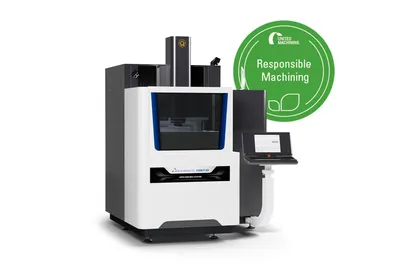
GF Machining AgieCharmilles FORM P 600
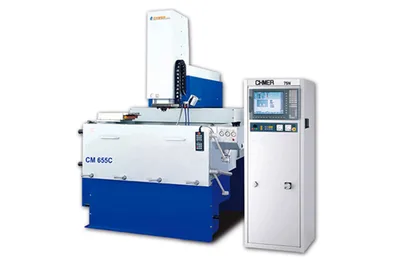
CHMER CM655C
GF AgieCharmilles FORM 20
Sodick AP1L