Makino EDBV8
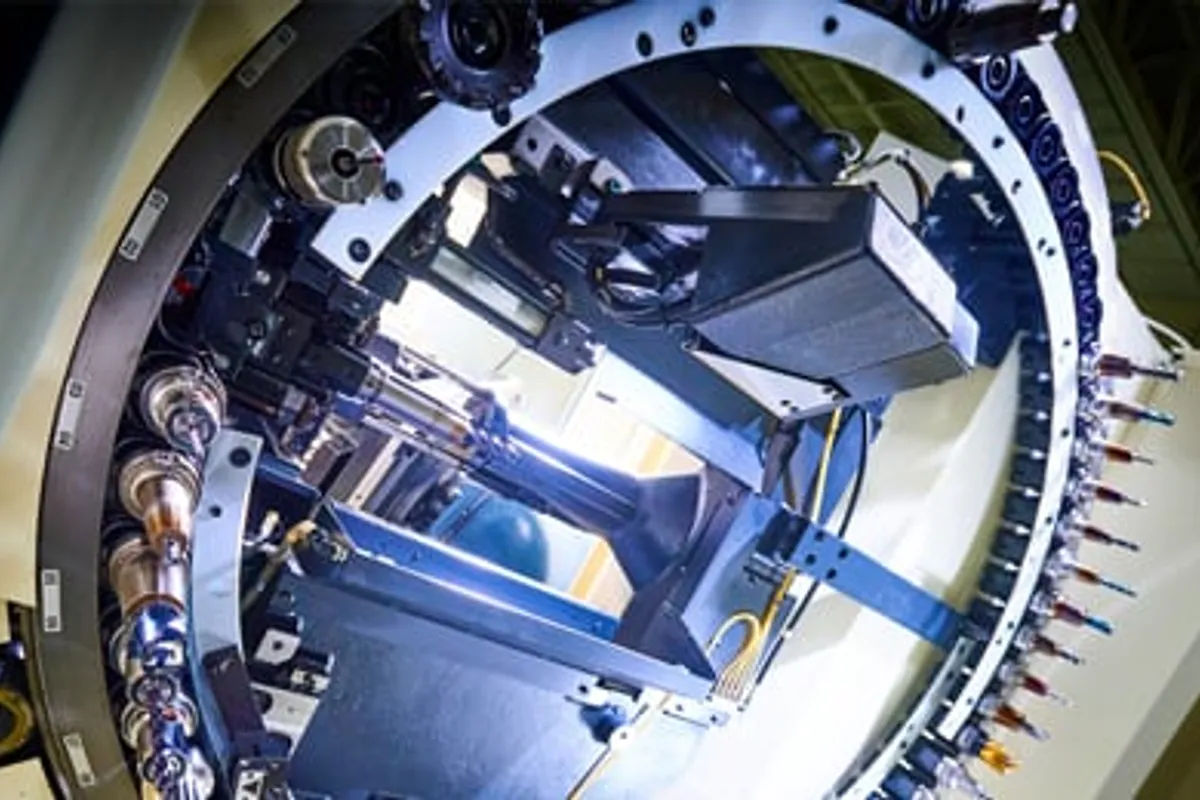
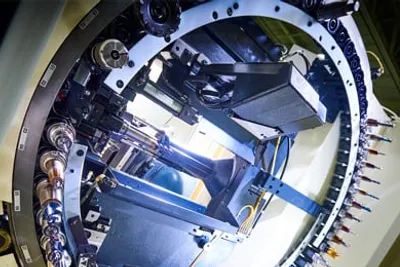
Image: makino.com, Makino
Key Specifications
X Travel
Y Travel
Z Travel
Tool Capacity
Table Size
Rapid Traverse
How much does the Makino EDBV8 cost?
Estimated price range
Our best estimate for a sinker edm (ram edm) in this class — not a quote from Makino. Configuration moves it a long way.
Overview
The Makino EDBV8 is an EDM hole-drilling machine built for the cooling holes of turbine blades and vanes, with 800 x 600 mm (31.5 x 23.6 in) of X and Y travel, an integral two-axis rotary table and a tool capacity of 24. Makino describes it as an expansion of the EDBV3, and the difference is reach: the EDBV3 has 370 mm (14.6 in) of X and 270 mm (10.6 in) of Y over the same 500 mm (19.7 in) Z.
The Z row reads 500 mm (19.7 in) with 750 mm (29.5 in) in brackets, and the table does not say what the second figure belongs to, so ask which Z the quoted machine carries. The rotary table turns 360° on A and swings -110/+30° on B, which lets one setup reach several faces and locations of a part. Its load is the figure to watch: 50 kg (110 lb) as standard and 150 kg (330 lb) with the option. Rapid traverse is 5 m/min (197 in/min).
All machining is done fully submerged, with water as the dielectric. The water reservoir sits in the base casting, and a chiller, water filtration and de-ionization are provided to keep the water in condition. Working submerged also removes the splash guards a manual setup would need and the slip hazard of over-spray. For film-cooling holes and diffusers, the break-through detection system recognises electrode break-through within 1 second or 0.040” (1.0mm) of depth, which is how the machine avoids internal back-striking.
The electrode and die guide are pre-assembled as one unit, so a single exchange performs both ATC and AGC (automatic guide change), and Makino gives the exchange as within 45 seconds. A Middle Guide system keeps long electrodes from bending and vibrating. Loading is through a 3-sided programmable rise-and-fall work tank, listed at 1,400 x 1050 mm (55.1 in x 41.3 in). The Hyper-i control runs on a 24” class high-definition touch screen with a Windows 7 operating system.
Full Specifications
| Parameter | Value |
|---|---|
| Table Size | Rotary Table - A: 360° / B: -110/+30° |
| X-Axis Travel | 800 mm (31.5 in) |
| Y-Axis Travel | 600 mm (23.6 in) |
| Z-Axis Travel | 500 mm (750 mm) (19.7 in (29.5 in)) |
| Rapid Traverse Rate | 5 m/min (197 in/min) |
| Max Workpiece Weight | 50 kg (150 kg Opt) Rotary Table (110 lb (330 lb. Opt) Rotary Table) |
| Tool Capacity | 24 |
| Work Tank Size | 1,400 x 1050 mm (55.1 in x 41.3 in) |
Specifications sourced from makino.com — verified 2026-10-02
Strengths & Limitations
Strengths
- Built for EDM drilling of turbine blade and vane holes, with break-through detection within 1 second or 0.040” (1.0mm) of depth
- Integral rotary table, 360° on A and -110/+30° on B, reaches several faces of a part in one setup
- Combined ATC and AGC exchanges the pre-assembled electrode and die guide unit within 45 seconds
- Fully submerged machining in water, with chiller, filtration and de-ionization provided, so no splash guards are needed
- 800 mm (31.5 in) of X and 600 mm (23.6 in) of Y, against 370 mm (14.6 in) and 270 mm (10.6 in) on the EDBV3
Limitations
- The rotary table carries 50 kg (110 lb) as standard; heavier parts need the 150 kg (330 lb) option
- Z is listed as 500 mm (19.7 in) with 750 mm (29.5 in) in brackets and no note on what the larger stroke requires
- Rapid traverse of 5 m/min (197 in/min) makes long moves between hole positions comparatively slow
- Makino describes it only for drilling turbine engine components, and the table gives no generator current, so it is not a general die-sinking machine
Best For
Frequently Asked Questions
01
EDM drilling of turbine engine components, mainly cooling film holes and diffusers in blades and vanes for power generation and aerospace. Break-through detection recognises the electrode breaking through within 1 second or 0.040” (1.0mm) of depth, and a Middle Guide keeps long electrodes from bending and vibrating.
02
Stroke. The EDBV8 has 800 mm (31.5 in) of X and 600 mm (23.6 in) of Y, while the EDBV3 has 370 mm (14.6 in) and 270 mm (10.6 in). Both list a 500 mm (19.7 in) Z, a 5 m/min (197 in/min) rapid, the A 360° / B -110/+30° rotary table and a tool capacity of 24.
03
50 kg (110 lb) as standard and 150 kg (330 lb) with the optional rating. Weigh the fixture and the part together against these limits, since everything sits on the tilting table rather than on a fixed bed.
04
Water. The reservoir is integrated into the base casting, which keeps the footprint small and helps thermal stability, and the machine is supplied with a chiller, water filtration and de-ionization to maintain water quality. All machining is done fully submerged.
05
The electrode and its die guide are pre-assembled as one unit, so a single exchange performs both the ATC and the AGC (automatic guide change) function. Makino gives the exchange as within 45 seconds. The table lists a tool capacity of 24.
Videos

Makino Inc.
Comparisons
More from Makino
Other Sinker EDM (Ram EDM)
Sodick K3BL
Sodick AL35G
ONA AX3
Sodick AG80L
CHMER CM1675C