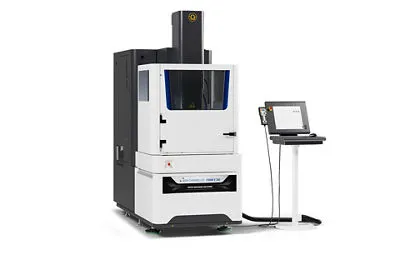
Makino EDAC1
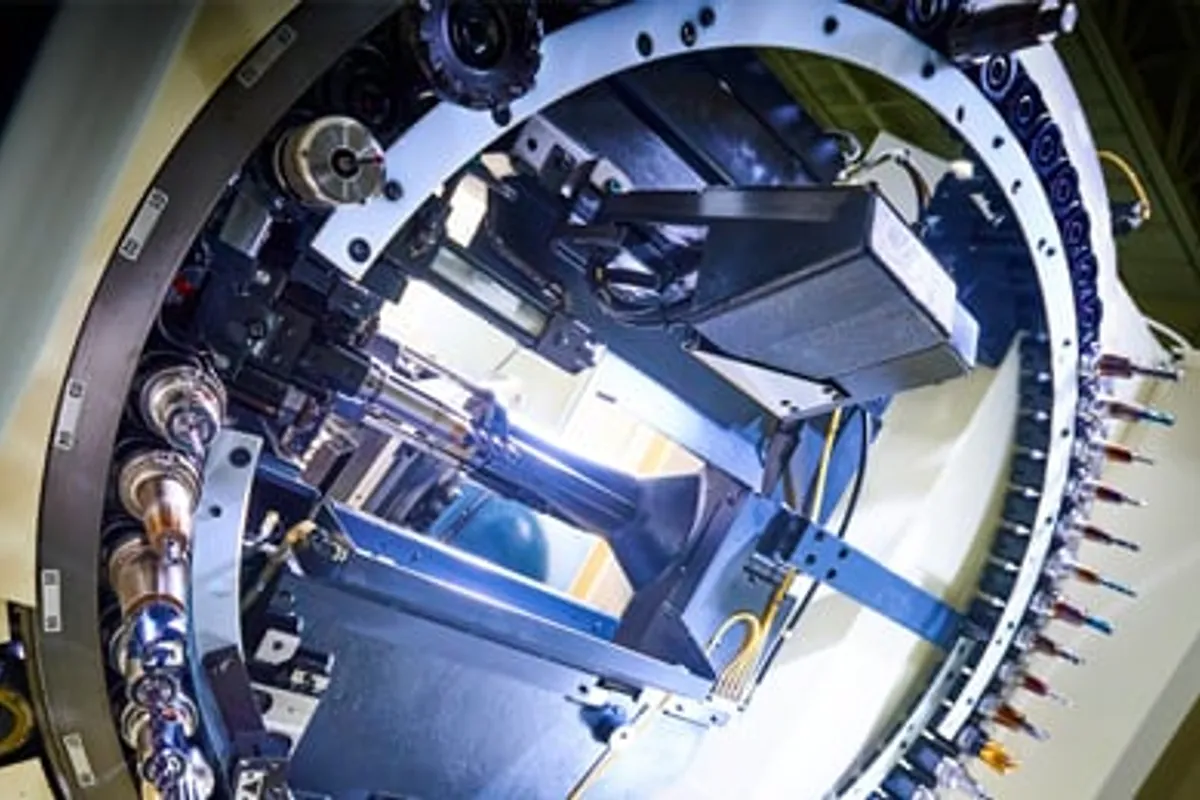
Image: makino.com, Makino
Key Specifications
X Travel
Y Travel
Z Travel
Table Size
max workpiece weight
work tank size
How much does the Makino EDAC1 cost?
Estimated price range
Our best estimate for a sinker edm (ram edm) in this class — not a quote from Makino. Configuration moves it a long way.
Overview
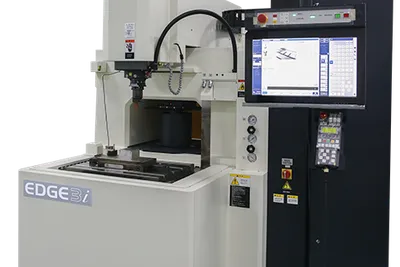
The Makino EDAC1 is a small sinker EDM built for ultra-precision work in small electronics and micromachining. Its envelope is compact: 220 mm (8.66 in) of X, 180 mm (7.08 in) of Y and 220 mm (8.66 in) of Z over a 350 x 250 mm (13.8 in x 9.8 in) table, with a 450 x 350 x 200 mm (17.7 in x 13.77 in x 7.87 in) work tank and a workpiece limit of 50 kgs (110 lb).
The machine is defined by its tolerances rather than its size. Makino states mechanical alignment of each axis of 2 microns (0.00008") or smaller over the full stroke, and positional tolerances of ±1 micron (0.00004"). It quotes a smallest inside corner radius of 5 microns and surface finishes down to 1.3 µin Ra (0.25 µm Rz). The Z-axis has a core-cooled ball screw stabilizer that allows continuous high-speed jump motions with ±1 micron depth control, which is what keeps fine ribs and slots consistent in depth from the first to the last.
The generator's peak machining current is 30 amp, and electrodes are limited to 5 kgs (11 lb). Both figures place the EDAC1 at the fine-finishing end of the work: it is not the machine for large graphite electrodes or heavy roughing. An optional Mi C-axis adds indexing with positioning accuracy of ±2 arc seconds, for electrodes that must be set at precise angles.
The worktable is stationary, with a three-sided rise-and-fall work tank that opens up access for setting up parts and watching the process. Control is through Makino's Hyper-i system. Against the EDFH-1, which shares the 350 x 250 mm (13.8 in x 9.8 in) table and 220 mm (8.7 in) of X but has 300 mm (11.8 in) of Z, the EDAC1 is the machine chosen for accuracy rather than reach.
Full Specifications
| Parameter | Value |
|---|---|
| Table Size | 350 x 250 mm (13.8 in x 9.8 in) |
| X-Axis Travel | 220 mm (8.66 in) |
| Y-Axis Travel | 180 mm (7.08 in) |
| Z-Axis Travel | 220 mm (8.66 in) |
| Max Workpiece Weight | 50 kgs (110 lb) |
| Work Tank Size | 450 x 350 x 200 mm (17.7 in x 13.77 in x 7.87 in) |
| Max Electrode Weight | 5 kgs (11 lb) |
| Max Machining Current | 30 amp |
Specifications sourced from makino.com — verified 2026-10-02
Strengths & Limitations
Strengths
- Positional tolerances of ±1 micron (0.00004") and axis alignment of 2 microns (0.00008") or smaller over the full stroke
- Smallest inside corner radius of 5 microns and surface finishes down to 1.3 µin Ra (0.25 µm Rz)
- Core-cooled ball screw Z-axis stabilizer with ±1 micron depth control during jump motions
- Optional Mi C-axis with ±2 arc seconds index positioning accuracy
- Stationary worktable and three-sided rise-and-fall tank for setup access
Limitations
- Small envelope: 220 mm (8.66 in) of X and 180 mm (7.08 in) of Y
- Workpiece weight is limited to 50 kgs (110 lb) and electrode weight to 5 kgs (11 lb)
- 30 amp peak machining current limits stock removal rates for roughing
- The C-axis is an option, not standard
Best For
Frequently Asked Questions
01
Makino states that the mechanical alignment of each axis is 2 microns (0.00008") or smaller over the full stroke, and that the machine can produce positional tolerances of ±1 micron (0.00004"). The optional Mi C-axis indexes with ±2 arc seconds of positioning accuracy.
02
Makino quotes surface finishes down to 1.3 µin Ra (0.25 µm Rz), and a smallest inside corner radius of 5 microns. The generator's peak machining current is 30 amp, so the machine is built for fine finishing rather than heavy roughing.
03
The table is 350 x 250 mm (13.8 in x 9.8 in) and the work tank 450 x 350 x 200 mm (17.7 in x 13.77 in x 7.87 in). Travels are 220 mm (8.66 in) in X, 180 mm (7.08 in) in Y and 220 mm (8.66 in) in Z. Workpieces can weigh up to 50 kgs (110 lb), electrodes up to 5 kgs (11 lb).
04
Both have a 350 x 250 mm (13.8 in x 9.8 in) table, 220 mm (8.7 in) of X and 180 mm (7.1 in) of Y. The EDFH-1 has 300 mm (11.8 in) of Z against 220 mm (8.66 in) on the EDAC1. The EDAC1 is the model Makino positions for small electronics and micromachining accuracy.
Videos

Makino Inc.

彭筱茵 Jessica
Comparisons
More from Makino
Other Sinker EDM (Ram EDM)
Sodick AL1000G
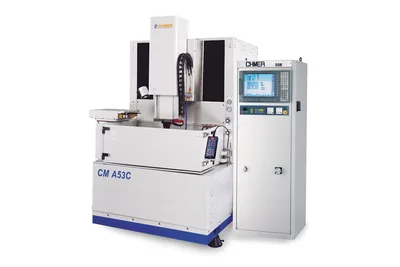
CHMER CM A53C
GF Machining Solutions Form 400 Sinker EDM
Mitsubishi Electric EA12V
GF AgieCharmilles FORM P 350