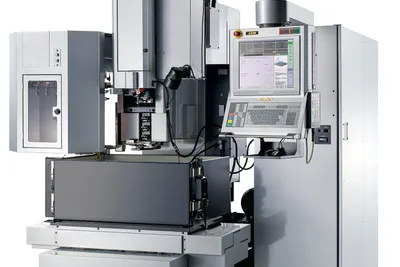
Makino BX3
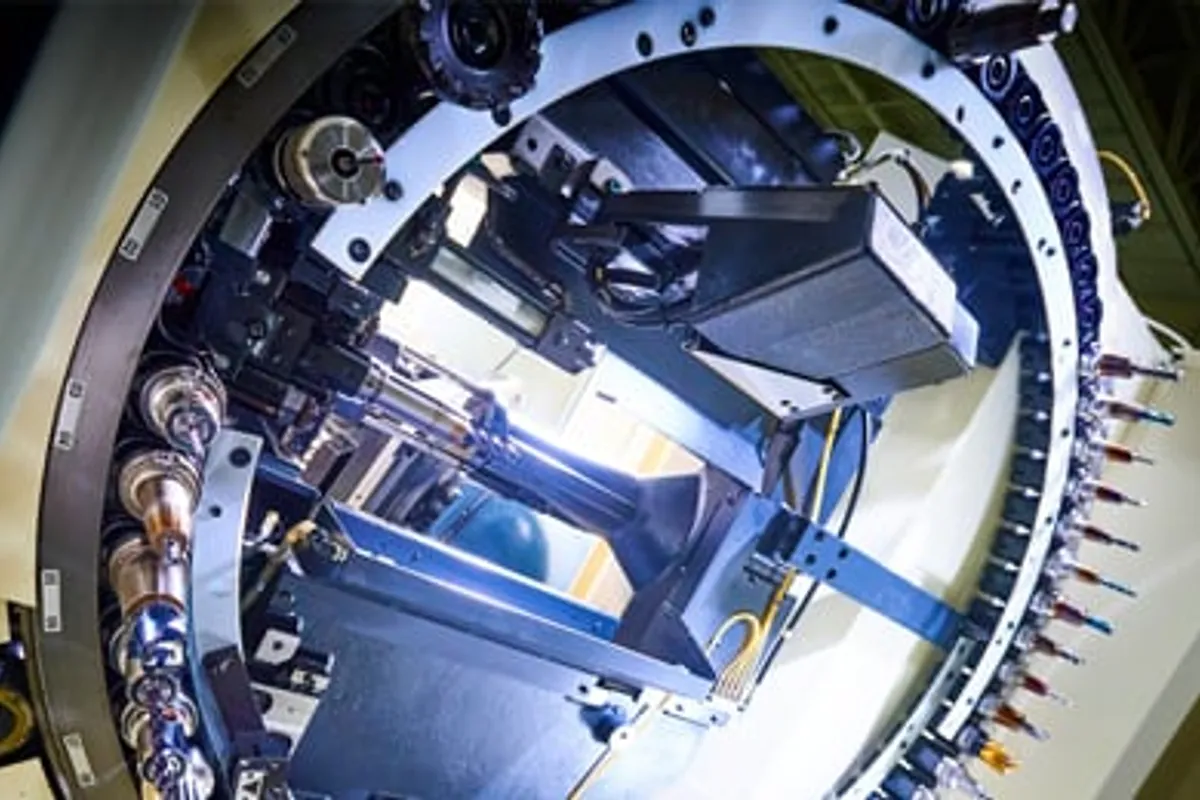
Image: makino.com, Makino
Key Specifications
X Travel
Y Travel
Z Travel
Table Size
Rapid Traverse
a axis range
How much does the Makino BX3 cost?
Estimated price range
Our best estimate for a sinker edm (ram edm) in this class — not a quote from Makino. Configuration moves it a long way.
Overview
The Makino BX3 is an EDM hole-drilling machine built for one job: drilling cooling film holes in turbine engine blades and vanes at high production volumes. It has 370 mm (14.6 in) of X, 270 mm (10.6 in) of Y and 750 mm (29.5 in) of Z, an integral two-axis rotary table with A: 360º and B: ±140º, and takes workpieces up to 11.81"Ø x 11.81" and 20 kg (44 lb).
Makino describes it as a further specialization of the EDBV3 for small aero-engine part details, and the differences are about cycle time. Rapid positioning is 10 m/min (394 in/min) where the EDBV3 moves at 5 m/min (197 in/min), and the rotary table indexes at 10rpm. The B-axis swings ±140º against the EDBV3's -110/+30°, and Z travel is 750 mm (29.5 in) against 500 mm (19.7 in). The rotary table is laid out so that a typical blade or vane sits close to the center of rotation, which keeps the X/Y moves between holes short.
The generator is Makino's digital ES200A, rated up to 100 Peak Amps, with adaptive control that detects break-through within 1 second. That matters when drilling into the hollow internal cavities of a cooled blade, where the electrode must stop before it strikes the far wall. All machining runs submerged in a programmable rise and fall work tank of 800 mm x 740 mm (31.50 in x 29.13 in); Makino states that submerged operation is critical for stable break-through.
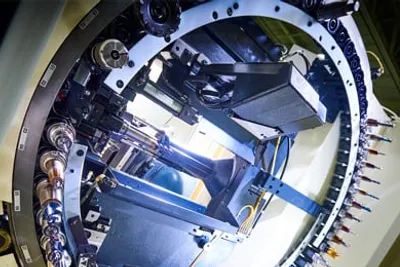
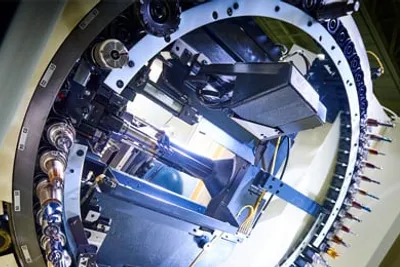
The 24 station ATC takes fully supported electrodes up to 700mm (27.6") long, and the simplified electrode holders let tool changes happen without moving or draining the tank. Flushing comes from a 10MPa (1450 psi) diaphragm pump, with on-board water filtration and de-ionization monitored by the control. The control is Makino's Hyper-i with dedicated EDM drilling functions. A full CE enclosure is standard, and maintenance access is at the rear so several machines can stand side by side.
Full Specifications
| Parameter | Value |
|---|---|
| Table Size | Rotary Table - A: 360º / B: ±140º |
| X-Axis Travel | 370 mm (14.6 in) |
| Y-Axis Travel | 270 mm (10.6 in) |
| Z-Axis Travel | 750 mm (29.5 in) |
| A Axis Range | 360° |
| B Axis Range | -140° / +140° |
| Rapid Traverse Rate | 10 m/min (394 in/min) |
| Max Workpiece Size | 11.81"Ø x 11.81" |
| Max Workpiece Weight | 20 kg (44 lb) |
| Work Tank Size | 800 mm x 740 mm (31.50 in x 29.13 in) |
Specifications sourced from makino.com — verified 2026-10-02
Strengths & Limitations
Strengths
- 10 m/min (394 in/min) rapid positioning and a 10rpm rotary table, twice the 5 m/min (197 in/min) of the EDBV3
- ES200A generator rated up to 100 Peak Amps, with break-through detection within 1 second
- 24 station ATC taking electrodes up to 700mm (27.6") long, exchanged without moving or draining the tank
- 750 mm (29.5 in) of Z travel and a B-axis of ±140º
- 10MPa (1450 psi) high pressure pump with its own filtration and de-ionization
- Rear maintenance access and a standard full CE enclosure for multi-machine installations
Limitations
- Workpiece weight is limited to 20 kg (44 lb)
- Workpieces must fit within 11.81"Ø x 11.81"
- X and Y travel of 370 mm (14.6 in) and 270 mm (10.6 in) restrict it to small part details
- Purpose-built for blade and vane film holes; it is not a general-purpose sinker EDM
Best For
Frequently Asked Questions
01
Both are blade and vane EDM drilling machines with 370 mm (14.6 in) of X, 270 mm (10.6 in) of Y and 24 tool positions. The BX3 rapids at 10 m/min (394 in/min) against 5 m/min (197 in/min) on the EDBV3, has 750 mm (29.5 in) of Z against 500 mm (19.7 in), and a B-axis of ±140º against -110/+30°.
02
Makino's fully digital ES200A generator, with an increase in power of up to 100 Peak Amps. Its adaptive control detects break-through within 1 second, which is important when drilling into the hollow internal cavities of blades and vanes.
03
Workpieces up to 11.81"Ø x 11.81" and 20 kg (44 lb), mounted on the integral rotary table with A: 360º and B: ±140º. The travels are 370 mm (14.6 in) in X, 270 mm (10.6 in) in Y and 750 mm (29.5 in) in Z.
04
The 24 station ATC accepts fully supported electrodes up to 700mm (27.6") long. The simplified electrode tool holders allow changes without moving or draining the work tank, so the machine keeps running submerged between holes.
05
Yes. All machining is fully submerged, using a programmable rise and fall work tank of 800 mm x 740 mm (31.50 in x 29.13 in). Makino states that submerged operation is critical for stable break-through. The dielectric is filtered and de-ionized on board.
Videos

Makino Inc.
Community Discussions
Links to community discussions. Summaries are editorial — visit the original thread for full context.
Comparisons
More from Makino
Other Sinker EDM (Ram EDM)
Sodick AP30L
OPS Ingersoll EAGLE G80 Competition
Excetek ED30C
Sodick AD35L