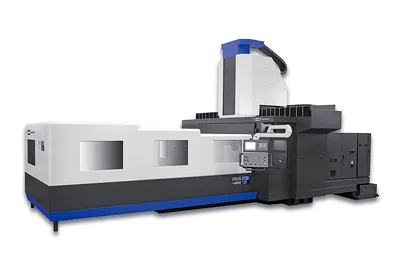
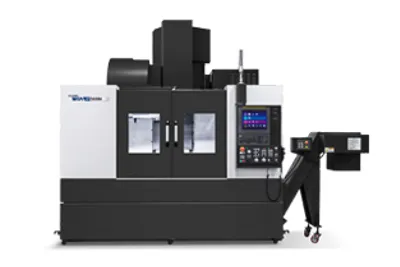
Hyundai WIA KF7700B II Series
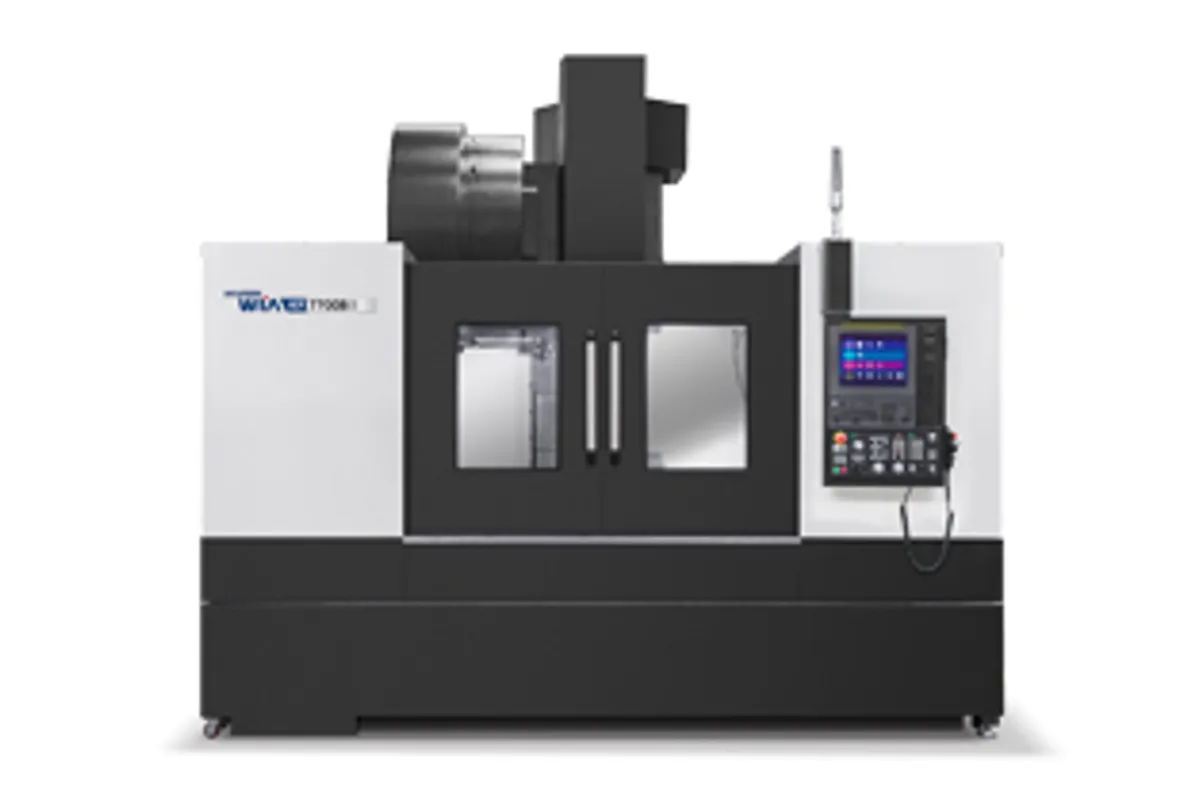
Image: wiamachine.com, Hyundai WIA
Key Specifications
X Travel
Y Travel
Z Travel
Max Spindle
Spindle Taper
Tool Capacity
How much does the Hyundai WIA KF7700B II Series cost?
Estimated price range
Our best estimate for a vertical machining centers (vmc) in this class — not a quote from Hyundai WIA. Configuration moves it a long way.
Overview
The Hyundai WIA KF7700B II Series is a BBT40 vertical machining center with 1,500 mm (59.1 in) of X travel, 760 mm (29.9 in) of Y and 635 mm (25 in) of Z, over a 1650 × 760 mm (65 × 29.9 in) table rated for 1,500 kg (3,307 lb). It sits one size above the KF6700B, which stops at 1,300 mm (51.2 in) of X and 670 mm (26.4 in) of Y with a 1,300 kg (2,866 lb) table load.
What marks out the standard spindle is torque, not speed. WIA lists 15 / 11 kW (20.1 / 14.8 hp) and 286 / 143 N·m (211 / 105.5 ft-lbf) with a top speed of 8,000 rpm. On a 40-taper machine that combination favours face mills, large drills and taps in steel and cast iron over small cutters in aluminium. The optional rating runs the other way: 18.5 / 11 kW (24.8 / 14.8 hp) with 118 / 52.5 N·m (87 / 38.7 ft-lbf), well under half the standard peak torque. A 12,000 rpm top speed is listed as an option too. The table does not say that the two options come together, so confirm which motor a 12,000 rpm machine carries before planning heavy cuts around the 286 N·m figure.
The table is longer than the X stroke, 1650 mm against 1,500 mm, so the ends of a full-length plate fall outside the cut and are better used for clamps and fixture stops. Y is different: travel equals the 760 mm table width, which puts the whole depth of the table within reach. Z travel is the same 635 mm (25 in) as on the KF6700B, so stepping up to this size buys plan area and load capacity, not height under the spindle.
Rapid traverse is 30 m/min (1,181 ipm) in X and Y and 24 m/min (945 ipm) in Z. For work longer than this machine can cover, the KF7600L keeps the 760 mm Y and 635 mm Z but stretches X to 2,100 mm (82.7 in) on a 2250 × 760 mm (88.6 × 29.9 in) table rated for 1,800 kg (3,968 lb). It is not simply a longer copy, though: the KF7600L lists 118 / 71.6 N·m (87 / 52.8 ft-lbf) as its standard spindle torque, so heavy roughing stays with this model.
Full Specifications
| Parameter | Value |
|---|---|
| X-Axis Travel | 1,500 mm (59.1 in) |
| Y-Axis Travel | 760 mm (29.9 in) |
| Z-Axis Travel | 635 mm (25 in) |
| Max Spindle Speed | 8,000 rpm (12,000 rpm optional) |
| Spindle Taper | BBT40 |
| ATC Capacity | 40 tools (60 optional) |
| Rapid Traverse Rate | X/Y/Z: 30 / 30 / 24 m/min (1,181 / 1,181 / 945 ipm) |
| Max Table Load | 1,500 kg (3,307 lb) |
| Spindle Motor Power | 15 / 11 kW (20.1 / 14.8 hp) (18.5 / 11 kW (24.8 / 14.8 hp) optional) |
| Spindle Torque | 286 / 143 N·m (211 / 105.5 ft-lbf) (118 / 52.5 N·m (87 / 38.7 ft-lbf) optional) |
| Tool Capacity | 30 tools (40 optional) |
| Table Size | 1650 × 760 mm (65 × 29.9 in) |
Specifications sourced from wiamachine.com — verified 2026-10-03
Strengths & Limitations
Strengths
- Standard spindle torque of 286 / 143 N·m (211 / 105.5 ft-lbf), against 118 / 71.6 N·m (87 / 52.8 ft-lbf) on the longer KF7600L
- 1,500 mm (59.1 in) of X and 760 mm (29.9 in) of Y travel, where the KF6700B offers 1,300 mm (51.2 in) and 670 mm (26.4 in)
- Table load of 1,500 kg (3,307 lb) on a 1650 × 760 mm (65 × 29.9 in) table
- Y travel equals the 760 mm (29.9 in) table width, so the full depth of the table can be machined
- A 12,000 rpm top speed and an 18.5 / 11 kW (24.8 / 14.8 hp) rating are both listed as options on the BBT40 spindle
Limitations
- The base spindle tops out at 8,000 rpm and 12,000 rpm is an option, so small-tool work in aluminium is limited on the standard machine
- The optional 18.5 / 11 kW rating comes with 118 / 52.5 N·m (87 / 38.7 ft-lbf), well under half the 286 N·m peak of the standard motor
- Z travel is 635 mm (25 in), the same as the smaller KF6700B, so tall fixtures and long tools gain nothing from the larger frame
- X travel of 1,500 mm is shorter than the 1650 mm table, so the full table length cannot be machined in one setup
- Z rapid traverse is 24 m/min (945 ipm), slower than the 30 m/min (1,181 ipm) of X and Y
Best For
Frequently Asked Questions
01
X travel is 1,500 mm (59.1 in), Y is 760 mm (29.9 in) and Z is 635 mm (25 in). The table measures 1650 × 760 mm (65 × 29.9 in) and is rated for 1,500 kg (3,307 lb). Y travel matches the table width, while the table is longer than the X travel.
02
The standard rating is 15 / 11 kW (20.1 / 14.8 hp) and 286 / 143 N·m (211 / 105.5 ft-lbf), with a top speed of 8,000 rpm. WIA also lists an optional 18.5 / 11 kW (24.8 / 14.8 hp) rating with 118 / 52.5 N·m (87 / 38.7 ft-lbf), and a 12,000 rpm top speed as an option. Ask which rating applies to the 12,000 rpm spindle, because the table does not pair them.
03
The spindle, taper and rapids are listed the same on both. The KF7700B has 1,500 mm (59.1 in) of X and 760 mm (29.9 in) of Y against 1,300 mm (51.2 in) and 670 mm (26.4 in) on the KF6700B, and its table load is 1,500 kg (3,307 lb) against 1,300 kg (2,866 lb). Z travel is 635 mm (25 in) on both, so the larger model adds area and load, not height.
04
The KF7600L has 2,100 mm (82.7 in) of X travel and an 1,800 kg (3,968 lb) table load on the same 760 mm Y and 635 mm Z. The KF7600L's standard spindle is listed at 18.5 / 15 kW (24.8 / 20.1 hp) and 118 / 71.6 N·m (87 / 52.8 ft-lbf), though, where the KF7700B has 286 / 143 N·m (211 / 105.5 ft-lbf). Pick on part length first, then check whether the cut needs the higher torque.
05
Rapid traverse is 30 m/min (1,181 ipm) in X, 30 m/min (1,181 ipm) in Y and 24 m/min (945 ipm) in Z. The same figures are listed for the KF6700B, so the two sizes differ in how far the axes move, not in how fast.
Videos
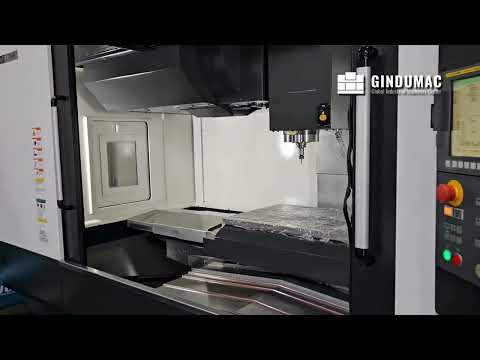
GINDUMAC GmbH

Hillary Machinery Inc

Hillary Machinery Inc

GrinTech Kft.
More from Hyundai WIA
Other Vertical Machining Centers (VMC)
Chiron MILL 8000
Fanuc Robodrill α-D14MiB5
Campro CPV-1600B-BT40
Feeler TC-20α
Hurco VM 30i