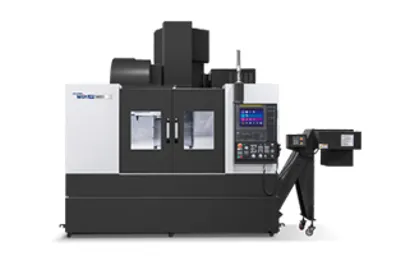
Hyundai WIA KF5700B II Series
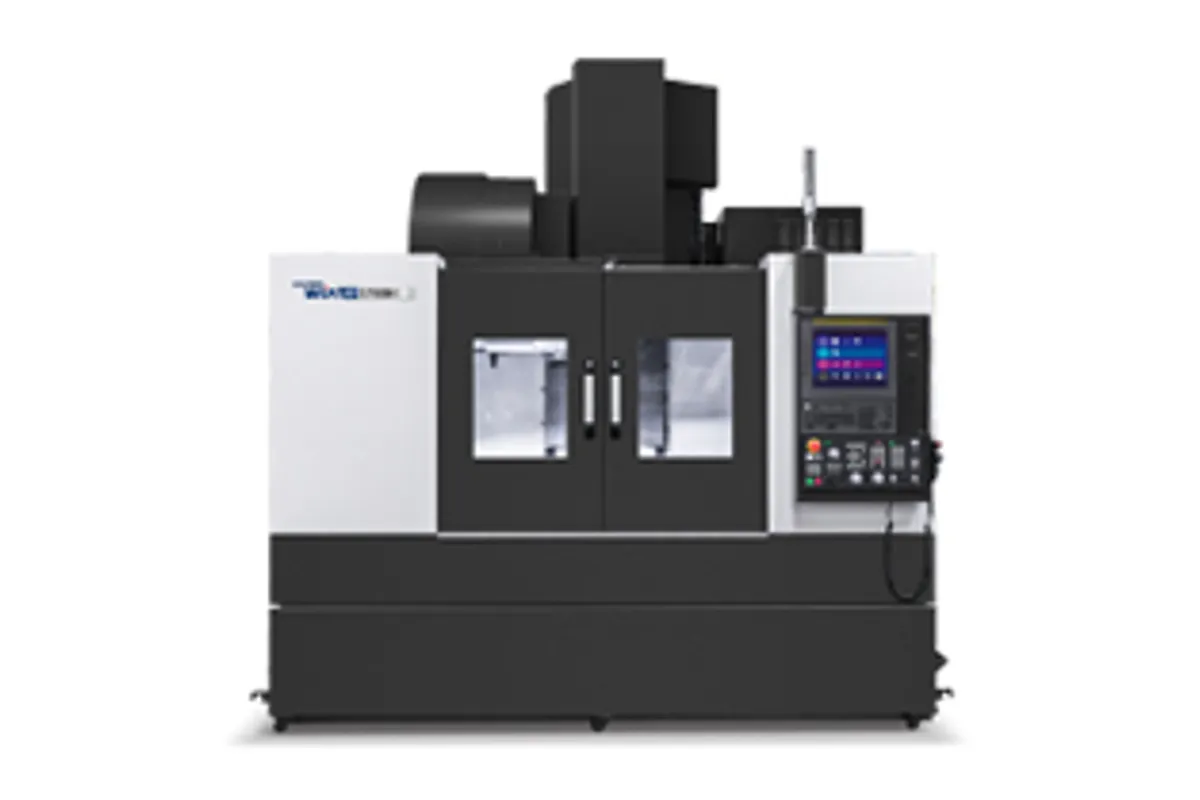
Image: wiamachine.com, Hyundai WIA
Key Specifications
X Travel
Y Travel
Z Travel
Max Spindle
Spindle Taper
Tool Capacity
How much does the Hyundai WIA KF5700B II Series cost?
Estimated price range
Our best estimate for a vertical machining centers (vmc) in this class — not a quote from Hyundai WIA. Configuration moves it a long way.
Overview
The Hyundai WIA KF5700B II Series is a BBT40 vertical machining center with 1,100 × 570 × 520 mm (43.3 × 22.4 × 20.5 in) travels and a spindle that comes two ways: 8,000 rpm as standard or 12,000 rpm as an option. The choice changes the character of the machine more than the speed figures alone suggest.
Hyundai WIA lists the standard spindle at 15 / 11 kW (20.1 / 14.8 hp) and 286 / 143 N·m (211 / 105.5 ft-lbf). The optional figures are 18.5 / 11 kW (24.8 / 14.8 hp) and 118 / 52.5 N·m (87 / 38.7 ft-lbf). Read alongside the optional 12,000 rpm, the option gives up well over half the torque in exchange for speed. With 286 N·m the standard spindle is the one for large drills, taps and face mills in steel. With 118 N·m the optional one is for smaller cutters run fast.
The table is 1,300 × 570 mm (51.2 × 22.4 in) and carries 1,000 kg (2,205 lb). Rapid traverse is 30 / 30 / 24 m/min (1,181 / 1,181 / 945 ipm) in X, Y and Z, a moderate figure. The KF5/50 covers a similar envelope with a BBT50 spindle and rapids of 36 / 36 / 30 m/min (1,417 / 1,417 / 1,181 ipm).
The magazine holds 30 tools, with 40 as an option. The next size up, the KF6700B II Series, has the same spindle figures with travels of 1,300 × 670 × 635 mm (51.2 × 26.4 × 25 in) and a 1,300 kg (2,866 lb) table load.
Full Specifications
| Parameter | Value |
|---|---|
| X-Axis Travel | 1100 mm (43.3 in) |
| Y-Axis Travel | 570 mm (22.4 in) |
| Z-Axis Travel | 520 mm (20.5 in) |
| Max Spindle Speed | 8000 rpm (12000 rpm optional) |
| Spindle Taper | BBT40 |
| Rapid Traverse Rate | X/Y/Z: 30 / 30 / 24 m/min (1,181 / 1,181 / 945 ipm) |
| Max Table Load | 1000 kg (2,205 lb) |
| Spindle Motor Power | 15 / 11 kW (20.1 / 14.8 hp) (18.5 / 11 kW (24.8 / 14.8 hp) optional) |
| Spindle Torque | 286 / 143 N·m (211 / 105.5 ft-lbf) (118 / 52.5 N·m (87 / 38.7 ft-lbf) optional) |
| Tool Capacity | 30 tools (40 optional) |
| Table Size | 1300 × 570 mm (51.2 × 22.4 in) |
Specifications sourced from wiamachine.com — verified 2026-10-03
Strengths & Limitations
Strengths
- Standard BBT40 spindle rated 286 / 143 N·m (211 / 105.5 ft-lbf) and 15 / 11 kW (20.1 / 14.8 hp) at up to 8,000 rpm
- Optional 12,000 rpm spindle for work that needs speed more than torque
- 1,300 × 570 mm (51.2 × 22.4 in) table with a 1,000 kg (2,205 lb) load rating
- Same spindle figures as the larger KF6700B II Series, so nothing is given up in the spindle by choosing the smaller frame
- 30-tool magazine as standard, 40 tools optional
Limitations
- The standard spindle stops at 8,000 rpm; 12,000 rpm is an option
- The optional spindle figures show torque of 118 / 52.5 N·m (87 / 38.7 ft-lbf), far below the standard 286 / 143 N·m
- Rapids of 30 / 30 / 24 m/min (1,181 / 1,181 / 945 ipm) trail the 36 / 36 / 30 m/min of the KF5/50
- Z travel is 520 mm (20.5 in), against 635 mm (25 in) on the KF6700B II Series
Best For
Frequently Asked Questions
01
It depends on the tools. Hyundai WIA lists the standard spindle at 8,000 rpm, 15 / 11 kW (20.1 / 14.8 hp) and 286 / 143 N·m (211 / 105.5 ft-lbf). The optional figures are 12,000 rpm, 18.5 / 11 kW (24.8 / 14.8 hp) and 118 / 52.5 N·m (87 / 38.7 ft-lbf). Large cutters in steel want the torque of the standard spindle. Small cutters and aluminium want the speed of the option.
02
Travels are 1,100 mm (43.3 in) in X, 570 mm (22.4 in) in Y and 520 mm (20.5 in) in Z. The table measures 1,300 × 570 mm (51.2 × 22.4 in) and takes a maximum load of 1,000 kg (2,205 lb). The table is longer than the X travel.
03
In size only, going by the listed figures. The KF6700B II Series has travels of 1,300 × 670 × 635 mm (51.2 × 26.4 × 25 in), a 1,500 × 670 mm (59.1 × 26.4 in) table and a 1,300 kg (2,866 lb) load. Spindle speed, power, torque, rapids and tool capacity are the same on both.
04
30 tools as standard, with a 40-tool magazine as an option. The spindle taper is BBT40. Hyundai WIA's series table does not list maximum tool diameter, length or weight, so ask for those limits if you run large face mills or long boring bars.
05
Rapid traverse is 30 m/min (1,181 ipm) in X and Y and 24 m/min (945 ipm) in Z. Those are moderate figures. If positioning time between features dominates your cycle, weigh that against the torque of the standard spindle.
Videos

Hillary Machinery Inc
More from Hyundai WIA
Other Vertical Machining Centers (VMC)
TRAK VMC2
Tormach PCNC 440
Haas VS-3
Vision Wide SE-2118
Okuma MB-46V II