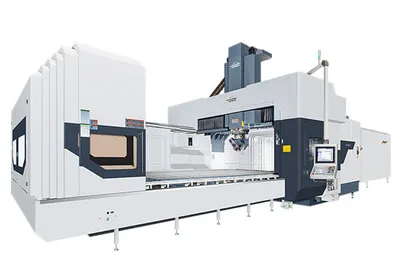
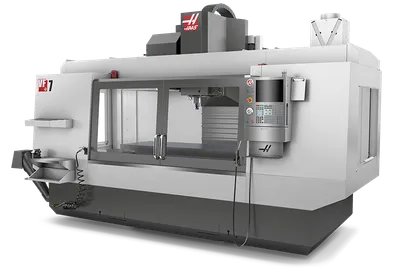
Hyundai WIA KF-D Series
Image: wiamachine.com, Hyundai WIA
Key Specifications
X Travel
Y Travel
Z Travel
Max Spindle
Spindle Taper
Tool Capacity
How much does the Hyundai WIA KF-D Series cost?
Estimated price range
Our best estimate for a vertical machining centers (vmc) in this class — not a quote from Hyundai WIA. Configuration moves it a long way.
Overview
The Hyundai WIA KF-D Series is a family of heavy vertical machining centers with BT50 or HSK-A100 spindles and box ways or hybrid (box + roller) guideways. Listed travels run from 1,100 to 1,300 mm (43.3 to 51.2 in) in X and 560 to 670 mm (22.0 to 26.4 in) in Y, with 520 mm (20.5 in) of Z throughout. Every range below spans several models, and the listed figures do not say which model sits at which end.
Weight tells most of the story. The machines are listed at 15,000 to 18,000 kg (33,069 to 39,683 lb), and the KF6700B II Series, which reaches the same 1,300 mm (51.2 in) of X on a BBT40 spindle, carries 1,300 kg (2,866 lb) on its table where the KF-D Series is listed at 1,200 to 1,500 kg (2,646 to 3,307 lb). Box ways add sliding contact area and damping under heavy cuts, at the expense of traverse speed, and the rapids reflect that: 24 to 30 m/min (945 to 1,181 ipm).
Spindle speed is listed as 8,000 to 12,000 RPM. Which speed goes with which taper or model is not stated, and neither power nor torque is given, so the spindle is the first item to pin down in any quotation.
The arm-type changer holds 30 tools as listed, with 40 or 60 optional. The control is FANUC 0i-MF Plus or 31i-B. Table dimensions are not among the listed figures.
Full Specifications
| Parameter | Value |
|---|---|
| X-Axis Travel | 1,100 - 1,300 mm (43.3 - 51.2 in) |
| Y-Axis Travel | 560 - 670 mm (22.0 - 26.4 in) |
| Z-Axis Travel | 520 mm (20.5 in) |
| Table Load Max | 1,200 - 1,500 kg (2,646 - 3,307 lb) |
| Max Spindle Speed | 8,000 - 12,000 RPM |
| Spindle Taper | BT50 or HSK-A100 |
| Guideway Type | Box ways or hybrid (box + roller) |
| Tool Capacity | 30 (40/60 optional) |
| Tool Changer Type | Arm-type ATC |
| Rapid Traverse Rate | 24 - 30 m/min (945 - 1,181 ipm) |
| CNC Control | FANUC 0i-MF Plus or 31i-B |
| Machine Weight | 15,000 - 18,000 kg (33,069 - 39,683 lb) |
Specifications compiled from manufacturer literature and industry references. Not independently verified against a published spec sheet — confirm with the manufacturer or an authorised dealer before making a purchasing decision.
Strengths & Limitations
Strengths
- BT50 or HSK-A100 spindle taper for large, heavy tooling
- Box ways or hybrid (box + roller) guideways
- Table load listed at 1,200 to 1,500 kg (2,646 to 3,307 lb)
- Magazine of 30 tools, with 40 or 60 available as options
- Machine weight of 15,000 to 18,000 kg (33,069 to 39,683 lb), mass that helps absorb heavy cuts
Limitations
- Rapids of 24 to 30 m/min (945 to 1,181 ipm) are modest, the usual trade for box ways
- Z travel is 520 mm (20.5 in) on every size, which long 50-taper tools use up quickly
- No spindle power or torque is listed, and the figures do not tie the 8,000 to 12,000 RPM range to particular models
- At 15,000 kg (33,069 lb) and above, foundation and rigging need planning before delivery
Best For
Frequently Asked Questions
01
Listed X travel is 1,100 to 1,300 mm (43.3 to 51.2 in), Y travel 560 to 670 mm (22.0 to 26.4 in) and Z travel 520 mm (20.5 in). Table load runs from 1,200 to 1,500 kg (2,646 to 3,307 lb). The figures are given as ranges for the series, not per model.
02
The taper is listed as BT50 or HSK-A100 and the maximum speed as 8,000 to 12,000 RPM. The listed figures do not say which speed belongs to which model or taper, and give no power or torque, so confirm the exact spindle when asking for a quotation.
03
Box ways or hybrid (box + roller) guideways, depending on the machine. Box ways favour damping and load capacity over speed, which matches the listed rapid traverse of 24 to 30 m/min (945 to 1,181 ipm).
04
The arm-type tool changer is listed with 30 tools, and 40 or 60 as options. The control is FANUC 0i-MF Plus or 31i-B. Machine weight is 15,000 to 18,000 kg (33,069 to 39,683 lb), so plan the floor and the lift accordingly.
More from Hyundai WIA
Other Vertical Machining Centers (VMC)
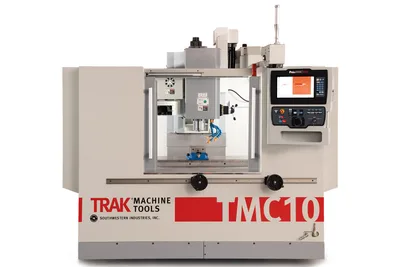
TRAK TMC10
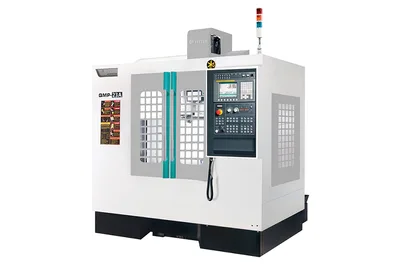
Feeler QMP-30
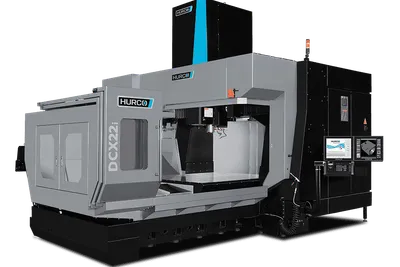
Hurco DCX22i
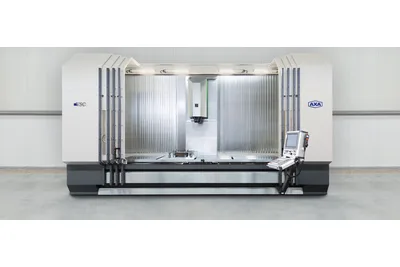
AXA VSC 3 - XTS
Haas VF-7/40