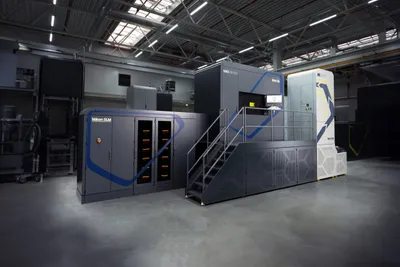
HP Metal Jet Production System
Key Specifications
Configuration
Per-Unit Build Volume
System Throughput
Printhead Technology
Layer Thickness
Post-Sinter Density
Overview
The HP Metal Jet Production System represents HP's vision for fully integrated, factory-floor metal additive manufacturing at industrial scale. Rather than a single printer, the Production System is a modular, multi-unit configuration of Metal Jet printing stations combined with automated powder management, part extraction, and furnace sintering infrastructure — all tied together by HP's Digital Manufacturing Intelligence software. The system is designed for manufacturers who have moved beyond evaluation and are committed to metal AM as a primary production method, targeting throughputs competitive with traditional high-volume net-shape processes like MIM and powder metallurgy.
The Production System architecture reflects HP's strategy of serving the high-volume end of the metal AM market rather than competing head-to-head with LPBF vendors in the low-volume, high-complexity segment. By leveraging multiple Metal Jet printer units operating in parallel and a centralized automated powder management and sintering workflow, HP targets per-part economics that can rival MIM at volumes of 50,000 to several million units per year. This positions the system in a unique market segment — above what a single S100 or S100+ can achieve, and below the tooling costs required for MIM dies.
Material focus for the Production System centers on 316L and 17-4PH stainless steel, with HP's certified sintering partners (including GKN Powder Metallurgy, Parmatech, and others) providing validated sintering cycles, dimensional control protocols, and mechanical property assurance. The integration of Digital Manufacturing Intelligence enables real-time process monitoring, traceability from powder lot to finished part, and OEE dashboards — features that are prerequisites for automotive and medical device production environments operating under ISO/IATF quality systems.
HP has demonstrated the Production System concept with automotive customers including Volkswagen Group, which has used Metal Jet technology for production of structural components at scale. The system represents the endpoint of HP's Metal Jet technology roadmap and is intended for manufacturers with dedicated metal AM production cells rather than shared-equipment R&D environments. Investment and infrastructure requirements are substantial, making it appropriate for tier-one automotive suppliers, large medical device OEMs, and industrial goods manufacturers with validated, high-volume AM applications.
Full Specifications
| Parameter | Value |
|---|---|
| Configuration | Multi-unit modular (2+ Metal Jet printer stations) |
| Per-Unit Build Volume | 430 x 320 x 200 mm |
| System Throughput | Up to 1,000+ cm³/h (multi-unit, combined) |
| Printhead Technology | HP Thermal Inkjet, full-width PageWide array |
| Layer Thickness | 50 – 140 µm |
| Post-Sinter Density | 97 – 99% theoretical density |
| Primary Materials | 316L stainless steel, 17-4PH stainless steel |
| Automation | Automated powder management, part extraction, transfer to sintering |
| Software | HP Digital Manufacturing Intelligence (process monitoring, traceability, OEE) |
| Sintering Integration | Continuous belt or batch furnace (customer-supplied or partner-managed) |
| Quality System Support | ISO 9001, IATF 16949, ISO 13485 compatible documentation |
Specifications compiled from manufacturer literature and industry references. Not independently verified against a published spec sheet — confirm with the manufacturer or an authorised dealer before making a purchasing decision.
Strengths & Limitations
Strengths
- Modular multi-unit architecture scales throughput linearly to match production volume requirements without requalification
- Integrated Digital Manufacturing Intelligence provides real-time traceability and OEE visibility required for automotive and medical production
- Per-part economics competitive with MIM at volumes of 50,000+ units per year, without MIM tooling costs
- HP's certified sintering partner network (GKN, Parmatech) provides turnkey sintering capability with validated property data
- Full-width inkjet printing technology leverages HP's decades of printhead reliability, reducing consumable cost vs. laser-based AM
Limitations
- Total system investment of $1M+ and dedicated facility infrastructure requirements limit access to large industrial manufacturers
- Material portfolio remains concentrated in stainless steels; broader alloy support lags LPBF platforms for specialty applications
- Sintering step requires either significant furnace capital investment or reliance on external sintering partners, adding supply chain complexity
Best For
Frequently Asked Questions
01
The Production System adds centralized automated powder management, integrated part extraction and transfer, and HP's Digital Manufacturing Intelligence software for fleet monitoring and traceability — creating a unified production cell rather than independent printer units. It is engineered for continuous production operation rather than batch R&D use.
02
The Production System is designed to interface with continuous-belt or large-batch controlled-atmosphere sintering furnaces. HP works with certified partners (GKN, Parmatech) who provide validated sintering cycles, or customers can invest in in-house furnace capacity aligned to their throughput requirements.
03
Yes. HP's Digital Manufacturing Intelligence software provides the process monitoring, parameter recording, and part traceability documentation necessary to support IATF 16949 compliance, along with PPAP (Production Part Approval Process) workflows for automotive production part qualification.
04
HP and its partners position the Production System as economically competitive with MIM at annual volumes of approximately 50,000 units and above, where MIM tooling amortization and HP's per-part printing cost cross over favorably compared to single-unit LPBF or smaller binder jetting systems.
05
Volkswagen Group has been the most prominent public customer, announcing collaboration with HP on Metal Jet production of structural components for vehicles. GKN Powder Metallurgy has also been a major partner in building out the production ecosystem around HP Metal Jet.
Videos

HP

DKSH Korea TEC

HP

HP

Matsuura UK
Community Discussions
Community discussion — Cutting AR500 Steel - CNCzone
Community discussion — Oxygen generator - cnczone.com
Community discussion — Looking into Plasma or Laser cutter for sheet metal - CNCzone
Community discussion — Machining ferrite - CNCzone
Comparison and buying advice — Need help: waterjet or CNC mill for educational makerspace?
Pricing and buying discussion — Honest opinions on Jet lathes, mills and saws? :
Options and configuration advice — Cheap hobbyist setup to create parts like this in metal?
Community discussion — Plasma Jet, Laser, or Waterjet cutter? : r/Machinists - Reddit
Links to community discussions. Summaries are editorial — visit the original thread for full context.
Related Machines
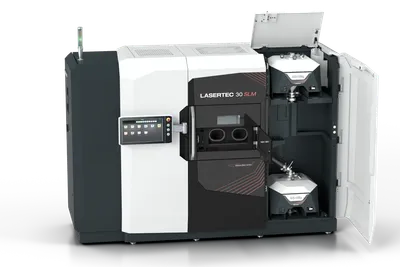
DMG Mori LASERTEC 30 SLM
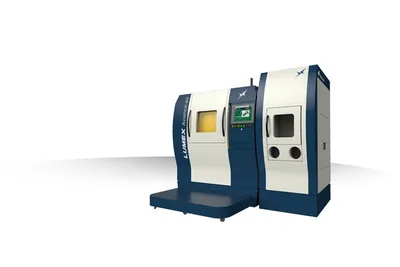
Matsuura LUMEX Avance-60
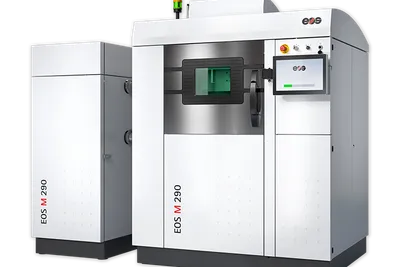
EOS M 290
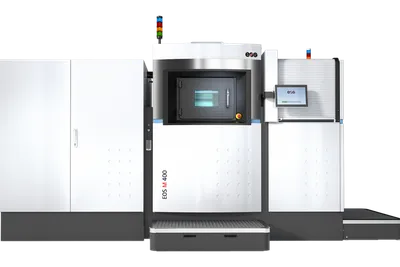
EOS M 400-4
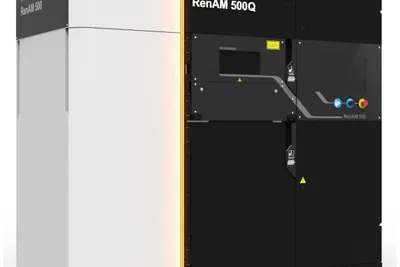
Renishaw RenAM 500Q