Hardinge Bridgeport Series I CNC
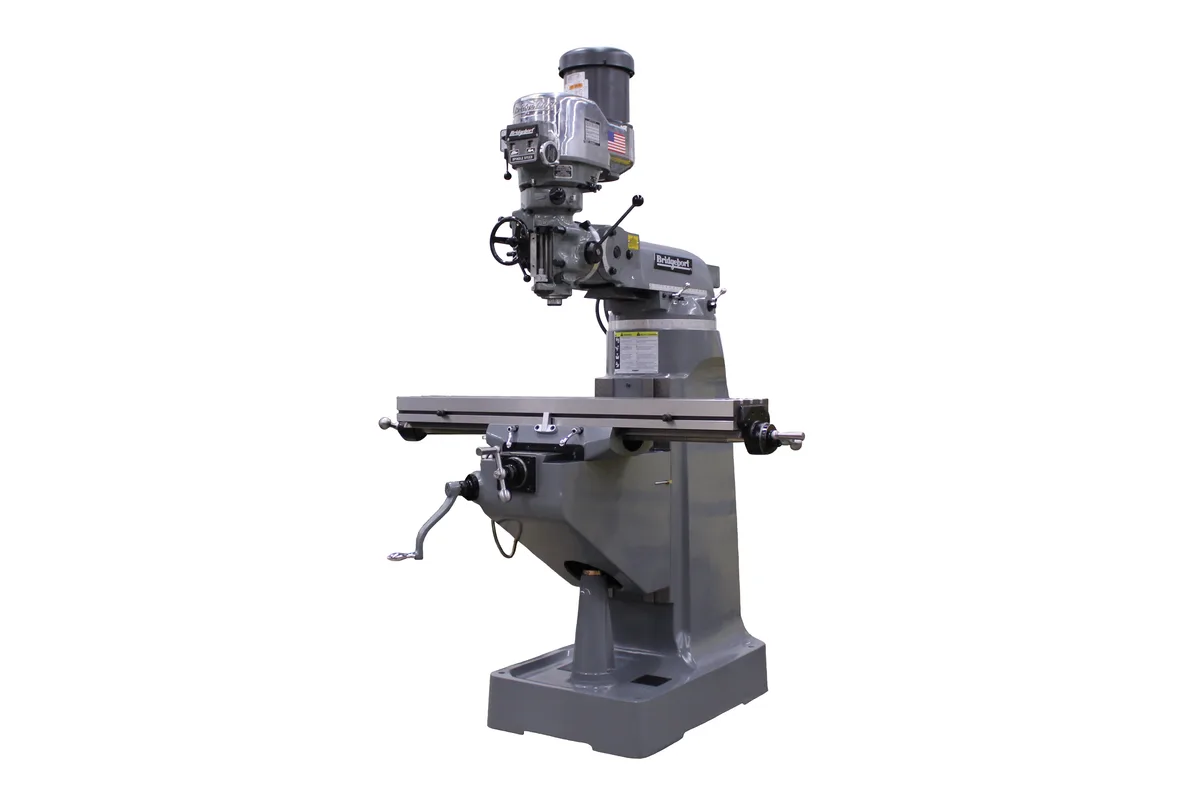
Image: bridgeportmachinetools.com, Hardinge
Key Specifications
X Travel
Y Travel
Spindle Taper
Table Size
Spindle Power
quill travel
How much does the Hardinge Bridgeport Series I CNC cost?
Estimated price range
Our best estimate for a vertical machining centers (vmc) in this class — not a quote from Hardinge. Configuration moves it a long way.
Overview
The Bridgeport Series I CNC is a knee-type vertical mill with 33 in (838 mm) of X travel, 12 in (306 mm) of Y, a 4.03 in (102 mm) quill and 16 in (406 mm) of knee travel. The spindle is an R-8, with NMTB30 as an option, driven by a 3 HP motor on a 30-minute duty rating (2 HP continuous). It is a toolroom machine, far smaller and lighter than an enclosed machining center: 1,930 lb (875 kg), on a footprint of 84 x 120 in (2140 x 3048 mm).
Its layout is the classic turret-mill arrangement. The ram slides 12 in (306 mm), which moves the throat distance between 6.75 in (171 mm) and 18.75 in (476 mm), and the knee sets the gap between table and spindle nose from 2.5 in (64 mm) to 18.25 in (463 mm). A tall fixture or a part on a rotary table is accommodated by lowering the knee, while the quill supplies the 4.03 in (102 mm) of feed stroke at the tool.
Speeds come in two ranges, 60 - 500 RPM and 500 - 4200 RPM. The low range gives usable torque for boring and larger cutters; the top end is slow for small carbide tools. The manufacturer rates the machine in mild steel at 3/8 in (9.5 mm) drilling, 2 cubic inches per minute of milling and a 6 in (152 mm) diameter boring range. Those are light figures, and they describe the work honestly: one-offs, repairs, fixtures and second operations.
The table is listed as 9 x 49 in with three T-slots of 0.625 in (16 mm) on 2.5 in (64 mm) centers, and carries 750 lb (340 kg). Feedrates run 0-100 IPM with a minimum increment of 0.0001 in. Power is 208/230/460 V three-phase for the machine at 4 kVA, plus a separate 110 V single-phase, 15 A feed for the control.
Full Specifications
| Parameter | Value |
|---|---|
| X-Axis Travel | 33" (838mm) |
| Y-Axis Travel | 12" (306mm) |
| Quill Travel | 4.03" (102mm) |
| Knee Travel | 16" (406mm) |
| Ram Travel | 12" (306mm) |
| Throat Distance Min | 6.75" (171mm) |
| Throat Distance Max | 18.75" (476mm) |
| Table to Spindle Nose Min | 2.5" (64mm) |
| Table to Spindle Nose Max | 18.25" (463mm) |
| Table Size | 9" x 49" (299 x 1245mm) |
| Number of T Slots | 3 |
| T Slot Centers | 2.5" (64mm) |
| T Slot Size | 0.625" (16mm) |
| Table Height Above Floor Max | 47.25" (1200mm) |
| Max Table Load | 750lbs. (340kgs) |
| Spindle Diameter | 1.875" (48mm) |
| Quill Diameter | 3.375" (86mm) |
| Spindle Motor Power | 3HP (30 Min Duty Rated), 2HP (Continuous) |
| Spindle Taper | R-8 (NMTB30 opt.) |
| Spindle Speed Low Range | 60 - 500 RPM |
| Spindle Speed High Range | 500 - 4200 RPM |
| Feedrate Range | 0-100 IPM |
| Minimum Increment | 0.0001" |
| Drilling Capacity Mild Steel | 3/8" (9.5mm) |
| Milling Capacity Mild Steel | 2 CI/min |
| Boring Range Mild Steel | 6" Dia (152mm) |
| Floor Space Required | 84" x 120" (2140 x 3048mm) |
| Machine Height | 87" (2210mm) |
| Machine Weight | 1930lbs (875kgs) |
| Shipping Weight | 2075lbs (941kgs) |
| Input Power | 208/230/460 3 phase 50/60 cycle, 110/1/60 for Control |
| Power Capacity | 4 KVA / 15Amp CTRL |
Specifications sourced from bridgeportmachinetools.com — verified 2026-10-03
Strengths & Limitations
Strengths
- 33 in (838 mm) of X travel on a machine that weighs only 1,930 lb (875 kg)
- 16 in (406 mm) of knee travel gives up to 18.25 in (463 mm) between table and spindle nose
- 12 in (306 mm) of ram travel moves the throat distance from 6.75 in (171 mm) to 18.75 in (476 mm)
- R-8 spindle takes common toolroom tooling, with NMTB30 offered as an option
- Minimum increment of 0.0001 in with feedrates of 0-100 IPM
- Runs on 208/230/460 V three-phase at 4 kVA
Limitations
- 3 HP on the 30-minute rating and 2 HP continuous keep metal removal to 2 cubic inches per minute in mild steel
- Top speed of 4200 RPM is slow for small carbide cutters
- Quill stroke is 4.03 in (102 mm); deeper features need the knee repositioned
- Table load is limited to 750 lb (340 kg)
- No automatic tool changer or enclosure appears in the table
Best For
Frequently Asked Questions
01
X is 33 in (838 mm) and Y is 12 in (306 mm). Vertical movement is split between a 4.03 in (102 mm) quill and 16 in (406 mm) of knee travel. The ram adds 12 in (306 mm) of in-and-out adjustment, giving a throat distance of 6.75 in (171 mm) to 18.75 in (476 mm).
02
The table is 9 x 49 in with three T-slots, each 0.625 in (16 mm) on 2.5 in (64 mm) centers, and the maximum load is 750 lb (340 kg). The metric size is printed as 299 x 1245 mm; the 299 mm width does not agree with 9 in, so work from the inch figures. Maximum table height above the floor is 47.25 in (1200 mm).
03
An R-8 taper is standard and NMTB30 is optional. The motor is 3 HP on a 30-minute duty rating and 2 HP continuous. Speeds cover 60 - 500 RPM in low range and 500 - 4200 RPM in high range. The spindle diameter is 1.875 in (48 mm) and the quill diameter 3.375 in (86 mm).
04
In mild steel: drilling to 3/8 in (9.5 mm), milling at 2 cubic inches per minute and boring up to a 6 in (152 mm) diameter. These are modest ratings that match the 3 HP motor, so the machine suits light cuts and accurate positioning more than fast stock removal.
05
Input power is 208/230/460 V, three-phase, 50/60 cycle for the machine, with a separate 110 V single-phase supply for the control. Power capacity is listed as 4 kVA, with 15 A for the control circuit.
06
The footprint is 84 x 120 in (2140 x 3048 mm) and the height is 87 in (2210 mm). Net weight is 1,930 lb (875 kg) and shipping weight 2,075 lb (941 kg), which is light for a milling machine with this much X travel.
More from Hardinge
Other Vertical Machining Centers (VMC)
Johnford VMC-1050
Kitamura Bridgecenter-8G #40
Vision Wide VF-5000
Hartford MW-543
Haas CM-1