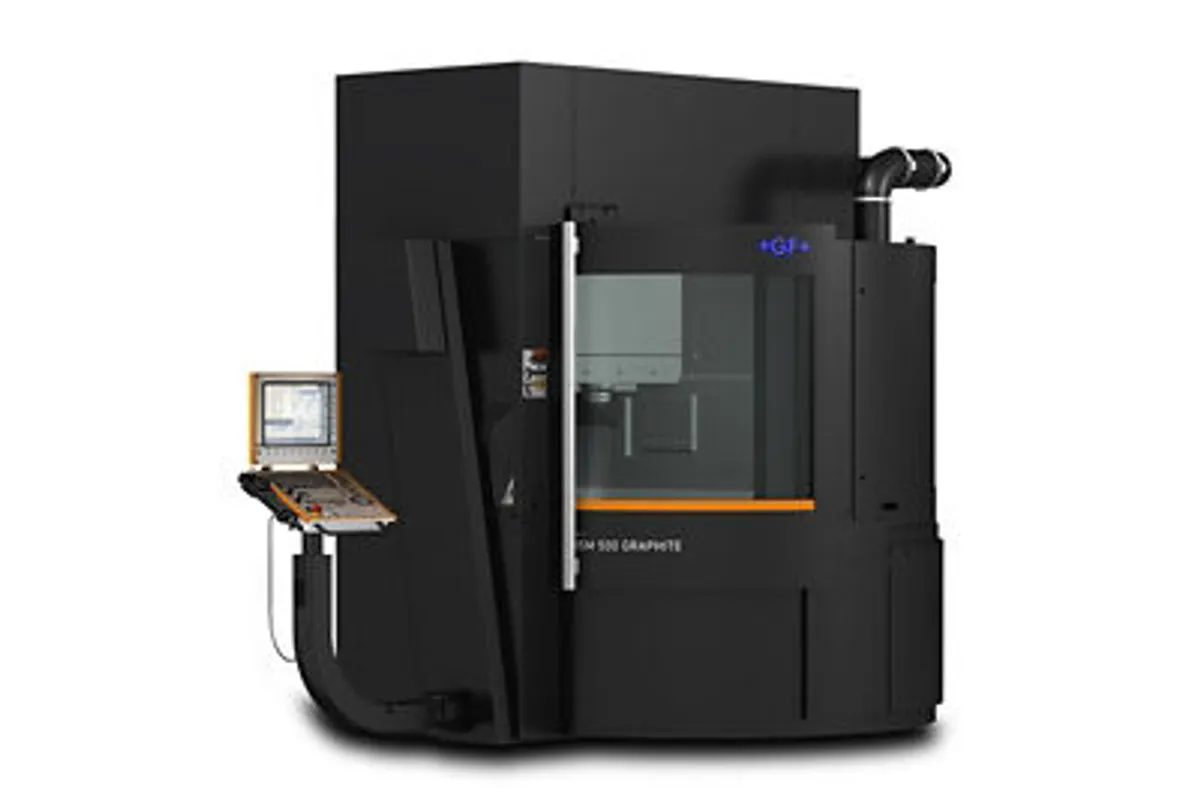
GF Mikron HSM 500 GRAPHITE
Key Specifications
X Travel
Y Travel
Z Travel
Table Size
feed rate xyz
max table load
How much does the GF Mikron HSM 500 GRAPHITE cost?
Estimated price range
Our best estimate for a vertical machining centers (vmc) in this class — not a quote from GF Machining Solutions. Configuration moves it a long way.
Overview
The Mikron HSM 500 GRAPHITE is the electrode-milling version of GF Machining Solutions' HSM 500, built to cut graphite electrodes for die-sinking EDM. It keeps the base machine's 500 x 450 x 350 mm travel, 550 x 450 mm T-slot table (200 kg) and 42 m/min feed rate, and GF fits it with a STEP TEC spindle running at 42,000 min⁻¹ on an HSK-E40 interface, listed at 13.5 kW and 8.8 Nm.
Graphite dust is the problem this version solves. It is fine, abrasive and conductive, and it gets into guideways, ballscrews and electrical cabinets. GF's answer is a fully enclosed and protected structure, full covers on all axes, automatic central lubrication, and an Amano suction unit with two separate dust bins to pull the dust out at the source. A buyer converting a standard mill to graphite work would have to add all of that; here it comes with the machine.
Under the enclosure it is the same precision platform: polymer concrete base, absolute optical linear scales, a liquid-cooled structure and Intelligent Thermal Control. That matters for electrodes, because any size error in the electrode is copied straight into the eroded cavity. The compact touch probe can measure electrodes in the machine before they leave the work area.
The magazine holds 18 or 36 pockets. GF's specification tab for this page is shared with the standard HSM 500 and also lists a 30,000 rpm spindle; the graphite description itself names only the 42,000 min⁻¹ unit, so confirm the spindle in any quotation.
Full Specifications
| Parameter | Value |
|---|---|
| X-Axis Travel | 500 mm |
| Y-Axis Travel | 450 mm |
| Z-Axis Travel | 350 mm |
| Feed Rate Xyz | 42 m/min |
| Table Size | T-slot table 550 x 450 mm |
| Max Table Load | 200 kg |
| Spindle | 30,000 rpm (HSK-E40), 13.5 kW, 8.8 Nm; 42,000 rpm (HSK-E40), 13.5 kW, 8.8 Nm |
| Tool Magazine | 18 / 36 pockets |
Specifications sourced from united-mikronmill.com — verified 2026-10-02
Strengths & Limitations
Strengths
- Fully enclosed structure with all axes covered against graphite dust
- Amano suction unit with two separate dust bins for graphite extraction
- 42,000 min⁻¹ STEP TEC spindle with HSK-E40 interface for small electrode cutters
- Automatic central lubrication for continuous graphite production
- Polymer concrete base and absolute optical scales carried over from the HSM 500
Limitations
- Built around graphite; 8.8 Nm of spindle torque leaves little for steel roughing
- Table load is 200 kg on a 550 x 450 mm table
- Z travel of 350 mm limits tall electrode blanks and long tool assemblies
- The specification tab does not separate the graphite version's figures from the standard HSM 500
Best For
Frequently Asked Questions
01
A fully enclosed and protected structure, covers on all axes, automatic central lubrication and an Amano suction unit with two separate dust bins. GF fits a STEP TEC spindle at 42,000 min⁻¹. Travel (500 x 450 x 350 mm), table (550 x 450 mm, 200 kg) and the 42 m/min feed rate are the same as on the Mikron HSM 500.
02
Graphite dust is abrasive and conductive. On an unprotected mill it wears guideways and ballscrews and can reach electrical components. The HSM 500 GRAPHITE handles this with full enclosure, covered axes, central lubrication and dust extraction at the source.
03
GF describes it as engineered for graphite electrodes. The spindle is listed at 13.5 kW and 8.8 Nm on an HSK-E40 interface, so it suits light, fast passes. Shops that also need copper electrodes or steel finishing in quantity should compare it with the standard Mikron HSM 500.
04
The magazine is listed with 18 or 36 pockets. For electrode work, where one electrode set can use many small roughing and finishing cutters plus spares, the 36-pocket magazine supports longer unattended runs.
Videos

UNITED MACHINING
Comparisons
More from GF Machining Solutions
Other Vertical Machining Centers (VMC)
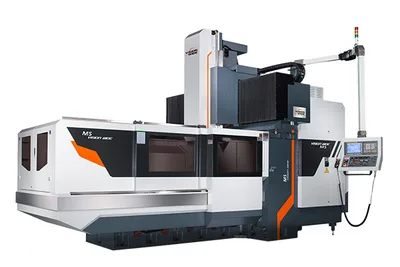
Vision Wide MS-2123
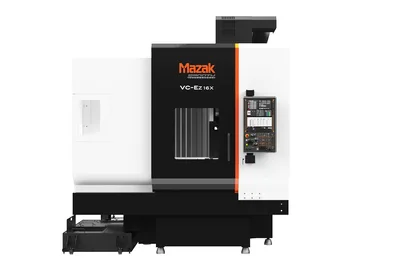
Mazak VC-Ez 16
Brother TC-32BN
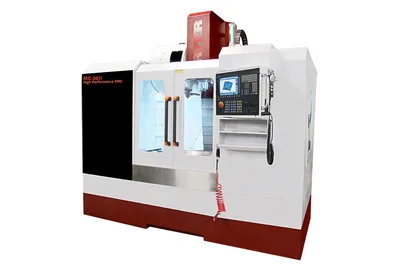
Fryer MC-30B
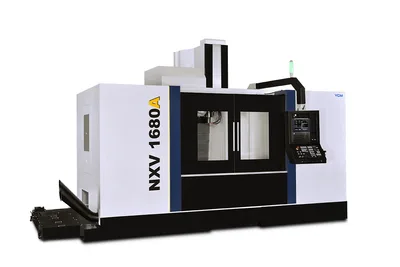
YCM NXV1680A