Industrial CNC Machine Directory

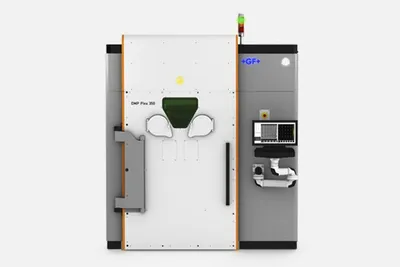
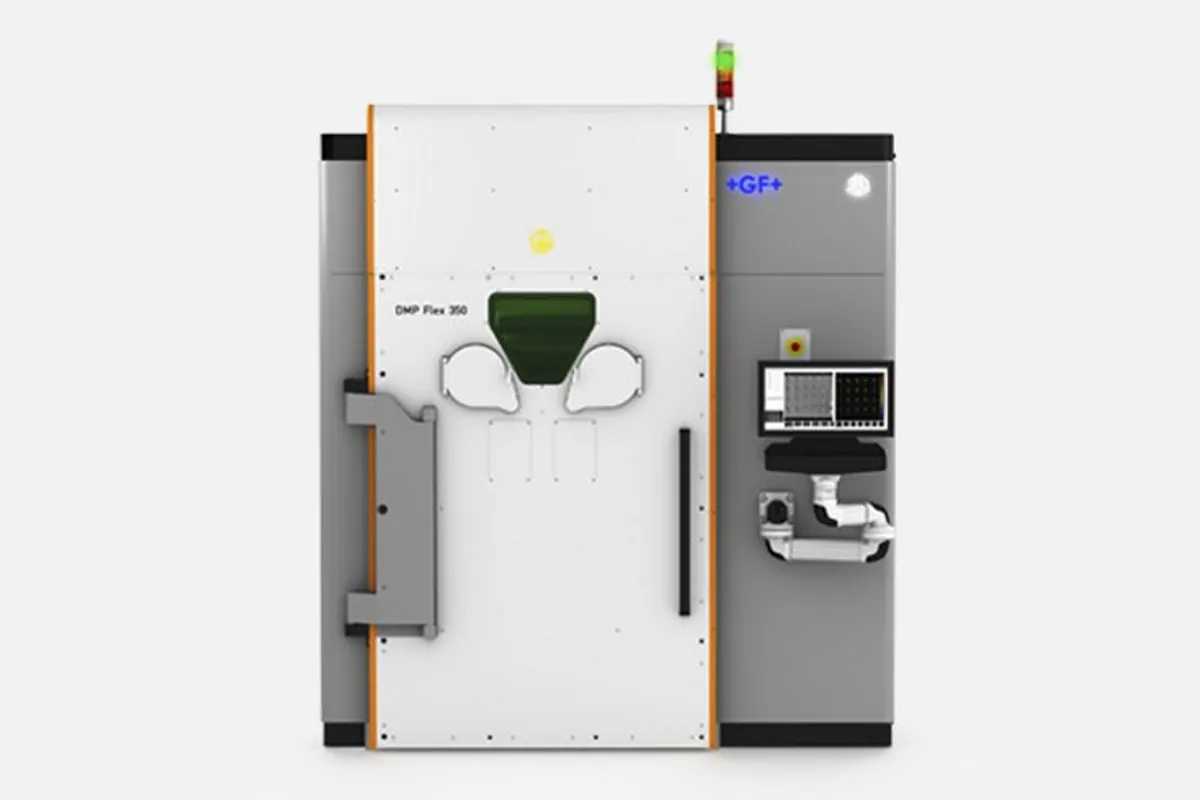
GF DMP Flex 350

$450,000 - $800,000 Updated 2025-03-15
GF DMP Flex 350 Metal Additive Manufacturing
01

Key Specifications

Repeatability

Δx (3σ) = 60 μm, Δy (3σ) = 60 μm, Δz (3σ) = 60 μm

build volume single dual

275 x 275 x 420 mm (10.8 x 10.8 x 16.5 in)

build volume triple

350 x 350 x 350 mm (13.8 x 13.8 x 13.8 in)

laser type

1 or 2 or 3 x 500 W / Fiber laser

laser power

1x, 2x, or 3x 500 W

layer thickness

Adjustable, min 5 um; typical 30, 60, 90 um

02

Overview

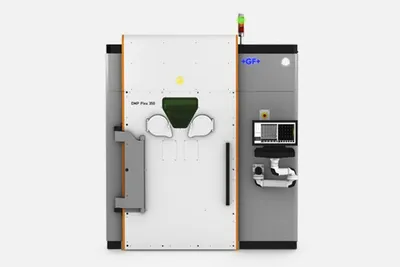
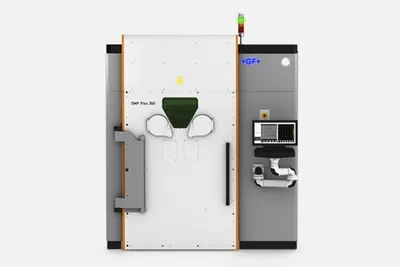
The GF DMP Flex 350 is a production-oriented metal 3D printer developed through the partnership between GF Machining Solutions and 3D Systems, using Direct Metal Printing (DMP) laser powder bed fusion technology. With a build volume of 275 x 275 x 420 mm (10.8 x 10.8 x 16.5 in) on single and dual laser configurations -- expanding to 350 x 350 x 350 mm on the triple laser variant -- it targets aerospace, medical, and industrial applications where part complexity, material performance, and process repeatability are non-negotiable.

The machine is available in single, dual, or triple 500 W fiber laser configurations at 1070 nm wavelength. Each laser can access the full build area simultaneously, so you get near-linear throughput scaling without the stitching artifacts and zone boundary issues that plague some competitor multilaser systems. The triple laser configuration with the expanded 350 x 350 mm build plate is particularly significant -- it puts the DMP Flex 350 into a productivity class that competes with systems costing considerably more.

Layer thickness is adjustable with a minimum of 5 micrometers and typical settings of 30, 60, or 90 micrometers depending on material and resolution requirements. The 5 um minimum is remarkably fine and enables surface finishes and feature resolution that most LPBF systems can't achieve. Accuracy sits at plus or minus 0.1-0.2% with a 100 um minimum, and repeatability is 60 um (3 sigma) in X, Y, and Z -- tight enough for aerospace and medical qualification.

What makes the DMP Flex 350 a 'Flex' is its removable print module. You can swap the entire build chamber out of the machine, which means you can change materials without extensive cleaning procedures. This is critical for shops running multiple alloys -- switching from titanium to Inconel on a conventional system can take days of purging and cleaning. The removable module approach lets you maintain a dedicated module per material and swap in minutes.

The material portfolio is extensive: aluminum alloys (AlSi7Mg0.6, AlSi10Mg, Al6061-RAM2, Scalmalloy), titanium (Gr1, Gr5, Gr23), stainless steels (316L, 17-4PH), maraging steel, cobalt-chrome (CoCrF75), nickel alloys (Ni718, Ni625), and specialty materials including tungsten, C-103 (niobium alloy), and copper alloys (CuCr1Zr, CuCr2.4, GRCop-42). That copper and refractory metal capability is notable -- few LPBF systems qualify those materials.

The machine uses 3DXpert software for build preparation, simulation, and process optimization. It measures 2,370 x 2,400 x 2,869 mm and weighs 4,200 kg. New DMP Flex 350 systems typically price between $450,000 and $800,000 depending on laser count and options. Specs sourced from GF Machining Solutions / 3D Systems published technical data.

03

Full Specifications

Parameter Value
Build Volume Single Dual 275 x 275 x 420 mm (10.8 x 10.8 x 16.5 in)
Build Volume Triple 350 x 350 x 350 mm (13.8 x 13.8 x 13.8 in)
Laser Type 1 or 2 or 3 x 500 W / Fiber laser
Laser Power 1x, 2x, or 3x 500 W
Layer Thickness Adjustable, min 5 um; typical 30, 60, 90 um
Accuracy ± 0.1-0.2% with ± 100 μm minimum
Repeatability Δx (3σ) = 60 μm, Δy (3σ) = 60 μm, Δz (3σ) = 60 μm
Materials Aluminum, titanium, stainless steel, maraging steel, cobalt-chrome, nickel alloys, tungsten, niobium (C-103), copper alloys
Print Module Removable print module for rapid material changeover
Software 3DXpert
Machine Dimensions 2370 x 2400 x 2869 mm (DMP Flex 350 in printing condition)2370 x 2400 x 3470 mm (DMP Factory 350 in printing condition)
Machine Weight 4200 kg
Laser Wavelength 1070 nm
Layer Thickness Range Preset Adjustable, min. 5 μm, typical: 30, 60, 90 μm
Build Envelope 275 x 275 x 420 mm (height inclusive of build plate) – DMP 350 Single / Dual / Triple laser350 x 350 x 350 mm - DMP 350 Triple laser
Material Deposition Soft blade recoater
Minimum Feature Size 200 μm
Minimum Wall Thickness 150 μm

Specifications sourced from gfms.com — verified 2026-03-28

04

Strengths & Limitations

Strengths

  • Removable print module enables rapid material changeover -- maintain dedicated modules per alloy and swap in minutes instead of the days-long cleaning required on fixed-chamber systems
  • Triple laser configuration with 350 x 350 mm build plate delivers near-linear throughput scaling with full-field laser access, no zone boundaries or stitching artifacts
  • 5 um minimum layer thickness enables surface finishes and feature resolution beyond what most LPBF competitors can achieve for precision medical and aerospace components
  • Exceptional material portfolio including copper alloys (CuCr1Zr, GRCop-42), refractory metals (tungsten, C-103), and Scalmalloy that few competitors qualify
  • 60 um repeatability (3 sigma) across all axes supports aerospace and medical qualification requirements for serial production
  • 3D Systems partnership provides access to extensive validated parameter sets and application engineering support across the full material range

Limitations

  • Entry price above $450K for single laser, climbing past $800K for triple laser -- positioned at the premium end of mid-format LPBF systems
  • Removable print module adds operational flexibility but also adds cost for shops that need multiple modules for different materials
  • 275 x 275 mm build plate on single/dual models limits part nesting compared to competitors like EOS M 300-4 with 300 x 300 mm
  • 3DXpert software ecosystem creates some vendor lock-in compared to more open platforms that accept third-party build preparation software
  • GF/3D Systems install base is smaller than EOS or SLM Solutions, meaning fewer third-party parameter sets and published research available
05

Best For

Aerospace manufacturers producing flight-critical components in titanium, Inconel, and specialty alloys that require documented process repeatability for qualification Medical device companies building patient-specific implants and standard prosthetics in Ti Gr23 and CoCr with regulatory traceability requirements Multi-material shops running diverse alloys that benefit from the removable print module approach to eliminate cross-contamination and reduce changeover time Rocket and space propulsion companies working with copper alloys (GRCop-42) and refractory metals for combustion chamber and nozzle components Contract additive manufacturing bureaus serving multiple industries that need the flexibility to switch between material families efficiently R&D facilities developing new alloy parameters that benefit from the adjustable layer thickness down to 5 um for fine process characterization
06

Frequently Asked Questions

01 What does a new GF DMP Flex 350 cost?

New DMP Flex 350 systems typically run $450,000 to $800,000 depending on configuration. A single 500 W laser system falls at the lower end. The triple laser variant with 350 x 350 mm build plate, additional print modules, and full software suite pushes toward the top. Used units occasionally appear in the $250,000-$400,000 range. Each additional removable print module for material flexibility adds to the total investment.

02 What's the difference between the DMP Flex 350 and DMP Factory 350?

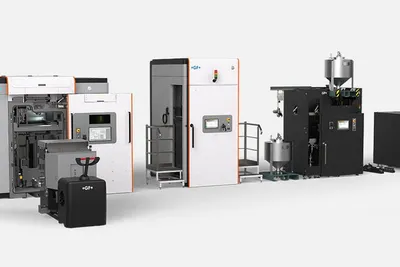
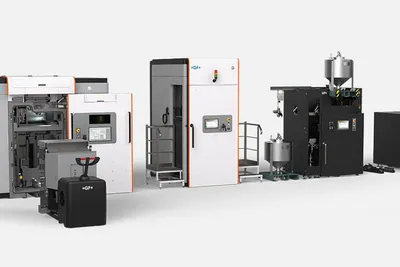
The key difference is powder management. The DMP Flex 350 features a removable print module for material flexibility -- you swap the entire build chamber. The DMP Factory 350 adds an integrated powder management system with automated sieving and powder conveyance, designed for higher-volume production with a single material family. The Factory version is optimized for throughput in dedicated production; the Flex version is optimized for material changeover flexibility. Both share the same laser platform and build volume.

03 How does the removable print module work?

The DMP Flex 350's build chamber is a self-contained module that can be physically removed from the machine. You can maintain separate modules loaded with different powder materials -- one for titanium, one for Inconel, one for stainless steel. To change materials, you remove the current module (under inert atmosphere) and install the new one. This eliminates the hours or days of cleaning required on conventional systems to prevent cross-contamination between alloys. Each module maintains its own sealed powder environment.

04 What materials can the DMP Flex 350 process?

The material portfolio is one of the broadest in the LPBF industry: aluminum alloys (AlSi10Mg, AlSi7Mg0.6, Al6061-RAM2, Scalmalloy), titanium (Grade 1, 5, 23), stainless steels (316L, 17-4PH), maraging steel, cobalt-chrome (CoCrF75), nickel superalloys (Inconel 718, 625), and specialty materials including tungsten, C-103 niobium alloy, and copper alloys (CuCr1Zr, CuCr2.4, GRCop-42). The copper and refractory metal capability is particularly noteworthy for aerospace propulsion applications.

05 How does the DMP Flex 350 compare to the EOS M 290?

The EOS M 290 is the most widely installed LPBF system globally with a single 400 W laser and 250 x 250 x 325 mm build volume. The DMP Flex 350 offers a larger build volume (275 x 275 x 420 mm), higher laser power (500 W), and the option for dual or triple lasers. The DMP Flex 350's removable print module provides faster material changeover. EOS counters with a massive install base, more published parameters, and extensive third-party ecosystem. The DMP Flex 350 is the more capable machine; the EOS M 290 has more industry infrastructure around it.

06 What is the build rate of the DMP Flex 350?

Build rate depends on material, layer thickness, and laser configuration. A single 500 W laser typically achieves 10-30 cm3/hr depending on alloy and layer thickness. Dual lasers nearly double this, and triple lasers can push above 60 cm3/hr on materials like aluminum with thicker layers. Actual throughput varies significantly based on part geometry, support structures, and quality requirements. The 5 um minimum layer thickness enables maximum resolution but at significantly slower build rates than the typical 30-90 um settings used for production.

07

Videos

DMP FLEX 350 - Discover our unique features for metal 3D printing

DMP FLEX 350 - Discover our unique features for metal 3D printing

United Machining (USA)

DMP Flex 350 - Finished Print Removal

DMP Flex 350 - Finished Print Removal

3D Systems

3D Systems DMP Flex 350 for Medical Devices

3D Systems DMP Flex 350 for Medical Devices

ECS Singapore

3D Systems and GF Machining unveil the DMP Factory 500 at IMTS 2018

3D Systems and GF Machining unveil the DMP Factory 500 at IMTS 2018

Practical Machinist

08

Community Discussions

09

Related Machines