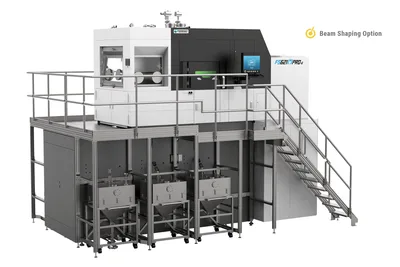
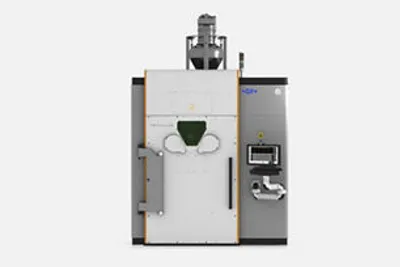
GE Additive Arcam A2XX
This model was not found in Colibrium Additive's current lineup when we checked on 2026-10-03 . It may be a superseded or older model; the specifications below are as we last recorded them.
Key Specifications
build volume
technology
electron beam power
beam focus diameter
layer thickness
build temperature
How much does the GE Additive Arcam A2XX cost?
Estimated price range
Our best estimate for a metal additive manufacturing in this class — not a quote from Colibrium Additive. Configuration moves it a long way.
Overview
The GE Additive Arcam A2XX is an Electron Beam Melting (EBM) machine with a listed build volume of 200 x 200 x 380 mm and 3,000 W of electron beam power. It is not in Colibrium Additive's current lineup. The description below is drawn from the listed figures alone, and nobody has been able to check them against a maker's page, so ask for the original documentation of any machine under consideration.
The build volume is tall for its plan area, with 380 mm of height over a 200 x 200 mm base. That shape favours long parts stood upright or several tiers of smaller parts. On the listed figures this is a coarse, hot process: layer thickness is 50 – 200 µm, the beam focus diameter is variable from 0.2 – 1.0 mm, and build temperature is given as up to 1000°C depending on the alloy. As-built surface roughness is listed at Ra 25–35 µm, so mating faces, bores and sealing surfaces need machining stock left on them.
Compatible materials are Ti-6Al-4V, Ti-6Al-4V ELI, CoCrMo and Titanium CP. The vacuum level is listed at < 1 × 10⁻³ mbar and scanning speed at up to 8,000 m/s for the electron beam. For installation, the listed figures give a footprint of ~2.0 x 0.9 m and a power requirement of 32 kVA. Machine weight and helium consumption are not listed.
Full Specifications
| Parameter | Value |
|---|---|
| Build Volume | 200 x 200 x 380 mm |
| Technology | Electron Beam Melting (EBM) |
| Electron Beam Power | 3,000 W |
| Beam Focus Diameter | 0.2 – 1.0 mm (variable) |
| Layer Thickness | 50 – 200 µm |
| Build Temperature | Up to 1000°C (alloy dependent) |
| Vacuum Level | < 1 × 10⁻³ mbar |
| Compatible Materials | Ti-6Al-4V, Ti-6Al-4V ELI, CoCrMo, Titanium CP |
| Scanning Speed | Up to 8,000 m/s (electron beam) |
| Surface Roughness As Built | Ra 25–35 µm |
| Machine Footprint | ~2.0 x 0.9 m |
| Power Requirement | 32 kVA |
Specifications compiled from manufacturer literature and industry references. Not independently verified against a published spec sheet — confirm with the manufacturer or an authorised dealer before making a purchasing decision.
Strengths & Limitations
Strengths
- 380 mm of build height over a 200 x 200 mm base, in a listed build volume of 200 x 200 x 380 mm
- 3,000 W of electron beam power with a variable beam focus diameter of 0.2 – 1.0 mm
- Build temperature listed at up to 1000°C (alloy dependent)
- Listed footprint of ~2.0 x 0.9 m
Limitations
- Not in Colibrium Additive's current lineup, and the listed figures are unconfirmed
- As-built surface roughness of Ra 25–35 µm means functional surfaces need finish machining
- Only four compatible materials are listed: Ti-6Al-4V, Ti-6Al-4V ELI, CoCrMo and Titanium CP
- Layer thickness starts at 50 µm, which limits fine detail
Best For
Frequently Asked Questions
01
No. The A2XX is not in Colibrium Additive's current lineup, so it is best treated as an older model. The figures on this page are the listed figures and have not been confirmed against a maker's page; verify them from the documentation of the machine itself.
02
The listed build volume is 200 x 200 x 380 mm, so the height of 380 mm is nearly twice the 200 mm side of the base. Layer thickness is listed at 50 – 200 µm and the beam focus diameter at 0.2 – 1.0 mm (variable).
03
Ti-6Al-4V, Ti-6Al-4V ELI, CoCrMo and Titanium CP. Build temperature is listed as up to 1000°C, alloy dependent, and the process runs at a listed vacuum level of < 1 × 10⁻³ mbar.
04
As-built surface roughness is listed at Ra 25–35 µm. That is a rough surface by machining standards, so leave stock on faces that locate, seal or carry a bearing and plan a finishing operation after the build.
More from Colibrium Additive
GE Additive Arcam EBM Q10plus
Concept Laser Mlab Cusing R
Colibrium X Line 2000R
GE Additive M2 Series
Concept Laser M1 Cusing
Concept Laser M2 Series 5 Metal 3D Printer
Other Metal Additive Manufacturing
Renishaw RenAM 500E
SLM Solutions SLM 500
3D Systems DMP Factory 500
SLM Solutions SLM 280
GF DMP Factory 350